The global explosion of interest in artificial intelligence has plunged the computing industry into a state of acute scarcity. While the primary bottleneck was once the memory market, the epicenter of the crisis has now shifted toward central processing units (CPUs). To safeguard infrastructural stability, tech titans are being compelled to fundamentally overhaul their client engagement models. Central to this evolution is a strategic pivot away from volatile spot transactions in favor of long-term, sustainable agreements.
The contemporary server computing landscape is undergoing a structural pivot, catalyzed by the meteoric rise of generative AI. For some time, industry analysts have focused on the scarcity of high-bandwidth memory and GPUs—sectors where manufacturers have already institutionalized long-term contracts characterized by predetermined pricing brackets and substantial advance payments. Now, however, a similar trend has permeated the central processing unit (CPU) segment, which remains the bedrock of any server rack.
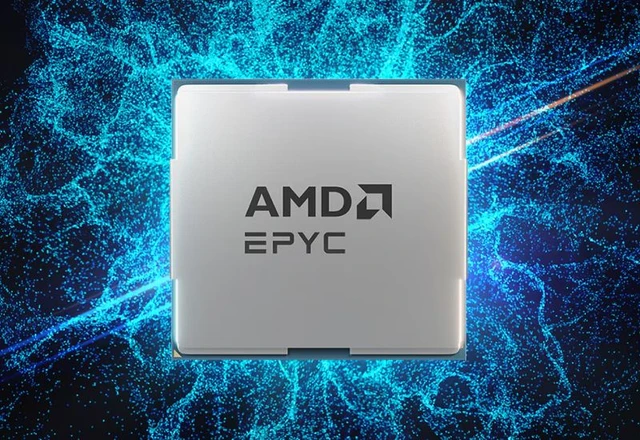
Industry titans Intel and AMD have begun transitioning their primary partners—most notably Chinese server hardware manufacturers—toward long-term supply commitments. These contracts typically span at least one year, though negotiations for longer planning horizons are already underway. A key nuance of the current climate is that these agreements guarantee only minimum volume thresholds; pricing remains open-ended, granting vendors strategic maneuverability amidst ongoing market volatility.
Pricing trends across the Asian server hardware market are under significant strain. Certain components have seen a steady 10% increase in cost, while some CPU models have surged by as much as 40% since the start of the year. Such a spike signals a profound systemic imbalance between supply and demand that can no longer be ignored.
The catalyst for this shortage is the industry's pivot toward the inference phase—the stage where trained models are deployed to process real-time user queries. While GPUs are critical for training neural networks, the efficient deployment and operational support of these systems in production require massive computational overhead provided by traditional server CPUs. Intel has openly acknowledged that the surge in demand for its solutions is a direct result of this architectural overhaul to accommodate AI workloads.
The repercussions are already manifesting across supply chains: lead times for certain CPU models have ballooned to six months. This is no longer a localized issue but a global crisis, creating significant bottlenecks for data center scaling worldwide. In an era where access to compute power has become the primary competitive advantage, the CPU market is effectively shifting from an open trade model to a regime of strict quotas and strategic alliances.
 The Triumph of 3nm Chip Manufacturing