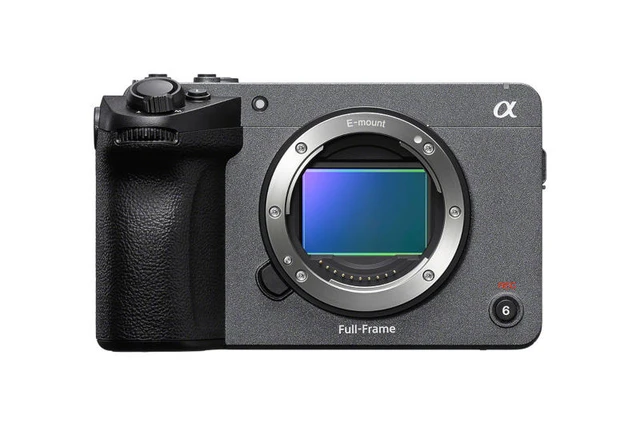
Today’s video production landscape demands a critical equilibrium between agility and uncompromising image quality. The debut of the Sony FX5 marks a pivotal evolution in the cinema line, where a compact form factor no longer limits professional ambition. By integrating cutting-edge AI algorithms and sophisticated color science, the device transforms into a potent instrument for visual storytelling—engineered to bridge the gap between the flexibility of run-and-gun production and the refined aesthetics of high-end cinematography.
At the heart of the Sony FX5 lies a 16.6-megapixel full-frame Exmor RS sensor, enabling high-fidelity 5K video acquisition. However, the device's true value proposition extends beyond raw pixel count to its computational intelligence: the new processor features a dedicated AI algorithm processing block. This integration elevates autofocus and object tracking to a professional grade, ensuring flawless subject adherence even during the most demanding dynamic sequences.
Data flexibility is a cornerstone of the FX5’s architecture. Support for Open Gate (3:2) recording allows filmmakers to utilize the sensor's entire surface area—a critical advantage when pairing with anamorphic lenses, as it provides accurate framing and proportions directly in the viewfinder. For those requiring absolute precision over color and luminance, the camera implements direct recording in X-OCN (Extended tonal range Original Camera Negative). This 16-bit linear format theoretically captures up to 280 trillion colors, providing immense latitude for post-production color grading. Furthermore, the camera supports 5K at 60 fps and 4.5K at 120 fps, positioning it as a versatile tool for both standard cinema production and high-end slow-motion cinematography.
Exposure management in the FX5 is handled via three base ISO values: 800, 4000, and 12800. This triple-base approach expands the effective exposure range and enhances image clarity compared to traditional dual-ISO systems. While Dual Gain technology allows for a dynamic range of up to 16 stops, this depth comes at the cost of a slight reduction in data readout speeds. Image stabilization is achieved through a hybrid system combining In-Body Image Stabilization (IBIS) and Dynamic Active Mode, further augmented by Clear Image Zoom for clean digital magnification.
The camera's ergonomics draw heavily from the flagship Venice 2 series. A multifunctional control wheel enables rapid menu navigation and parameter adjustment, while six customizable buttons allow operators to tailor the interface to specific production workflows. Monitoring is handled via a tilting 3.5-inch screen with a 2.76 MP resolution. A key addition is the detachable OLED viewfinder, boasting a brightness of 2500 nits—essential for visibility under harsh sunlight. However, this introduces a notable engineering compromise: mounting the viewfinder blocks access to the Multi Interface shoe, which may pose a challenge when recording high-fidelity 32-bit audio.
The FX5's technical arsenal includes slots for SD UHS-II and CFexpress Type A cards, a full-size HDMI Type A port, Ethernet, and a modern Wi-Fi module supporting the 6 GHz band. The ecosystem is further expanded by the ability to use Xperia smartphones as external monitors via the Monitor and Control app. Power is supplied by the NPSA100 battery, guaranteeing up to 130 minutes of operation. Notably, the absence of an internal electronic neutral density (ND) filter means operators will rely on external optics for light management.
The device's evolutionary trajectory is outlined in its software roadmap. With the release of firmware version 2.0 (slated for August 2027), the camera is expected to gain support for 4K recording at 240 fps in X-OCN format and the XAVC-I codec for full-frame capture. Plans also include a dedicated interface for vertical shooting and advanced frame extraction tools.
The Sony FX5 enters the market with a base kit priced at $4,898, while the version bundled with the XLR handle is valued at $5,498. Optional accessories, such as the electronic viewfinder ($698) and a timecode adapter for equipment synchronization ($98), allow users to scale the camera configuration to meet the specific demands of their project.
 The Triumph of 3nm Chip Manufacturing