The global AI arms race is shifting its epicenter, migrating from massive cloud data centers directly onto end-user hardware. Within this landscape, Tesla’s strategy of developing proprietary, purpose-built silicon has become a decisive factor in its bid for dominance over the autonomous systems market. By pursuing a tight coupling of software and silicon, the company aims to ensure the seamless operation of both its humanoid robotics and self-driving fleets. Management's ambitions are now centered on engineering the most sophisticated edge-computing chip in the industry.
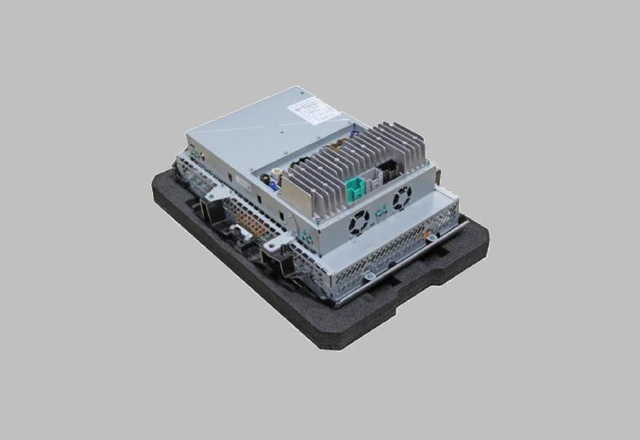
Tesla’s strategic trajectory has decisively shifted toward an autonomy ecosystem, centered around Robotaxis and the Optimus humanoid robots. To realize these ambitions, conventional computing power is no longer sufficient; a radical overhaul of edge computing architecture is required. This is where the upcoming AI6 chip enters the fray, positioned as the absolute class leader in both performance and energy efficiency.
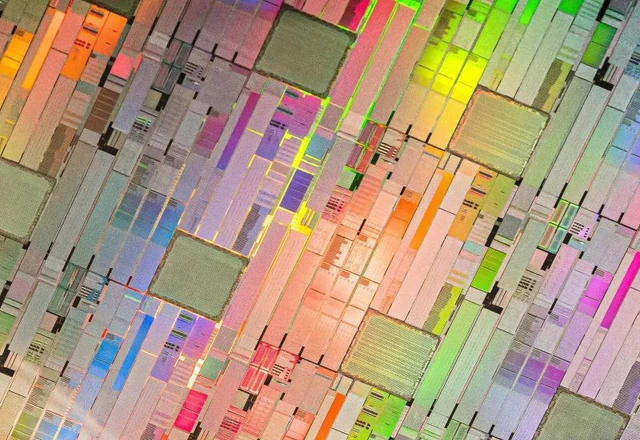
The technological leap from the current generation to AI6 promises to be substantial, with throughput expected to double compared to its predecessor, the AI5. Full-scale deployment of this solution is not anticipated until mid-2028. A critical focus remains on the fabrication process: the transition to a 2nm-class node will enable unprecedented transistor density and drastically reduce power consumption—a non-negotiable requirement for mobile platforms and robotics.
Tesla’s manufacturing strategy hinges on supply chain diversification. While the AI5 is expected to leverage both Samsung and TSMC, the production of AI6 will likely be concentrated within Samsung’s Texas facilities. The scale of this partnership is formidable: a contract extending through 2033, valued at an estimated $16.5 billion, with the dedicated plant slated for launch in the third quarter of next year.
Parallel to the development of the system's "brains," Tesla is reconfiguring its industrial infrastructure. The mass production of humanoid robots is slated for deployment at its legacy California plant, which previously specialized in the flagship Model S and Model X electric vehicles. This transformation underscores a fundamental shift in priorities: moving away from traditional automotive manufacturing toward high-tech robotics. Details regarding the location of Terafab—a joint venture for chip fabrication designed to ensure total independence from external semiconductor giants—are expected shortly.
Such an ambitious technological push requires colossal financial injections. Tesla’s capital expenditures are climbing rapidly; after doubling to $5.8 billion last quarter, total investments could exceed $25 billion by the end of 2026. The company's financial leadership has confirmed that this upward trend in spending will persist over the coming years.
These funds will be allocated not only to silicon and robotics but also to expanding solar panel production and scaling the overall computational capacity required for training neural networks. To maintain this momentum, Tesla is prepared to secure up to $30 billion in borrowed capital. Given that current debt obligations remain relatively low (under $9.3 billion), such a maneuver appears to be a calculated step toward establishing a global AI infrastructure.
 The Triumph of 3nm Chip Manufacturing