The global AI arms race has transformed computational power and semiconductors into the hardest currency of the modern era. Against a backdrop of acute shortages in high-performance memory, securing these components has evolved into a matter of strategic survival for today's tech titans. Elon Musk, orchestrating synergy across his various ventures, is striving to build a closed-loop ecosystem for chip production and consumption. Securing priority allocations from Micron signals Tesla's definitive pivot: the company is no longer merely an automaker, but a formidable contender in the AI infrastructure landscape.
The current technological epoch is defined by a pivotal shift in focus: moving away from pure software toward the underlying hardware capable of sustaining it. For Elon Musk, this trend has become foundational; the ambitions of SpaceX and Tesla are effectively converging into a singular trajectory centered on the development of artificial intelligence. Within this paradigm, memory scarcity has emerged as a critical choke point, throttling the speed of neural network training and the deployment of autonomous systems.
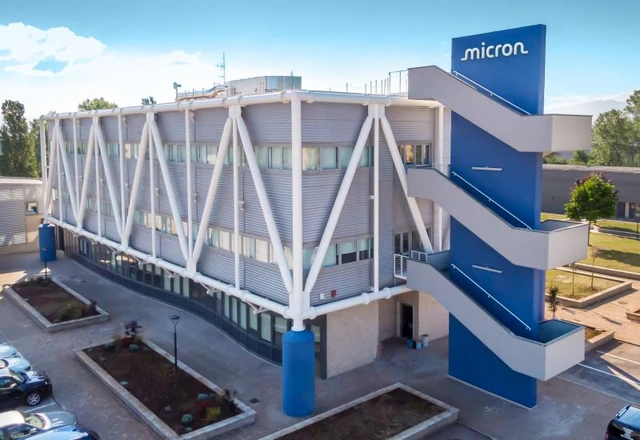
Recent quarterly filings reveal that Tesla has successfully secured substantial allocations of memory chips from Micron under exceptionally favorable terms. This is not merely a matter of procurement, but rather a "significant quota" that ensures the stability of the company's technological pipelines amidst the ongoing volatility of the semiconductor market.
The utility of these components spans every key pillar of Musk’s empire. First, they power in-vehicle compute systems, where demands for real-time data processing are escalating. Second, they are integral to the Optimus humanoid robots, whose cognitive capabilities depend directly on memory capacity and bandwidth. Finally, the server segment remains critical—providing the infrastructure for proprietary neural networks that drive Autopilot and Advanced Driver Assistance Systems (ADAS).
Of particular interest is the increasing synergy between Tesla and SpaceX. The two companies have begun working in close tandem to develop cutting-edge chips at the Terafab facility currently under construction in the U.S. This strategy of vertical integration allows Musk to minimize reliance on external vendors and accelerate development iterations. Notably, the cognitive architecture of the Optimus robots is handled by the SpaceXAI division, effectively transforming Musk's disparate ventures into a unified R&D powerhouse.
However, beneath these technical details lie significant political and commercial undercurrents. From a procurement metrics standpoint, neither Tesla nor SpaceX ranks among Micron's top ten clients by volume. Nevertheless, securing preferential terms and priority access to resources underscores Musk's immense personal leverage within the U.S. business community and political circles.
In this ecosystem, resources are highly fluid: memory formally earmarked for Tesla can be dynamically reallocated to SpaceX or xAI depending on where the most acute need for computational power arises. Consequently, hardware has become an agile strategic asset, shifted between projects to achieve maximum impact.
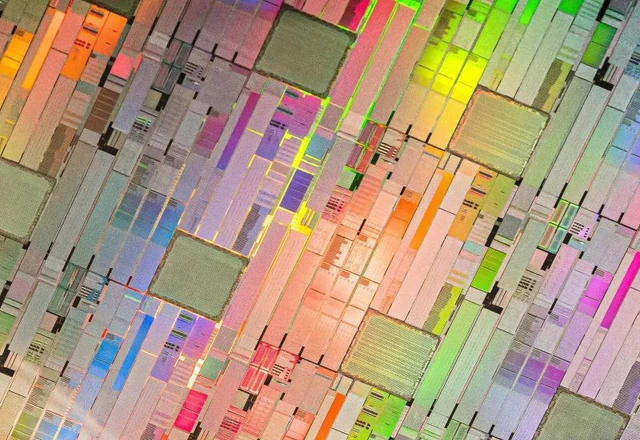 The Triumph of 3nm Chip Manufacturing