16 Jul 2026
 Charting the Course Toward Full AI Autonomy
The global generative AI arms race is evolving from a phase of wide-eyed technological wonder into a period of cutthroat corporate rivalry. Microsoft, long positioned as the strategic partner and primary financier for the industry's trailblazers, is now overtly pivoting its trajectory. The tech giant is doubling down on aggressively sidelining its competitors while striving for total technological autonomy. This transformation extends beyond mere engineering shifts; it is reshaping the company's entire commercial philosophy, escalating a market competition into an all-out war of ecosystems.
16 Jul 2026
 The Technological Pragmatism of Linus Torvalds
The clash between traditional open-source ethos and the proliferation of Large Language Models (LLMs) has reached a fever pitch at the very core of modern IT infrastructure. The Linux kernel—a project defined for decades by rigorous human oversight—has become the primary battleground for debates over the legitimacy of synthetic intelligence. Linus Torvalds, the project's perennial steward, maintains a pragmatic stance, decoupling technical efficacy from ideological bias. His approach signals a paradigm shift toward a new era, one in which AI is viewed not as an existential threat, but as an essential catalyst for the evolution of code.
16 Jul 2026
 AI Agent Competency Management Standard
The current landscape of AI agent development is grappling with "system prompt bloat" and the suboptimal utilization of context windows. The shift from monolithic instruction sets toward modular competencies is rapidly emerging as the new industry standard. Microsoft has solidified this trajectory by promoting its Agent Skills API for Python to stable status. Consequently, managing an agent's knowledge base and toolset is evolving from the intuitive "art" of prompt engineering into a rigorous engineering discipline.
16 Jul 2026
 The Cost of Digital Cheating in South Korea
The integration of artificial intelligence into consumer electronics is carving out new vulnerabilities within the frameworks of state oversight and professional certification. A recent incident in South Korea serves as a stark illustration of how wearable technology can compromise the integrity of certifications for essential emergency personnel. An attempt to "automate" success during a firefighter's examination resulted not only in criminal charges for the candidate but also sparked widespread public outcry. The episode exposes a profound disconnect between the breakneck pace of technological evolution and the inherent inertia of regulatory frameworks.
16 Jul 2026
 Synthetic Security via GPT-Red
The modern arms race in Large Language Models has shifted its focus from raw performance to the critical frontier of cybersecurity. As traditional manual testing fails to keep pace with the sheer scale of these systems, automated vulnerability discovery has become an imperative. OpenAI has unveiled GPT-Red—a specialized internal red-teaming tool engineered to identify security gaps with greater efficiency than any human operator. This transforms the defensive process into a perpetual loop of self-optimization driven by controlled aggression.
16 Jul 2026
 Regulating Synthetic Intimacy in China
The evolution of Large Language Models (LLMs) has catalyzed a novel sociological phenomenon: digital companionship, where algorithms are engineered to simulate profound emotional intimacy. Amidst a burgeoning global epidemic of loneliness, these virtual partners have emerged as an accessible surrogate for genuine human connection for millions worldwide. China has become the first nation to implement legislative guardrails against this trend, aiming to curb the risk of psychological dependency on machine-driven interaction. This precedent signals a pivotal shift in governance—a transition from managing the technical safety of AI toward regulating the cognitive and emotional impact these technologies exert on the human psyche.
16 Jul 2026
 Grok Build Transitions to Open Source
The software engineering landscape is undergoing a fundamental paradigm shift, evolving beyond basic autocomplete utilities toward fully autonomous AI agents. Against this backdrop, xAI’s decision to open-source Grok Build sets a significant precedent for the global engineering community. By bridging the generative power of Large Language Models (LLMs) with the precision of a terminal-based interface, the tool is now available for rigorous scrutiny and modification. This paves the way for truly bespoke development environments, ensuring that ultimate control over data and logic remains firmly in the hands of the developer.
16 Jul 2026
 The Scale of Data Powering Suno
The standoff between generative artificial intelligence and the copyright industry has escalated into a phase of open conflict. A recent leak of Suno's internal code has exposed the sheer scale of data harvesting required to simulate human musical creativity. Millions of tracks and thousands of hours of audio content have served as fuel for the neural network, effectively transforming the open web into an unpaid training ground. This incident fundamentally challenges the legitimacy of the "fair use" doctrine in the era of big data.
16 Jul 2026
 Moonshot AI’s Technological Leap with Kimi K3
The pursuit of expanded context windows has become a pivotal driver in the evolution of modern Large Language Models (LLMs). The industry is currently pivoting from basic conversational interfaces toward sophisticated instruments capable of complex engineering and creative synthesis. Moonshot AI is taking a decisive leap forward in this trajectory with the unveiling of its new flagship model, Kimi K3—a system engineered to fuse deep reasoning capabilities with an unprecedented capacity for information processing.
16 Jul 2026
 The Evolution of Debugging Tools in Android Studio Quail 2
Android development has long been a balancing act of precision resource management and a relentless war against memory leaks. As modern mobile applications grow increasingly complex, tracking down elusive bugs has evolved into an arduous task, often necessitating exhaustive dump analysis. The launch of the stable release of Android Studio Quail 2 signals a paradigm shift toward deep diagnostic automation. The IDE now steps into the role of an intelligent analyst, seamlessly integrating traditional profiling with the power of generative AI.
15 Jul 2026
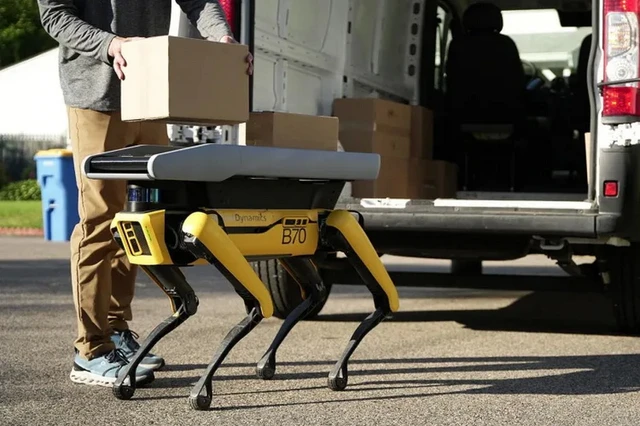 Spot: Solving the Last-Mile Challenge
Last-mile logistics remains one of the most complex and cost-intensive bottlenecks in modern delivery chains. Conventional wheeled robots and drones frequently falter when faced with everyday obstacles like staircases or the unpredictable terrain of suburban environments. Boston Dynamics is challenging this status quo by leveraging the superior agility of Spot, its quadrupedal robot. This strategic pivot evolves the autonomous machine from a high-profile tech showcase into a pragmatic instrument for operational optimization.
15 Jul 2026
 The Physical Embodiment of OpenAI’s Intelligence
The era of Large Language Models is transcending the realm of digital interfaces and migrating into the physical world. OpenAI’s ambition to establish a comprehensive ecosystem of personal devices signals a strategic shift toward "invisible computing"—a paradigm where AI becomes an organic extension of our daily environment. The vanguard of this movement will be a smart speaker designed to fundamentally reimagine human-machine interaction. This is not merely another home automation gadget; it is a concerted effort to engineer a true digital companion.
