The global semiconductor market is undergoing a fundamental transformation, as traditional consumer segments yield to the ascent of AI infrastructure. AMD’s latest financial report serves as a vivid illustration of this tectonic shift, highlighting the stark contrast between a stagnating gaming sector and the explosive growth of data center solutions. While the console market loses momentum, server-side hardware has become the primary engine driving the company's valuation. This trajectory forces the industry to confront critical questions regarding the scalability limits of the AI boom and whether manufacturers can truly overcome the physical bottlenecks of the global supply chain.
The contemporary high-tech landscape is characterized by a stark polarization: while consumer demand stabilizes, the corporate sector is demanding colossal amounts of computational horsepower. AMD, positioned as a pivotal player in AI infrastructure, has posted impressive results, recording a 50% surge in total revenue to reach a record $11.5 billion. However, beneath these figures lies a profound structural realignment of the business.
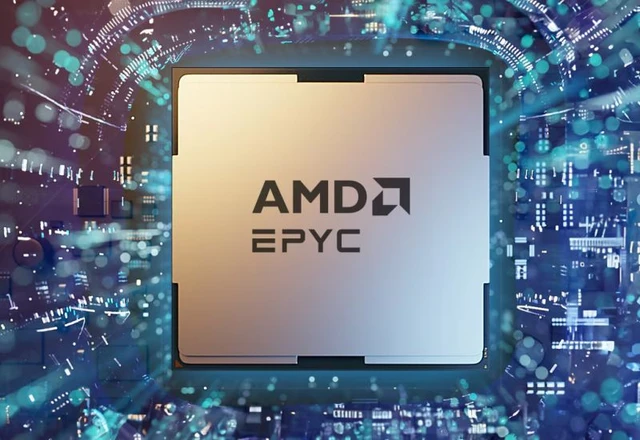
The company's strategic center of gravity has shifted toward the server segment, where revenue skyrocketed by 107% to $6.7 billion. Servers now account for 58% of AMD's total aggregate income. This success is driven by the synergy between two core product lines: Instinct high-performance GPU accelerators and EPYC central processors. In the cloud and enterprise segments, growth exceeded 70%, allowing the division to pivot from last year's operating losses to a profit of $2.1 billion.
Against the backdrop of triumph in server solutions, the consumer sector is exhibiting mixed dynamics. Client solutions, buoyed by the success of the Ryzen lineup, grew by 23% to reach $3.1 billion in revenue. However, this gain was partially offset by a steep decline in the gaming segment, where revenue plummeted 31% to $779 million. The primary driver was a slump in demand for semi-custom chips for gaming consoles, signaling a natural saturation of the current console generation. Consequently, the combined growth of the client and gaming divisions was a modest 6%, while operating profit for these segments contracted from $767 million to $582 million.
On a GAAP basis, the financial metrics appear phenomenal: operating profit surged by 1,585% to $1.99 billion, and net income rose by 163%, reaching $2.3 billion. Earnings per share (EPS) climbed to $1.38, formally exceeding analyst expectations. Nevertheless, the market reacted with skepticism—AMD's shares fell 8.82% in after-hours trading. This paradox is explained by inflated investor expectations: in an era of "AI fever," even a positive report can be perceived as insufficient if it fails to demonstrate hyper-exponential growth.
AMD management’s strategic outlook for the coming years remains highly optimistic. The forecast for the semiconductor market capacity has been revised upward to $2 trillion by 2028, with the lion's share—approximately $1.4 trillion—expected to stem from AI GPU accelerators. Server revenue is projected to double by 2027, with long-term annual growth rates expected to exceed 35%.
Yet, the ascent to these heights is fraught with significant technological hurdles. A primary concern remains the shortage of High Bandwidth Memory (HBM), which is critical for the operation of modern accelerators. Furthermore, the company faces supply chain bottlenecks; sustaining this growth will require a substantial expansion in wafer fabrication, testing, and chip packaging capacities.
Concluding the analysis of the current period, there is a cautious forecast for the PC market in the second half of the year. Rising costs for components and memory are beginning to pressure consumer demand, which may lead to a slowdown in sales momentum. In response, AMD is doubling down on capital expenditures—which have already risen to $808 million per quarter—to secure technological superiority in the race for AI leadership.
 Breaking the Lithography Barrier in China