The global semiconductor market is currently navigating one of its most seismic shifts in decades, propelled by the meteoric rise of generative AI. Demand for high-performance memory has moved beyond linear growth, evolving into a fierce battle for technological hegemony and production capacity. In this high-stakes environment, established incumbents are losing their footing while emerging players aggressively carve out new niches. The current trajectory points toward a fundamental realignment of power among the industry's dominant DRAM vendors.
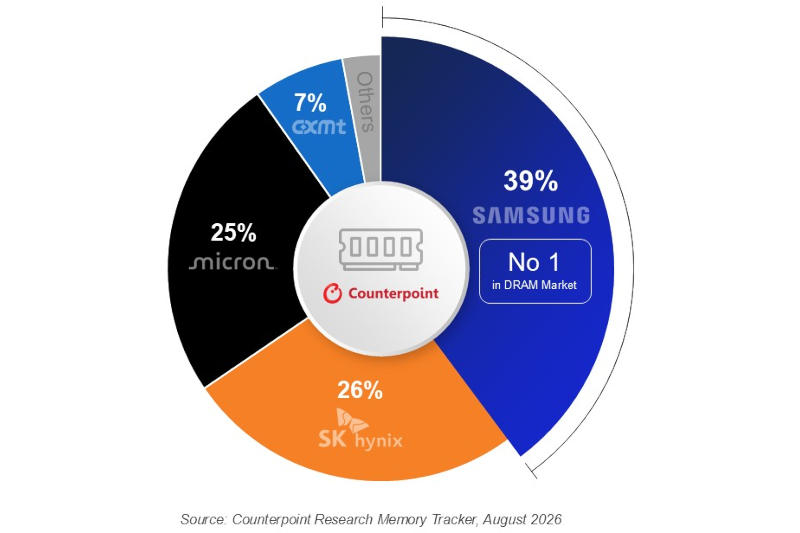
The memory industry has entered a period of profound volatility, where traditional hierarchies are being rigorously tested. As of the second quarter of 2026, Samsung has successfully reclaimed its status as the absolute leader in the DRAM segment, pushing its market share back up to 39%. This recovery returns the company to its 2024 levels, effectively seizing the crown from SK hynix, which had previously dominated the space. Notably, SK hynix's slide from 39% to 26% occurred alongside a paradoxical 214% year-on-year surge in quarterly revenue. This underscores a critical reality of the modern market: record-breaking financial performance does not guarantee the preservation of market position if competitors are scaling more aggressively.
The primary catalyst for these shifts has been the massive deployment of AI infrastructure. The AI boom has created a dual demand: an increasing need for standard DRAM to power CPUs, and a critical requirement for High Bandwidth Memory (HBM) to fuel GPU accelerators. Samsung played both sides of this trend with precision, monetizing price hikes in conventional memory while simultaneously expanding its footprint in the high-tech HBM segment.
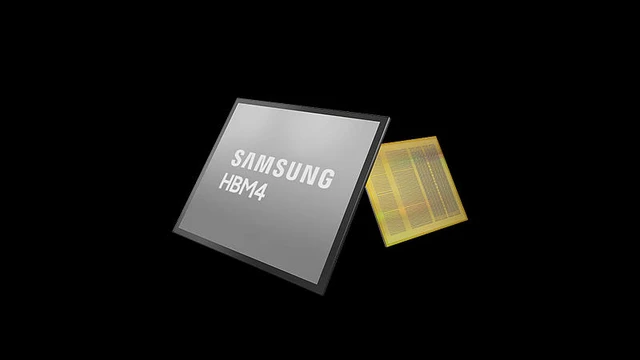
However, the leadership in the HBM niche—long held by SK hynix—became a source of vulnerability for the company. The latter half of 2025 and the start of 2026 were marked by significant price volatility; while standard DRAM prices spiked, the HBM segment faced downward pressure due to the commoditization of the HBM3E standard and delays in the rollout of the next-generation HBM4. This situation was further complicated by the fact that SK hynix was the first to pivot toward long-term contracts with strict price ceilings. During the market upswing, these agreements acted as a profit ceiling, preventing the company from fully capitalizing on memory shortages while its competitors operated under more flexible pricing models.
Against this backdrop, the American firm Micron is demonstrating impressive momentum. Since mid-2023, the manufacturer has steadily closed the gap with the second-place spot, reaching a 25% market share. Micron's strategy, traditionally viewed as conservative, has proven effective: the company accumulated the necessary capacity and is now poised for an aggressive transition toward long-term client agreements. With a fivefold increase in DRAM revenue over the past year, the likelihood of Micron overtaking SK hynix for second place in the global rankings seems almost inevitable.
Parallel to the struggle between these giants, regional players are rapidly gaining strength. Taiwan's Nanya has reported phenomenal year-on-year revenue growth of 690%, successfully positioning its DDR and LPDDR4/5 solutions. However, the most ambitious leap is being made by China's CXMT. A staggering 716% increase in revenue indicates that the company is evolving beyond being a mere local player.
For CXMT, an IPO serves as a strategic springboard to scale production of HBM and the latest LPDDR6 standard. If the company can successfully break out of the Chinese domestic market and meet global demands for quality and volume, its ascent into the ranks of the world's top three memory suppliers may be a matter of months, not years.
 Breaking the Lithography Barrier in China