The AI arms race has shifted its primary front: the battle is no longer fought solely over algorithmic breakthroughs, but over the achievement of energy autonomy. Massive compute clusters demand more than just raw power; they require an unwavering, flawless stability of supply. The integration of Tesla’s industrial-scale energy storage solutions into the SpaceXAI infrastructure represents a calculated strategic response to this critical bottleneck. This synergy transforms fragmented technological assets into a unified, closed-loop ecosystem.
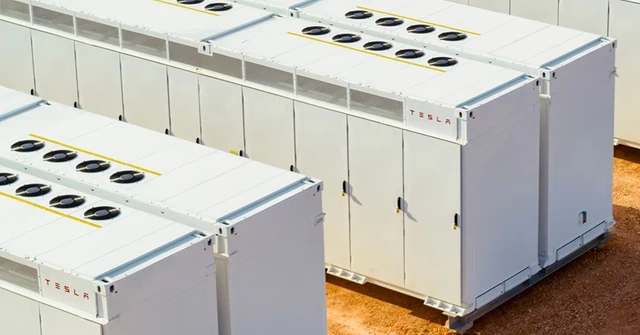
The scale of investment in SpaceX's energy infrastructure is staggering: this year alone, the company has allocated $329 million toward the acquisition of Tesla Megapack systems, with the bulk of these purchases—$295 million—concentrated in the second quarter. These figures signal more than mere technical necessity; they point to a deep structural integration among the various ventures under Elon Musk's leadership.
The consolidation of assets has reached a new milestone with SpaceX absorbing the xAI startup, resulting in the creation of a unified division: SpaceXAI. This transformation evolves fragmented initiatives into a monolithic architecture where the X social platform and AI computing power become integral components of a shared technological stack. The financial continuity here is evident: even prior to the merger, xAI had invested $430 million in Megapack battery systems for its data centers, continuing to expand its hardware fleet post-integration.
Within the data center architecture, the technical role of the Megapack extends far beyond simple backup power. Modern neural networks—particularly during the training and inference phases—generate extreme and volatile electrical loads. Sudden spikes in GPU power consumption can overload local generators or destabilize external grids. Energy storage systems act as a critical buffer in this environment, smoothing out consumption peaks and optimizing overall energy expenditures.
Beyond battery systems, SpaceX is demonstrating a drive toward total ecosystem dependency on Tesla, extending even to its operational fleet: as of late 2025, the company has acquired $131 million worth of Cybertruck electric pickups. This underscores a strategic pivot toward comprehensive electrification and internal synergy across all business units.
However, the energy strategy for SpaceXAI remains heterogeneous. The primary load at the Colossus 2 campus is still borne by natural gas turbines, which reports suggest were deployed while bypassing certain federal permits. In this hybrid configuration, Megapacks serve as a critical stabilizer, providing the necessary flexibility and resilience for a system operating at its physical limits to achieve a technological breakthrough in AI.
 Breaking the Lithography Barrier in China