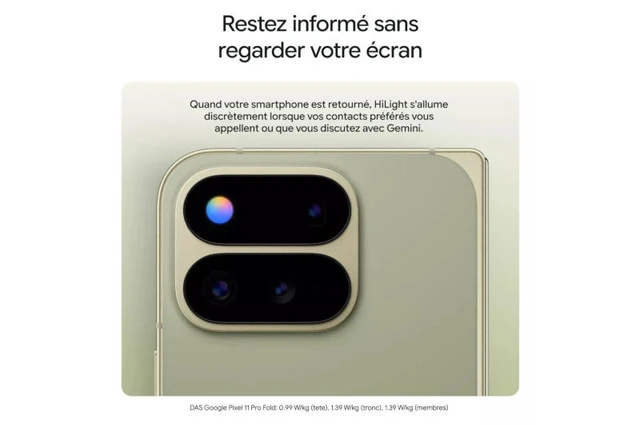
The mobile industry has long since abandoned traditional LED notification lights, pivoting instead toward full-screen alerts and edge-lighting effects. Now, however, Google appears to be revisiting this philosophy by reintroducing a dedicated physical RGB element to its flagship lineup. Dubbed "HiLight," this new feature is designed to restore the ability to glimpse critical information at a glance without needing to wake the primary display. This move reflects a broader global trend toward mitigating screen dependency and fostering a more mindful, intentional relationship with our devices.
The evolution of modern smartphones has been defined by a relentless pursuit of aesthetic minimalism: bezels have vanished, and functional elements have been migrated into the display itself. In this race toward simplicity, the industry sacrificed one of its most utilitarian tools—the LED notification light. Users were left with a binary choice: constantly check their screens or rely on haptic feedback, which often proves either too intrusive or entirely imperceptible.
According to recent leaks, Google intends to revive this feature for the Pixel 11 lineup. Teaser imagery for the devices—slated for an August 12 unveiling—reveals a compact RGB indicator. This is far more than a simple flash; it is a comprehensive light-signaling system capable of shifting colors based on the context of the notification.
Internally, the project spent considerable time under the codename "Pixel Glow." However, the final marketing phase brought a strategic rebranding: the technology is now dubbed "HiLight." This shift in nomenclature underscores a transition from mere "glow" to a purposeful interaction tool designed for brevity and precision.
The core philosophy of HiLight centers on the "face-down" usage scenario. In this orientation, the smartphone ceases to be a source of visual noise while remaining informative. The indicator activates only in exceptional cases—such as calls from starred contacts or active interactions with the Gemini AI.
The integration with Gemini is particularly compelling from a UX perspective. In an era of expanding Large Language Models, AI is evolving from a standalone app into a background companion. Light signaling allows the neural network's presence to be visualized, creating a sort of "system pulse" that signals algorithmic activity without requiring the user to unlock the device or dive into the digital interface.
It is evident that Google is striving for a balance between technological advancement and ergonomics. The return to RGB indicators is an admission that physical signals are often more effective than software-based ones. While the full scope of HiLight's capabilities will only be revealed at the official launch, it is already clear that the company is betting on "quiet" informativeness and the reduction of cognitive load for the user.
 Meta’s New Era of Visual Interaction