The AI arms race has precipitated a critical reallocation of resources across the semiconductor industry. While market attention remains riveted on GPUs, the true bottleneck has emerged in the availability of high-speed memory. With the three dominant industry titans having already fully committed their production capacities for years to come, the sector is grappling with an unprecedented scarcity. In this environment, securing hardware resources has evolved from a routine operational challenge into a fundamental imperative for strategic survival.
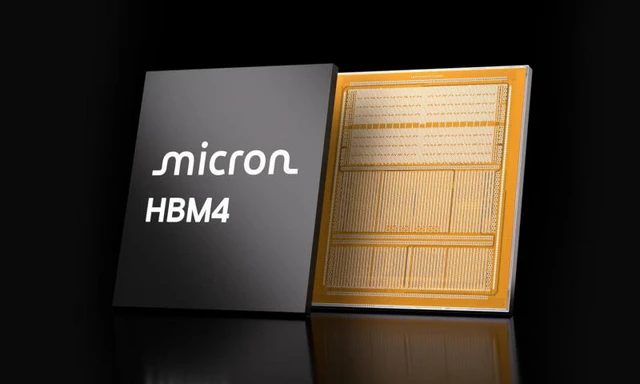
The modern technological landscape is grappling with a stark paradox: despite advancements in manufacturing processes, the demand for DRAM and specialized High Bandwidth Memory (HBM) is accelerating at a pace that the industry simply cannot match. According to data from DigiTimes, the three dominant market players—Samsung, SK hynix, and Micron—have effectively sold out their production capacity through 2027. This means that additional orders from third-party companies are no longer being accepted, as there are virtually no available slots left in the production schedules.
The primary catalyst for this crisis has been the meteoric rise of generative AI. Modern Large Language Models (LLMs) require massive volumes of memory with extreme bandwidth, rendering HBM a mission-critical component for accelerators and servers. Consequently, July and August became pivotal months for major industry players; those who failed to secure their quotas during this window risk being left without essential components for several years. The strategic discretion maintained by market participants has only exacerbated the situation, as companies deliberately kept their deals under wraps to avoid triggering even more aggressive competition for these limited resources.
Traditional procurement models are giving way to rigid strategic planning. Memory manufacturers have shifted toward long-term contracts spanning three to five years, implementing a system of advance payments. Clients are now essentially "pre-purchasing" portions of production lines to guarantee future supply. This shift transforms the memory market from an open trading arena into a closed club of privileged partners.
The outlook for 2027 is sobering: it is expected that the industry will be able to satisfy only 60–70% of total demand. This implies that a significant portion of orders will be pushed back to 2028, creating a "snowball effect" of chronic shortages.
In this hierarchy of resource allocation, the consumer sector finds itself at the bottom. Priority is given to hyperscalers, cloud providers, and AI research labs—the primary drivers of profitability. As a result, the share of DRAM allocated to consumer PCs and laptops continues to shrink. While 2025 was already tense, by 2027, the consumer segment may receive as little as 30% of total memory output, with the remaining 70% absorbed by server hardware and HBM modules.
Notably, this critical situation is exclusive to volatile memory. The NAND flash market is exhibiting healthier signs; supply is gradually balancing out, and supply chains in this segment are expected to stabilize by 2027. However, no such relief is in sight for DRAM, and the industry is bracing for the most severe component availability crisis in its modern history.
 Breaking the Lithography Barrier in China