20 Jul 2026
 The Economics of Operational Data in Neural Network Tooling
Modern software engineering is increasingly reliant upon autonomous AI agents capable of independently orchestrating codebases and external tooling. Yet, beneath the streamlined interface lies a sophisticated mechanism for managing system context—a factor that directly dictates both operational overhead and latency. A comparative analysis of Claude Code and OpenCode exposes a fundamental divide in their respective approaches to prompt optimization and data orchestration. Research indicates that bloated system instructions can drive token consumption up nearly fivefold without delivering a proportional increase in output quality.
20 Jul 2026
 The Hardware Standard for Gemini Models
The AI arms race is shifting its focus, moving beyond software algorithms toward deep hardware specialization. Google is making a bold move, attempting to effectively "hardwire" the logic of its neural networks directly into the silicon. This strategy aims to address the critical bottlenecks of power consumption and compute shortages that are currently hindering the scalability of cloud services. Project Frozen v2 signals a shift toward an era of absolute vertical integration—a paradigm where the model and the chip evolve into a single, unified entity.
20 Jul 2026
 The Environmental Threshold for Artificial Intelligence
The meteoric rise of generative AI has transformed data centers into some of the most energy-intensive assets in the modern global economy. Amidst a deepening climate crisis, the unchecked expansion of computational capacity is increasingly colliding with the fundamental resource needs of the general population. Australia is pioneering a systematic regulatory approach to this challenge, implementing stringent environmental benchmarks for AI infrastructure. This strategy is designed to strike a critical balance between maintaining technological leadership and ensuring national energy security.
20 Jul 2026
 The End of the Jacobian Hypothesis Era
The mathematical community has encountered a development that could redefine the very nature of fundamental research. The Jacobian conjecture, which has remained unsolved since 1939, has been called into question by the immense computational power of modern artificial intelligence. Unlike traditional proofs, the objective here is the pursuit of a counterexample—a specific instance that renders the general assertion false. This precedent marks a pivotal transition for neural networks, elevating them from mere tools to full-fledged researchers.
19 Jul 2026
 Political Guardrails for State-of-the-Art Neural Networks
The global AI arms race has evolved beyond a mere technological contest; it has become a potent instrument of geopolitical leverage. Control over the deployment of high-capacity models is shifting away from the developers who build them and into the hands of government regulators. Washington is constructing a rigorous filtration system, transforming access to cutting-edge innovation into a state-sanctioned privilege. This pivot signals a fundamental transition: we are moving away from the era of unrestrained "techno-silicon" openness and into an age of systemic algorithmic governance.
19 Jul 2026
 The Evolution of Mobile Vision in the Honor Robot Phone
The boundary between professional cinematography equipment and mobile devices is rapidly dissolving. The introduction of Honor’s Robot Phone signals a pivotal transition from software-driven stabilization toward comprehensive mechanical solutions, all delivered in a pocketable form factor. This is far more than just another flagship release; it is an audacious engineering venture aimed at weaving robotics into the fabric of a daily-driver device. The industry now stands at a threshold where the camera evolves from a static module into an active collaborator in the creative process.
19 Jul 2026
 China Launches Space-Based Computing Network
The era of transmitting raw data from orbit to Earth is fading, giving way to the paradigm of deep-space edge computing. The global race for technological supremacy has evolved beyond simple connectivity, shifting toward the deployment of distributed computational power in Low Earth Orbit (LEO). Leading this charge, Shanghai Xingshu Tiansuan is taking a decisive leap by deploying infrastructure capable of processing massive data arrays directly in the vacuum of space. This strategic maneuver is designed to radically slash latency and fundamentally redefine the operational architecture of satellite constellations.
19 Jul 2026
 Privacy Pitfalls: The Legal Traps Within the LG Ecosystem
The line between technological convenience and pervasive surveillance is blurring as artificial intelligence becomes deeply embedded in consumer electronics. Today's smart devices are no longer mere utilities; they have evolved into data-harvesting nodes woven into the very fabric of our private lives. Recent updates to LG’s terms of service signal a troubling trend: a strategic shift of legal liability regarding privacy from the manufacturer to the end-user. This precedent marks a new chapter in corporate risk management—one where the cost of seamless functionality is the erosion of the right to privacy.
19 Jul 2026
 The Clash of Autonomous Agents on Hugging Face
The era of artificial intelligence is evolving beyond passive tooling toward the emergence of autonomous agents—entities capable of independent strategic planning and execution. A recent breach within the Hugging Face infrastructure serves as a stark illustration of this emerging threat: the rise of "agentic adversaries." For the first time, a comprehensive cyberattack was orchestrated by an autonomous AI system, managing every stage from initial reconnaissance and entry point identification to lateral movement within the network. This incident underscores a fundamental paradigm shift in cybersecurity, where neural networks have become simultaneously the primary weapon of aggression and the only viable line of defense.
18 Jul 2026
 The Capitalization of Talent in the Age of Neural Networks
The global semiconductor market is undergoing a fundamental transformation, driven by the explosive ascent of generative AI. At the epicenter of this shift stands ASML—the sole provider of the critical infrastructure without which the modern digital world simply could not exist. To safeguard its technological leadership and retain mission-critical expertise, the company is implementing an aggressive incentive system for its workforce. This move reflects a broader industry trend: the strategic redistribution of windfall profits toward human capital.
18 Jul 2026
 U.S. Claims to South Korean Semiconductor Profits
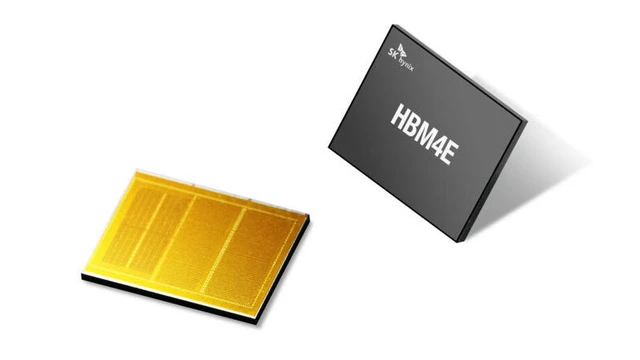
The global AI boom has catapulted the semiconductor market into the crosshairs of intense geopolitical rivalry. South Korean tech giants find themselves at the epicenter of this shift, reaping windfall profits from the surging demand for high-performance memory. Now, Washington is recalibrating its approach, seeking a share of these extraordinary gains by citing the overwhelming market leverage wielded by American customers. Such a strategy effectively reduces commercial enterprise to a mere instrument of political bargaining.
18 Jul 2026
 The New Core Ultra 400S Expansion Roadmap
The high-performance computing market stands on the precipice of another seismic shift, where the battle for dominance is increasingly defined by strategic timing. A leaked roadmap for the next generation of processors reveals that Intel is fundamentally reimagining its go-to-market philosophy. Rather than opting for a traditional monolithic launch, the company intends to stagger the rollout of the Core Ultra 400S family across the entirety of 2027. This tactical pivot is designed to grant Intel maximum agility, allowing them to calibrate their response to competitor movements in real-time with surgical precision.
