14 Jul 2026
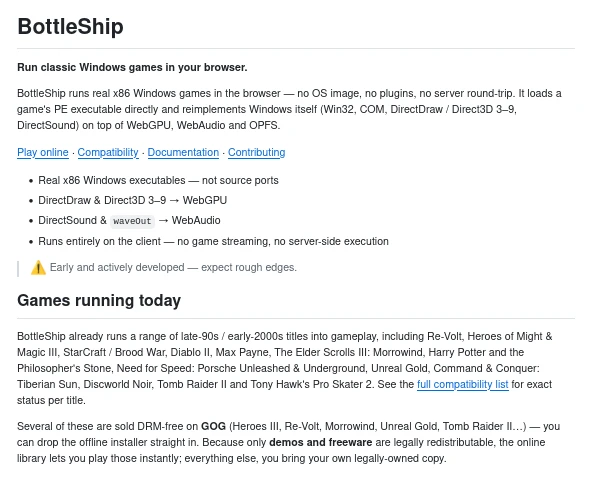 Windows Classics Reborn: Bringing the Legacy to the Browser
Preserving the digital heritage of video games from the late nineties and early aughts has long been a persistent technical hurdle. This era exists as a sort of "blind spot": titles from this period are too sophisticated for basic DOS emulators, yet far too archaic to operate stably on contemporary versions of Windows. The BottleShip project provides an elegant resolution to this dilemma by porting a comprehensive Win32 environment directly into the web browser. Consequently, these legendary titles are now accessible without requiring third-party software or relying on server-side resources.
13 Jul 2026
 TSMC’s Financial Triumph Riding the AI Wave
The global pivot toward an AI-driven economy has elevated semiconductors to the status of the world's most critical strategic asset. At the epicenter of this shift is Taiwan’s TSMC, which has established a virtual monopoly over the fabrication of cutting-edge silicon for the globe's premier technology firms. Recent financial reports reveal more than mere growth; they signal an aggressive scaling of operations driven by an insatiable and unprecedented demand for computational power. This trajectory reinforces the premise that access to advanced fabrication nodes has become the primary strategic lever in the high-stakes competition defining today's tech landscape.
13 Jul 2026
 The Risks of Orbital Contamination in the Geostationary Belt
Earth’s orbital environment is steadily evolving into a high-risk zone. Of particular concern is the geostationary orbit (GEO), where the world's most expensive and strategically critical communication and surveillance satellites are concentrated. Recent research has revealed the presence of small, previously undetected fragments that effectively create a "minefield" at an altitude of 36,000 kilometers. In the absence of atmospheric drag to clear these orbits, this debris poses a permanent threat to our global digital infrastructure.
13 Jul 2026
 The Specters of Corporate Legacy in Somers
The abandoned spaces of modern industry are evolving into sites of an uncanny pilgrimage, where the boundary between urban exploration and criminal trespass is nearly erased. In New York, the former IBM campus has transitioned from a hub of strategic planning into a cinematic backdrop for dystopian content. Today, the site stands as a stark manifestation of the conflict between private property rights and the impulse to preserve the cultural imprint of High Modernism. The saga of Somers exposes the phenomenon of "digital vandalism," where the pursuit of viral engagement accelerates the physical degradation of monuments dedicated to technology and design.
13 Jul 2026
 The Evolution of LLM Quality Metrics for Android
The integration of Large Language Models (LLMs) into the software development lifecycle has evolved from a series of experiments into an industry standard. However, generic benchmarks often fall short when faced with the idiosyncrasies of mobile platforms, where app lifecycle nuances and resource constraints are critical. Google is now redefining its approach to neural network evaluation with the introduction of the updated Android Bench. This initiative aims to establish a transparent and reproducible framework for measuring AI efficacy within real-world Android development scenarios.
13 Jul 2026
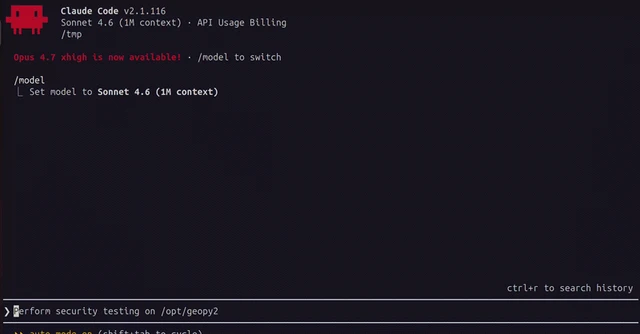 The Trust Trap in Automated Code Analysis
The pursuit of fully automated security auditing has led to the development of tools capable of autonomous code analysis and remediation. However, the line between beneficial autonomy and systemic vulnerability has proven to be perilously thin. Research into the "Friendly Fire" attack illustrates a chilling paradox: defensive instruments are being weaponized as vectors for infrastructure compromise. The primary threat has shifted; it is no longer merely the presence of malicious code, but the very process of its automated analysis that now poses the greatest risk.
13 Jul 2026
 The Evolution of Engineering in the Age of Autonomous Systems
The global software engineering landscape is undergoing a paradigm shift that is redefining the very nature of programming. Conventional coding is steadily yielding to the orchestration of sophisticated, intelligent systems. As envisioned by Jensen Huang, we are transitioning from the manual synthesis of instructions toward the high-level orchestration of AI agents. This evolution transforms the engineer from a mere implementer into a systemic strategist—one who defines the parameters and objectives governing autonomous processes.
12 Jul 2026
 Nvidia and Sega: A Symbiosis Spanning Decades
Today, the world views Nvidia primarily as the undisputed titan of artificial intelligence and server computing. Yet, beneath the veneer of its trillion-dollar market cap lies a profound connection to the gaming industry—the very bedrock upon which the company's empire was built. Sega's upcoming anniversary celebrations in Japan are more than a mere marketing exercise; they represent a symbolic homecoming. This convergence unveils one of the most ironic chapters in tech history: a narrative where a single misstep paved the way for an empire, and a single divestment cost a partner a fortune.
12 Jul 2026
 Ownership Rights in Virtual Worlds
The shift from physical media to digital consumption is fundamentally redefining the very notion of ownership. While the majority of global platforms frame content access as a temporary license, certain jurisdictions are beginning to challenge this status quo. Recent rulings by Chinese courts have established a bold precedent, recognizing gaming accounts and virtual assets as legitimate inheritable property. This legal pivot transforms pixels and source code into tangible capital, recalibrating the power dynamic between the end-user and the corporation.
11 Jul 2026
 Unitree Humanoids in the Operating Theater
For years, cutting-edge medical technology has been the exclusive domain of premier healthcare institutions, gated by the exorbitant cost of specialized equipment. Yet, the advent of telesurgery promises to dismantle these geographical barriers, empowering world-class surgeons to operate on patients regardless of their location. Researchers at the University of California, San Diego, set out to test this premise by employing the Unitree G1—an accessible humanoid robotic platform—as their primary instrument. This experiment raises a pivotal question: are we on the verge of shifting away from cumbersome, specialized systems toward compact, versatile robotic platforms?
11 Jul 2026
 The Dexterity and Precision of 1X Neo's Manipulators
The quest to engineer a truly capable humanoid robot consistently collides with the challenge of fine motor skills. While spatial locomotion is becoming increasingly routine, precision manipulation remains the "holy grail" of modern robotics. 1X’s Neo model seeks to breach this barrier by mimicking the intricate architecture of human tendons—a pivotal step toward creating a machine capable of operating seamlessly within environments designed by humans, for humans.
11 Jul 2026
 The Sunset of Physical Media in the Sony Ecosystem
The gaming industry is undergoing a fundamental paradigm shift, pivoting from the traditional concept of ownership toward a model of ephemeral access. Sony’s decision to phase out physical media entirely by 2028 represents a point of no return for millions of collectors and advocates of digital preservation. Despite its reputation as a stringent regulator, the European Union has proven powerless against this corporate strategy. This precedent exposes a profound tension between the drive for corporate efficiency and the consumer's right to product longevity.
