Today, the world views Nvidia primarily as the undisputed titan of artificial intelligence and server computing. Yet, beneath the veneer of its trillion-dollar market cap lies a profound connection to the gaming industry—the very bedrock upon which the company's empire was built. Sega's upcoming anniversary celebrations in Japan are more than a mere marketing exercise; they represent a symbolic homecoming. This convergence unveils one of the most ironic chapters in tech history: a narrative where a single misstep paved the way for an empire, and a single divestment cost a partner a fortune.
Nvidia's current profile presents a striking paradox: a company whose name has become synonymous with gaming now derives up to 90% of its revenue from the server segment. In the era of LLM dominance and generative AI, gaming GPUs have receded into the background of financial reports, yet they remain the cornerstone of the brand's identity. This is precisely why Jensen Huang's participation in the celebrations marking Sega's 30th anniversary in Tokyo carries such profound significance.
The event, scheduled for July 15 in the neon heart of Japanese electronics—Akihabara—is designed to remind the public of the inextricable link between these two giants. Beyond the ceremonial proceedings, Nvidia will showcase its latest technological advancements, specifically the RTX Spark platform. To galvanize the community, the event will feature a giveaway of a flagship GeForce RTX 5090 FE, underscoring the company's commitment to maintaining its status quo in the premium consumer hardware segment.
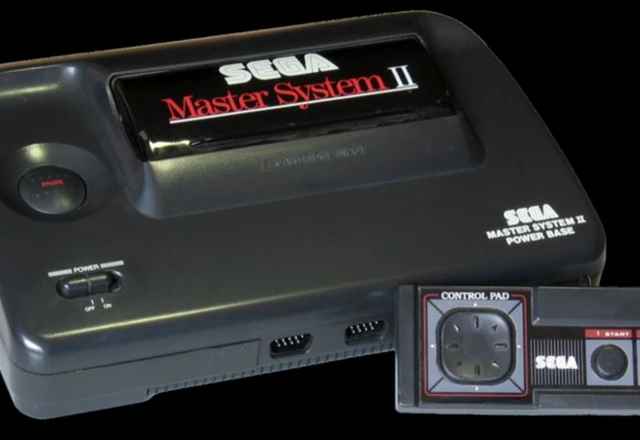
However, beneath the polished veneer of modern GPUs lies a dramatic origin story that began in the mid-nineties. In 1995, Nvidia released its first gaming chip, the NV1. At the time, the company was far from a monopolist; it was merely searching for its niche, and the development strategy for the NV1 was tightly synchronized with Sega's ambitions to capture the gaming market. During this period, Nvidia even undertook the development of a specialized graphics processor for Sega's next-generation console.
This phase served as a crucible for the fledgling company. A gamble on a specific technological concept proved erroneous, and the console chip project failed to meet its deadline. Faced with a failed delivery, Nvidia's leadership proposed an unconventional solution to Sega: rather than refunding the $5 million investment, the company asked that the sum be converted into equity in Nvidia.
This strategic maneuver proved to be a watershed moment for the industry. The resulting capital allowed Nvidia's engineers to pivot and focus on the development of the Riva 128. Released in 1997, the product was a bombshell, shipping one million units within its first four months of sales. The Riva 128 laid the foundation for the dominance we witness today, transforming Nvidia from an ambitious startup into the primary power player in the graphics market.
This chapter culminated in 1999 when Nvidia went public. Around this time, Sega decided to divest its stake in its partner. From the perspective of the management at the time, it appeared to be a standard exercise in profit-taking; in retrospect, however, the deal has become one of the most costly blunders in corporate history. As Jensen Huang himself has admitted, had Sega retained its shares, the value of that stake would today exceed $1 trillion.
Consequently, the Nvidia CEO's visit to Japan is more than a mere anniversary celebration; it is a tribute to a company that, at a critical juncture, believed in Nvidia's potential—even when their first joint venture had collapsed.
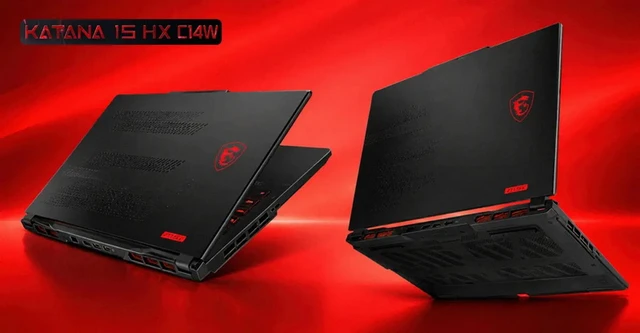 MSI Katana 15 HX and the Memory Paradox