Preserving the digital heritage of video games from the late nineties and early aughts has long been a persistent technical hurdle. This era exists as a sort of "blind spot": titles from this period are too sophisticated for basic DOS emulators, yet far too archaic to operate stably on contemporary versions of Windows. The BottleShip project provides an elegant resolution to this dilemma by porting a comprehensive Win32 environment directly into the web browser. Consequently, these legendary titles are now accessible without requiring third-party software or relying on server-side resources.
The struggle of legacy software compatibility with modern operating systems often stems from fundamental shifts in memory management, driver architectures, and APIs. While console retrogaming has long embraced high-fidelity emulation, PC games from the transitional era between DOS and Windows remained tethered to their rigid technical requirements. This gap served as the catalyst for BottleShip—an open-source project aiming to transform the web browser into a fully functional platform capable of running the resource-heavy applications of past decades.

The architectural backbone of BottleShip is based on a heavily modified fork of v86, which enables x86 architecture emulation within a Web Worker. This approach offloads computationally intensive tasks from the browser's main thread, preventing interface freezes and ensuring fluid performance. However, the true innovation lies in the implementation of a high-level compatibility layer: the project deploys support for Win32, COM, and DirectX by leveraging the latest web standards.
The graphics pipeline leverages WebGPU—a modern API that grants the browser direct access to GPU capabilities, which is pivotal for the accurate rendering of legacy DirectX applications. The audio subsystem is handled via WebAudio, while file system operations utilize OPFS (Origin Private File System), allowing game data to be stored locally within the browser with high-speed access. This entire stack operates exclusively client-side, turning BottleShip into an autonomous tool that requires no cloud computing or remote servers.
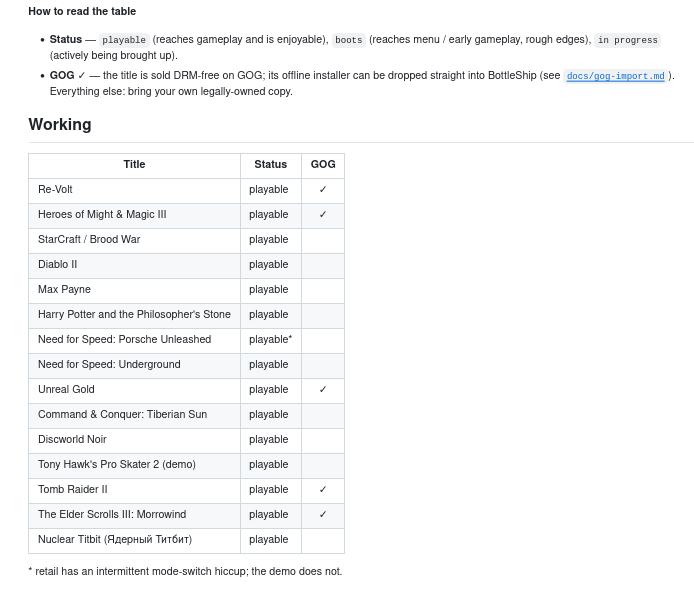
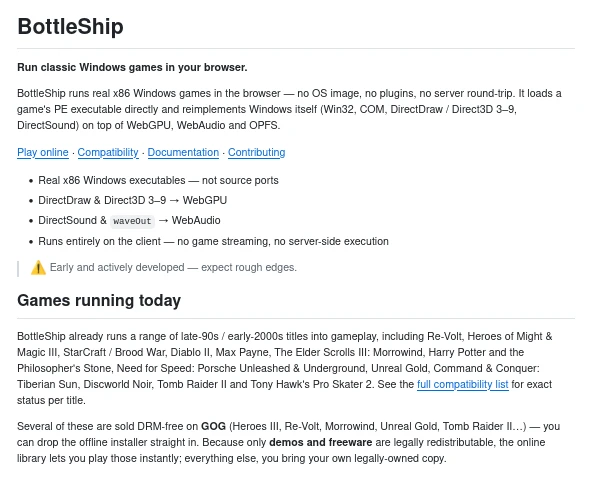
At its current stage of development, the project is already delivering impressive results, running titles previously considered "unattainable" for a browser environment. The compatibility list includes seminal projects such as The Elder Scrolls III: Morrowind and Max Payne, as well as strategy and RPG classics like StarCraft, Diablo II, and Heroes of Might & Magic III. Additionally, high-octane racers from the Need for Speed series (Porsche Unleashed and Underground), action titles like Tomb Raider II, and even niche projects such as Discworld Noir are running successfully.
BottleShip is distributed under the Apache License 2.0, paving the way for community-driven evolution. Although the project's public library is currently limited to demos and free content, the system's architecture allows users to independently integrate any licensed copies of games from their own archives. This transforms the browser from a mere content consumption tool into a full-fledged virtual machine capable of breathing new life into forgotten masterpieces of digital art.
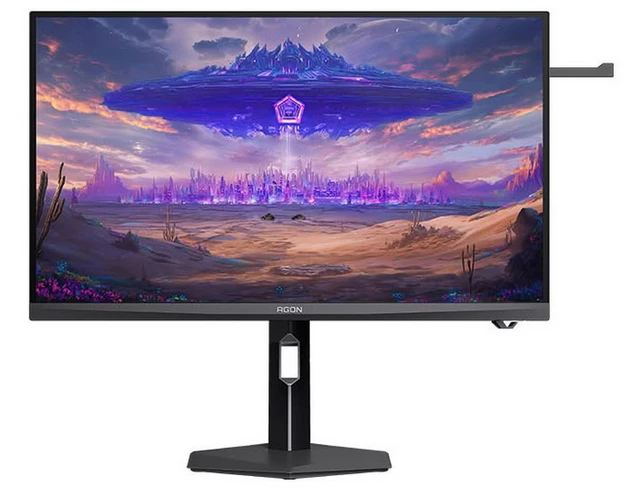 AOC Agon AGP277KXM Hybrid Display