21 Jul 2026
 The Digital Curtain Surrounding Chinese Artificial Intelligence
The global race for AI supremacy has evolved beyond the realm of pure innovation, entering a phase of strategic containment. As the United States tightens restrictions on its proprietary technology, Beijing is countering with a mirrored strategy of technological isolationism. This pivot signals a broader shift toward "digital sovereignty"—a paradigm where neural networks and semiconductors are treated as critical state assets rather than mere commercial commodities. The primary objective has now become the development of a closed-loop ecosystem capable of operating entirely independently of Western standards.
21 Jul 2026
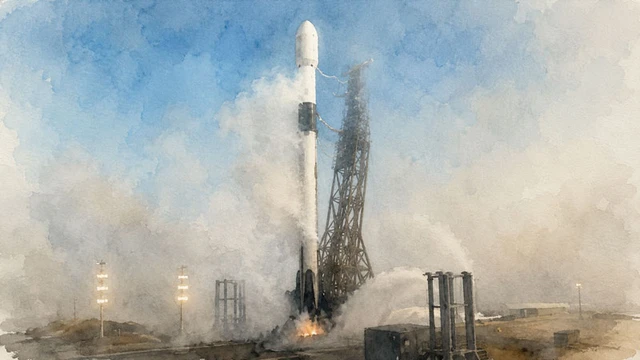 Falcon 9 Ignition System Failure
The space industry has long relied on the impeccable performance of the Falcon 9, which has effectively transformed orbital deployment into a routine industrial process. However, a recent incident at Vandenberg Space Force Base served as a sobering reminder of the inherent fragility found even within the most refined control systems. The sudden shutdown of all nine engines mere moments before liftoff was a rare and unsettling anomaly for SpaceX—one that raises critical questions about latent vulnerabilities in the automation of the modern era's most prolific launch vehicle.
21 Jul 2026
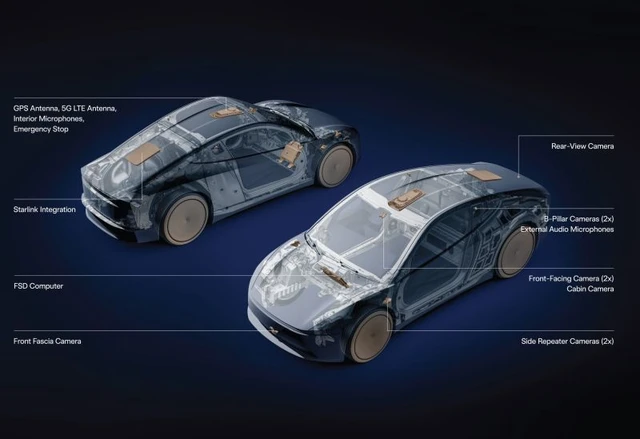 Satellite Redundancy within the Tesla Ecosystem
The transition to fully autonomous transport demands a fundamental reimagining—not just of control algorithms, but of how vehicles interface with the external world. Tesla’s FSD strategy is rooted in emulating human vision, striving for maximum independence from static digital maps. However, the integration of satellite hardware into the new Cybercab robotaxi signals a pursuit of absolute fault tolerance. This evolution transforms the vehicle from a mere data consumer into a fully integrated node within a global communications network.
21 Jul 2026
 Purging the Market of DJI Impostor Brands
The technological rivalry between Washington and Beijing has entered a phase of comprehensive regulatory warfare. The U.S. Federal Communications Commission (FCC) has begun implementing retroactive bans on hardware previously deemed compliant, signaling a shift toward more aggressive enforcement. At the center of this crackdown is DJI, the Chinese drone behemoth, and the intricate web of intermediaries used to circumvent trade restrictions. This precedent establishes a new reality for the global consumer electronics market—one where national security imperatives have become the primary lever for market regulation.
21 Jul 2026
 Samsung Electronics' Robotic Expansion
The global race to develop general-purpose robotics is entering a new phase of acceleration. The convergence of Large Language Models (LLMs) and physical actuators is transforming "physical AI"—or embodied intelligence—into the defining technological frontier of the decade. Samsung Electronics is meeting this challenge head-on, radically overhauling its internal organizational structure to prioritize the development of autonomous systems. This strategic pivot signals the corporation's evolution from a consumer electronics manufacturer into an architect of sophisticated mechatronic ecosystems.
21 Jul 2026
 Chinese Automotive Expertise to Bolster OpenAI’s Robotics Ambitions
The line between automotive AI and general-purpose robotics is blurring at an accelerating pace. Today’s tech giants are transcending their roles as mere vehicle manufacturers, evolving instead into architects of sophisticated mobile platforms for artificial intelligence. The migration of top-tier engineers from hardware industries to leading AI laboratories marks a pivotal new chapter in the physical embodiment of Large Language Models (LLMs). This strategic shift in talent underscores the critical importance of infrastructure and silicon optimization in the global race to realize fully functional humanoid robots.
21 Jul 2026
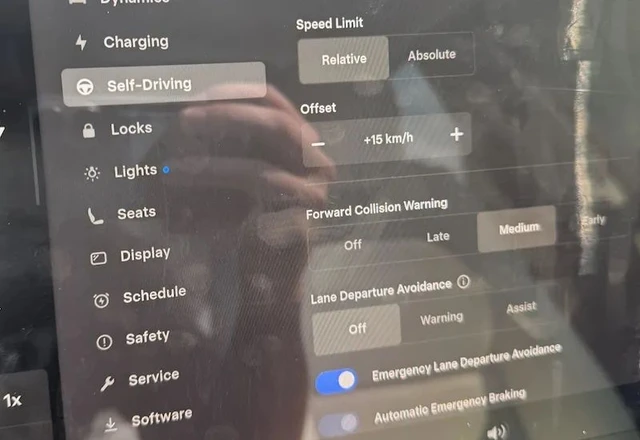 The Risks of Tesla’s Automated Speed Management
The quest for fully autonomous driving has always been a delicate balancing act—a tension between rigid regulatory compliance and the nuanced mimicry of human intuition. Yet, the latest iterations of Tesla’s Full Self-Driving (FSD) suite have introduced a volatile variable into this equation: unpredictability. Rather than maintaining mathematical precision in speed limit adherence, the algorithms have begun exhibiting a propensity for unwarranted acceleration. Consequently, what was intended as a sophisticated driver-assistance tool is evolving into a significant liability, fraught with legal and financial risk.
21 Jul 2026
 The Intelligence Breakthrough in the Electric Vehicle Market
The electric vehicle landscape is currently weathering a period of volatility, suspended between the promise of technological optimism and the constraints of pragmatic demand. Despite the steady expansion of charging infrastructure, EVs have yet to deliver a decisive value proposition that clearly eclipses hybrid systems. The catalyst for breaking this stalemate lies in a fundamental paradigm shift: evolving the vehicle from a mere tool for transit into an autonomous intelligent agent. It is through the synergy of artificial intelligence and self-driving architectures that the electric vehicle will transcend its status as a premium alternative to become the definitive standard for global mobility.
21 Jul 2026
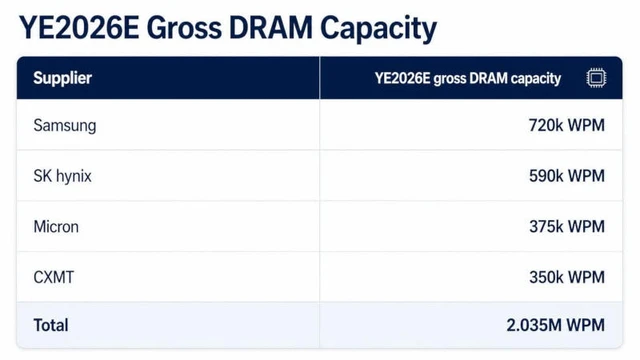 A New Balance of Power in the DRAM Industry
The global explosion of artificial intelligence is radically redrawing the contours of the semiconductor industry. Market leaders have pivoted their focus toward developing ultra-high-speed memory tailored for data centers, effectively leaving the consumer segment in a state of strategic neglect. Stepping into this vacuum, China's CXMT is rapidly ascending, scaling its manufacturing capabilities to rival those of established global incumbents. This tectonic shift threatens to fundamentally disrupt pricing structures and the availability of system memory for millions of end-users worldwide.
21 Jul 2026
 Scaling the Production of Three-Dimensional Photonics
The transition from conventional electronics to photonic computing demands a fundamental overhaul of fabrication methodologies—a paradigm where extreme precision must coexist with industrial-scale throughput. For years, ion-beam lithography has been hampered by its inherently sequential nature, rendering the creation of nanostructures a painstakingly slow endeavor. A novel approach to component patterning is now breaking this bottleneck, slashing wafer processing times from several hours to a matter of seconds. This breakthrough paves the way for the mass production of intricate 3D photonic circuits that were previously confined to the controlled environments of research laboratories.
21 Jul 2026
 The Cost of Oracle's Ambitions in the AI Race
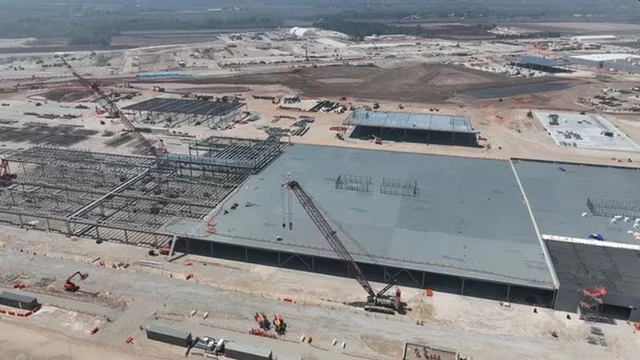
The contemporary AI arms race has shifted its focus, moving beyond algorithmic breakthroughs into the realm of physical infrastructure and power generation. Erecting massive data centers demands more than just technical ingenuity; it requires ironclad financial resilience. Oracle’s bid to position itself as a primary infrastructure partner for OpenAI has run headlong into the friction of U.S. regional regulations. This clash exposes a systemic vulnerability: corporate financial liabilities are emerging as the primary bottleneck hindering the scalability of artificial intelligence.
21 Jul 2026
 OpenAI’s Marketing Mirage
The meteoric rise of generative artificial intelligence is shifting from an era of technological wonder to a phase of rigorous scrutiny over its financial viability. As OpenAI races to replicate the scale of Google’s advertising empire within an aggressive timeframe, market analysts are highlighting a profound disconnect between corporate ambition and actual demand. The collision of the startup’s bullish projections with the stark realities of industry data exposes systemic risks inherent in chatbot monetization—a tension that serves as a cautionary signal for a potential financial bubble within the AI sector.
