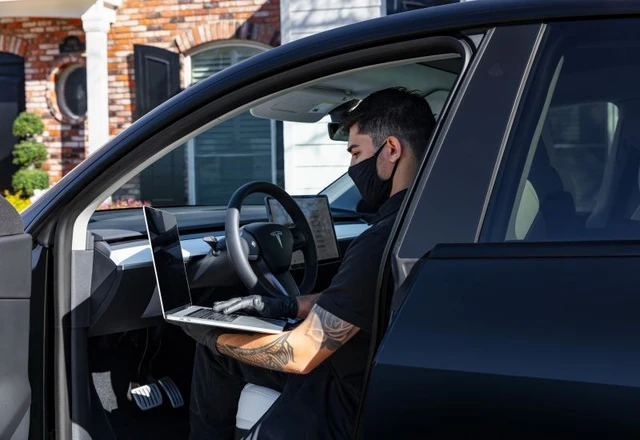
The global industrial landscape is shifting toward a new paradigm—one where artificial intelligence transcends its role as a mere data-processing utility to achieve physical embodiment. The strategic alliance between LG and Nvidia serves as the catalyst for this transformation, fusing cutting-edge computational power with profound hardware engineering expertise. This partnership aims to pioneer a new generation of autonomous agents capable of sophisticated cognitive interaction with the material world. By 2027, this synergy is poised to deliver fully realized humanoid systems that will fundamentally redefine the architecture of modern manufacturing.
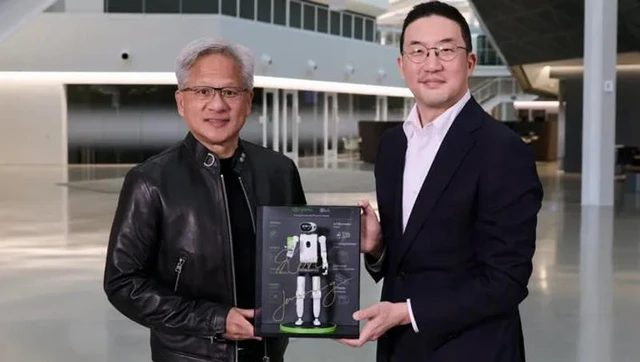
The current evolution of robotics is marked by a paradigm shift from rigid, hard-coded algorithms toward flexible deep learning models. A strategic partnership between LG and Nvidia, formalized via a Memorandum of Understanding, aims to build an ecosystem where "digital intelligence" is seamlessly integrated into mechanical forms. At the heart of this strategy lies the development of next-generation bipedal robots powered by Nvidia Isaac GR00T—a specialized foundational model for humanoid systems.
The technological stack powering LG's future robot is a sophisticated, multi-layered architecture. Onboard computing and cognitive reasoning are handled by the Nvidia Jetson Thor module, providing the raw performance necessary for real-time multimodal data processing. System safety and fault tolerance are managed by Nvidia Halos for Robotics—a critical requirement for safe human-machine interaction within industrial environments.
Central to this effort is the "One LG" concept, which leverages vertical integration across the corporation's diverse capabilities. In this framework, LG Electronics focuses on actuators and drive systems to enable physical mobility; LG Innotek develops the sensory array—the robot's "perceptual organs"; and LG Energy Solution ensures power autonomy through high-efficiency battery systems. The first fully realized prototype of this synthesis is expected to hit the market in the first quarter of 2027.
However, the partners' ambitions extend beyond creating standalone humanoid entities; they are envisioning a wholesale reimagining of the industrial enterprise. This project involves establishing blueprint "AI factories" leveraging Nvidia DSX infrastructure and cutting-edge Vera Rubin hardware. A key site will be a facility in Cheonan, South Korea, with an 80 MW power capacity, serving as a proving ground for fully autonomous production.
Real-world deployment has already begun: LG CLOiD wheeled robots are currently undergoing trials at a washing machine plant in Tennessee. These systems serve as a critical stepping stone, allowing the team to refine navigation and interaction algorithms before transitioning to more complex bipedal platforms.
Simultaneously, the Nvidia Drive Hyperion stack is being integrated into LG's automotive division. The goal is to create a high-performance computing platform for next-generation vehicles, effectively transforming the car into a mobile robot equipped with advanced AI capable of autonomous decision-making in dynamic urban environments. Consequently, the LG-Nvidia partnership is forging a unified ecosystem of autonomy, spanning everything from stationary factories and mobile transport to humanoid assistants.
 Anthropic’s Strategic Push for Hardware Independence