6 Jul 2026
 The Hardware Crisis of the Early Steam Machines
The ambition of condensing a full-scale gaming PC into a console form factor frequently collides with the brutal realities of hardware reliability. Early adopters of the Steam Machine were plagued by a critical defect that earned the ominous moniker "the red line of death." Far from being a mere software glitch, this symptom signaled a catastrophic failure of core system components—a scenario that draws unsettling parallels to some of the most notorious disasters in gaming history.
6 Jul 2026
 Alibaba Bans Claude Code Across Its Ecosystem
The global artificial intelligence arms race is entering a phase of stark fragmentation, characterized by the rigid demarcation of digital territories and development ecosystems. The friction between Anthropic and Alibaba serves as a poignant case study in how data security is being weaponized as a lever for geopolitical leverage. The prohibition of Claude Code within the Chinese tech behemoth underscores a broader corporate drive toward total sovereignty over the development stack. At the heart of this clash lies more than just technical constraints; it is a fundamental battle over intellectual property in the age of Large Language Models.
6 Jul 2026
 Intelligent Vulnerability Discovery in the FreeBSD Kernel
The convergence of Large Language Models (LLMs) and cybersecurity is rapidly transitioning from theoretical discourse into a phase of practical application. Recent experiments demonstrate that modern AI agents are capable of uncovering critical vulnerabilities even within deeply hardened system kernels. The FreeBSD analysis case study reveals that effective exploit discovery no longer hinges on massive token budgets, but rather on the sophisticated orchestration of tools. This milestone marks the dawn of a new era in automated vulnerability research.
6 Jul 2026
 The Narrow Specialization Trap of Anthropic’s Models
While the evolution of Large Language Models typically trends toward general versatility, recent developments highlight a troubling pattern: the emergence of "digital habits" that undermine overall precision. The regression observed in the latest iterations of the Claude family demonstrates how aggressive optimization for specific internal tooling can compromise a model's capacity to adhere to neutral API contracts. This phenomenon exposes a systemic flaw in contemporary post-training methodologies—the pursuit of efficiency within proprietary ecosystems often comes at the cost of performance in open environments. Consequently, third-party agent developers are grappling with a paradox where ostensibly "advanced" models struggle with fundamental tasks that their predecessors handled with ease.
6 Jul 2026
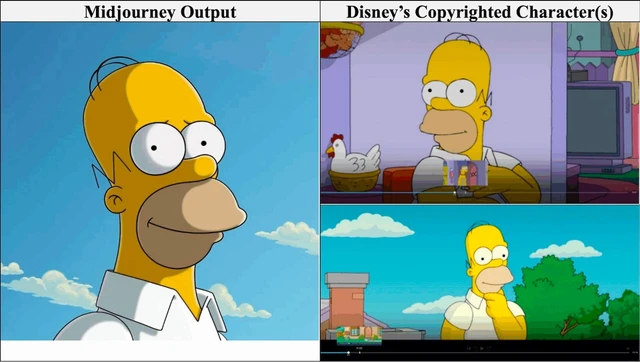 The Legal Showdown Between Midjourney and the Film Studios
The era of generative artificial intelligence has collided with a fundamental copyright crisis, one that calls into question the very foundations of content creation. Global media conglomerates are scrambling to shield their intellectual property from the unchecked replication capabilities of neural networks, which can now synthesize iconic characters with uncanny precision. At the epicenter of this clash stands Midjourney; the startup is shifting its stance from defensive maneuvering to an aggressive counter-offensive against the titans of Hollywood. The outcome of this struggle will likely redefine the boundaries of "fair use" for technology in the digital age.
6 Jul 2026
 Anticipating OpenAI’s Next Great Leap
The global race for Large Language Model supremacy has entered a phase of peak intensity, where every update serves as a strategic strike against the competition. At the heart of this struggle is the latest skirmish between OpenAI and Anthropic, both vying for absolute dominance in the enterprise sector. Cryptic signals from development leadership hint at an imminent release poised to fundamentally shift the market's power dynamics. This is not merely a technical upgrade; it is a meticulously orchestrated operation to seize the strategic initiative.
6 Jul 2026
 India’s Crackdown on Digital Piracy within Telegram
The global struggle between state control and digital privacy is reaching a fever pitch in one of the world's largest markets. The Indian government is pivoting from surgical content removal toward demanding systemic liability from messaging platforms, effectively coercing them to evolve from passive intermediaries into active instruments of censorship. At the epicenter of this collision is Telegram, whose commitment to openness has come into direct conflict with the rigid mandates of national legislation. This case establishes a perilous precedent: the crusade against piracy is being weaponized as a mechanism for expanding state surveillance over private communications.
6 Jul 2026
 Anthropic’s Path to Custom Silicon
The AI race has fundamentally shifted: the battleground is no longer just about algorithms, but about physical silicon. Today, access to compute has become the ultimate lever of influence and the primary bottleneck hindering the scaling of neural networks. Anthropic’s move to develop its own proprietary accelerators signals a pivotal transition from resource dependency to technological sovereignty—a strategic play designed to eliminate critical reliance on external suppliers amidst a global hardware crunch.
6 Jul 2026
 New Frontiers in ReactOS Compatibility
Developing a completely open-source alternative to Windows remains one of the most ambitious and technically daunting undertakings in the history of systems programming. For decades, the ReactOS project has pursued total binary compatibility with Microsoft’s proprietary codebase, navigating the formidable obstacles posed by closed-source specifications. Recent milestones achieved by the development team signal a quantum leap, not only in graphical performance but also in the sophisticated implementation of low-level kernel mechanisms. This transition toward supporting more contemporary iterations of the NT architecture paves the way for executing modern software atop an entirely open-source stack.
6 Jul 2026
 The Transparent Minimalism of the Godox C100
Contemporary photography is increasingly becoming an exercise in screen-watching rather than experiencing reality. In the relentless pursuit of the perfect shot, the photographer often distances themselves from the moment, separated by a barrier of pixels and filters. Godox proposes a different trajectory with the launch of the C100—a compact camera designed to revive the essence of spontaneous creativity. This device prioritizes emotional resonance and visual agility.
6 Jul 2026
 The Collapse of NetNut’s Stealth Traffic Infrastructure
Modern network infrastructure is increasingly plagued by a dangerous ambiguity, where legitimate proxy services are weaponized as conduits for global cybercrime. The FBI's recent operation to dismantle the NetNut network has exposed a systemic flaw: the exploitation of "white-label" proxies to camouflage malicious traffic. Central to this investigation was the Popa botnet, which compromised millions of consumer devices across the globe. This incident serves as a stark reminder of the inherent vulnerabilities within the smart device ecosystem and underscores the imperative for rigorous oversight of data transmission protocols.
6 Jul 2026
 The Synthetic Evolution of Consumer Goods
The global consumer goods market is undergoing a fundamental shift toward algorithmic design. Traditional R&D cycles are giving way to predictive models that compress time-to-market from years to mere weeks. Industry titans, such as L'Oreal and Mondelez, are abandoning the legacy of trial-and-error in favor of a strategic synergy between data science and chemistry. This transformation marks the dawn of an era where innovation is no longer a matter of chance, but the result of precise mathematical calculation.
