The modern software development landscape is undergoing a fundamental paradigm shift. Data from Vercel suggests that AI agents have evolved beyond mere assistants, emerging as primary actors within the deployment pipeline. This transition signals the end of an era defined by total reliance on a single AI laboratory. Today, the industry is pivoting toward a modular stack, where agility and cost-efficiency dictate the selection of a specific "intelligence."
The scale of the industry's transformation is most evident in the numbers: Vercel's platform now processes approximately 6 million deploys daily, exactly half of which are initiated not by humans, but by coding agents. Simultaneously, the AI Gateway—a router managing requests across hundreds of different models—handles over a trillion tokens per day. These metrics confirm that development automation has moved beyond the experimental stage and entered the phase of an industrial standard.
The fundamental shift is occurring in the very approach to system architecture. A year ago, companies sought a single strategic partner—whether OpenAI or Anthropic—and built their entire ecosystem around a single model. Today, that strategy is recognized as a mistake. The modern tech stack is becoming deeply modular. The model, the agentic orchestration, the data platform, the sandbox, and the gateway are now viewed as interchangeable components. As a product moves from prototype to full-scale production, the primary driver becomes a pragmatic calculus of cost versus quality.
This market dynamic is clearly reflected in the AI Gateway's traffic distribution. In May, DeepSeek's share skyrocketed from a negligible 1% to 17% of total token volume, effectively overtaking OpenAI in request count. However, DeepSeek's financial share remained minimal, indicating that low-cost models are being leveraged for mass, routine tasks. Meanwhile, Anthropic maintains a dominant position in monetary terms, capturing up to 65% of all payments and accounting for 70–80% of expenditures in complex scenarios, such as back-office agents. Consequently, a two-tier system is emerging: affordable models handle the "grunt work," while frontier systems are reserved for mission-critical tasks.
Currently, two primary domains stand out where agents demonstrate maximum efficiency. The first is code generation, which drives the bulk of global token volume. The second is internal corporate management tools. Rather than waiting until the end of a quarter for a new dashboard to be developed to obtain simple analytical data, managers are now using agents capable of instantly extracting the necessary information via API.
However, this progress is in direct conflict with the business models of many SaaS giants. For decades, traditional cloud services built their "kingdoms" by locking customer data within closed ecosystems. For agents to function effectively, they require open APIs, making data silos the primary obstacle to automation.
Parallel to this, security has become a critical concern. In the aerospace or defense industries, where decades of legacy code are written in specialized C++ dialects, a single misconfiguration in development tools could be catastrophic: confidential code could be sent to the cloud for model fine-tuning, effectively leaking intellectual property to competitors.
To address this, Vercel is introducing the Eve framework, which allows agent skills and instructions to be defined in natural language, alongside the Vercel Sandbox. This "digital cage" provides the agent with the necessary operational freedom while strictly limiting data access and controlling exactly what information can leave the secure perimeter.
Ultimately, the industry faces a choice: will intelligence become a monolithic product owned by a single provider, or will it evolve into a standardized building block, mirroring the evolution of classical software engineering? The bet is being placed on the latter—a world of open protocols and modularity, where the platform serves as the infrastructure bedrock, much like the role AWS played in the era of cloud computing.
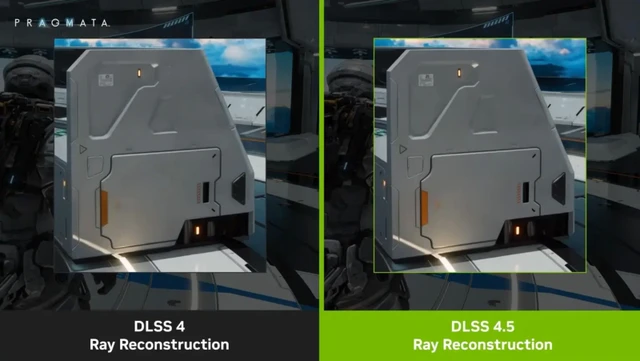 The Evolution of Rendering in DLSS 4.5