For decades, the modern conception of the "white-collar" professional was viewed as the inevitable culmination of the labor market's evolution. Yet, beneath the veneer of professional intellectual labor may lie a calculated, large-scale marketing strategy—one that has shaped our societal habits for generations. With the advent of generative AI, this artificial superstructure is beginning to crumble at an accelerating pace. Humanity now faces the urgent task of redefining the value of human intelligence in a world where routine cognitive labor is no longer a privileged domain.
The modern notion of the "knowledge worker" is less a milestone of social progress than a masterpiece of commercial calculation. At the heart of this phenomenon lies Microsoft’s decades-long strategy to put "a computer on every desk and in every home." This expansion was never about unlocking human potential; rather, it established a closed ecosystem where proficiency in word processors, spreadsheets, and email clients became the baseline benchmark for professional viability. In effect, the corporation engineered a standardized blueprint for office activity, transforming the ability to navigate specific software into a synonym for intellectual labor.
In this context, Apple’s approach represented a fundamentally different philosophy. Rather than constructing a rigid framework of corporate control and subscriptions, Apple sought to create intuitive, aesthetically refined tools for creativity. While Microsoft was building a machine for the standardization of labor, Apple was attempting to provide the individual with a medium for self-expression.
The current ascent of artificial intelligence is exposing the fragility of this "corporate construct." Much of what we have come to define as intellectual labor is, in reality, the drudgery of data shuffling, text formatting, and information structuring. As AI assumes these functions, we are witnessing not so much a loss of jobs as a liberation from artificially imposed behavioral patterns.
It is crucial, however, to distinguish between the different ways algorithms influence the human mind. While the recommendation engines of social media create destructive feedback loops—trapping users in endless doomscrolling and narrowing their horizons—the personal AI assistant operates in the opposite direction. It is evolving into a "pocket researcher" that, instead of confining the user within a filter bubble, provides instantaneous access to a global corpus of knowledge, thereby stimulating cognitive exploration.
This transformation inevitably precipitates a crisis in traditional education. For centuries, schools and universities have functioned as assembly lines designed to produce individuals capable of providing the "correct" answer. In an era where any factual piece of information is accessible in a fraction of a second, the value of the skill "knowing the answer" is trending toward zero.
The center of gravity in education must shift: from the pursuit of the right answer to the mastery of formulating precise, profound, and original questions. The future belongs to those who preserve a spirit of inquiry, a habit of skepticism, and the ability to penetrate to the core of a matter. Intelligence will no longer be measured by the volume of one's memory, but by the quality of one's inquiry into reality.
Yet, for technological innovators, the path toward this new paradigm is fraught with systemic opposition. A culture of wholesale replication has taken hold within the AI industry; any successful feature introduced by a startup is almost instantly absorbed by giants like Google, OpenAI, or Anthropic. The evolution of web-browsing tools within AI services vividly demonstrates that functional technological advantages are ephemeral. In a world where the major players can clone any viable feature, the only durable asset becomes the speed of adaptation and the ability to create meaning—something that cannot be simply rewritten in code.
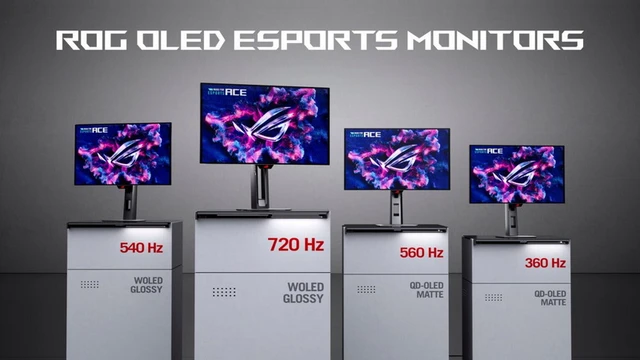 The Speed Limits of Modern Gaming Displays