Modern digital platforms are increasingly outsourcing security to algorithms in a bid to achieve near-instantaneous responses to malicious content. Yet, the line between effective filtration and systemic failure is proving to be perilously thin. The recent wave of mass bans on Discord serves as a stark illustration of the risks inherent in over-reliance on automated systems. When a neural network begins perceiving ordinary spreadsheets and chessboards as threats, security ceases to be a safeguard and instead becomes a tool for unwarranted pressure on the user base.
A systemic failure in Discord's moderation framework has resulted in the wrongful suspension of over 8,000 accounts over a two-month period. The catalyst was a wave of false positives triggered by AI algorithms that misidentified entirely benign imagery as malicious content. Users were penalized for sharing screenshots of spreadsheets, images of chessboards, game textures, and even simple files with transparent gray or white backgrounds.
The technical root of the issue lies in the security protocols Discord employs to maintain platform safety. The system operates by cross-referencing uploaded content against extensive databases of known malicious patterns and cryptographic hashes of prohibited imagery. Under optimal conditions, this approach allows for the instantaneous suppression of dangerous content. In this instance, however, the algorithm exhibited hyper-sensitivity, interpreting specific geometric structures as indicators of hidden threats.
A critical architectural vulnerability exacerbated the situation: the absence of a human-in-the-loop verification layer. The system was configured to trigger immediate account bans upon detection, bypassing any manual review by a human moderator. This transformed an automated filter into a "digital executioner," stripping users of their access long before the support team could identify the error.
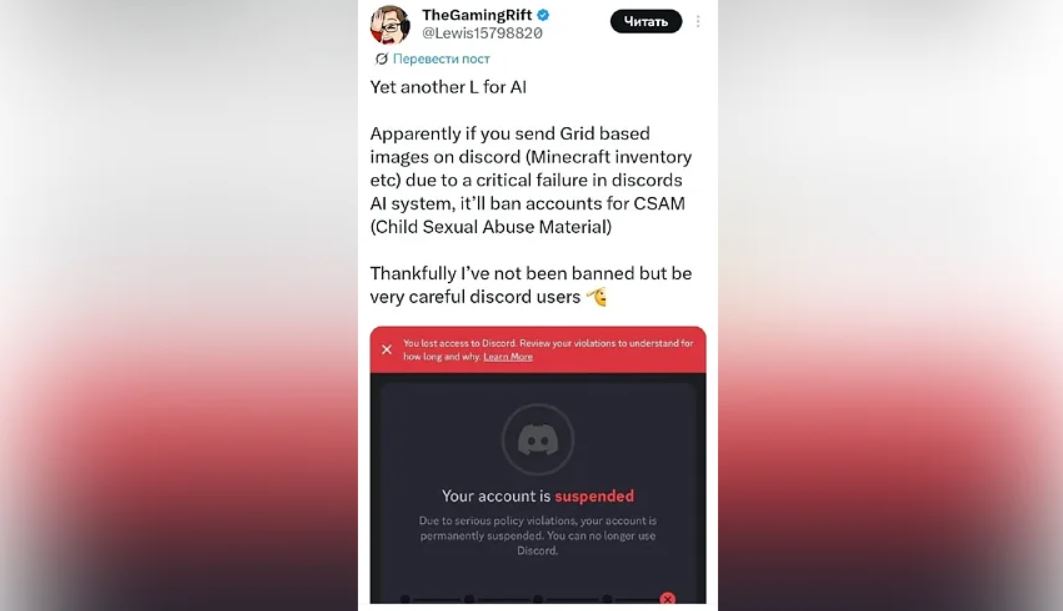
The nature of the "triggers" that sparked the collapse is particularly revealing. Analysis of user reports across social media and specialized forums suggests that the AI became over-responsive to square grid patterns. From a technical standpoint, this is logical: bad actors frequently employ grid overlays, noise, or specific filters for obfuscation—masking prohibited content (including NSFW and violent materials) to evade automated detection systems. In an attempt to plug this loophole, Discord's developers likely expanded the criteria for "suspicious content" too broadly, leading the system to perceive ordinary charts and tables as attempts to conceal illegal material.
This incident fits into a broader pattern of Discord's aggressive security and verification posture. The platform previously attempted to implement a rigid age-verification system that would have mandatorily migrated all accounts to "child" status until users provided government IDs and underwent facial video scanning. Such initiatives, while aimed at combating toxicity and protecting minors, have repeatedly faced fierce community backlash due to excessive biometric data harvesting and privacy infringements.
The fallout from these erroneous bans once again highlights the fundamental tension between automation and human oversight. In the pursuit of rapid response times, platforms are deploying systems that lack contextual awareness. When an algorithm cannot distinguish a chessboard from a masked prohibited image, it creates a systemic erosion of trust—a crisis that cannot be resolved simply by restoring access to the affected accounts.

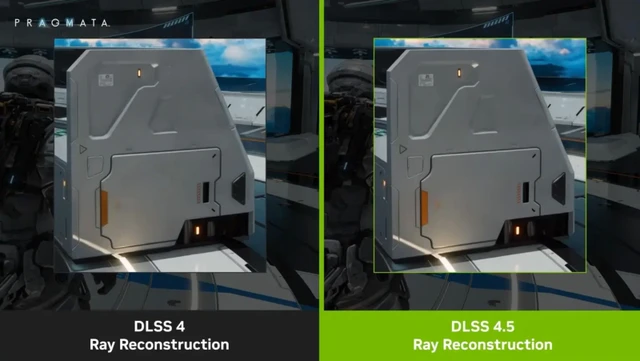 The Evolution of Rendering in DLSS 4.5