Nvidia's dominance in high-performance computing has long been anchored by the proprietary nature of the CUDA ecosystem. This created an artificial barrier for those utilizing alternative hardware, effectively locking them out of professional-grade software and cutting-edge neural networks. The ZLUDA project aims to dismantle this dependency by implementing a high-performance translation layer that bridges the gap between Nvidia's proprietary API and open industry standards. With the release of version six, the toolkit elevates this concept, pushing the boundaries of compatibility to encompass everything from high-end rendering to complex physics simulations.
CUDA's hegemony in the GPU market is driven not only by raw hardware performance but by a deeply integrated software ecosystem that has become the de facto industry standard for AI and 3D graphics. For AMD users, this has historically meant a binary choice: hunt for alternative software versions or accept a significant hit to performance. ZLUDA offers a sophisticated solution to this dilemma, enabling the execution of unmodified CUDA applications on AMD hardware with efficiency that closely rivals native performance.
The project's technical trajectory has been evolutionary. Initially conceived as a CUDA implementation via Intel OneAPI, ZLUDA later pivoted toward the AMD ecosystem. By leveraging the HIP (Heterogeneous-computing Interface for Portability) platform and the ROCm stack, the tool has evolved into a robust bridge, migrating computations from a proprietary API to an open-source framework. Written in Rust and distributed under MIT and Apache 2.0 licenses, the project ensures community accessibility and longevity, even in the absence of direct corporate funding.
The tangible utility of this approach is most evident in professional software. In applications like Blender 4.0 or V-Ray, users can now select CUDA as their rendering backend without owning an Nvidia GPU. Remarkably, in certain scenarios, ZLUDA outperforms native Radeon HIP in Blender, underscoring the exceptional optimization of its translation layer.
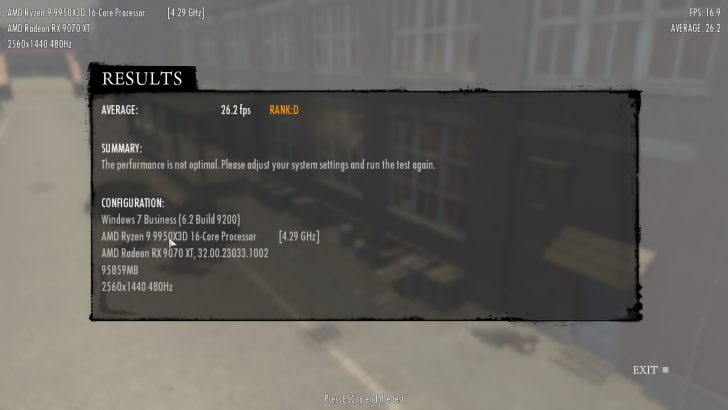
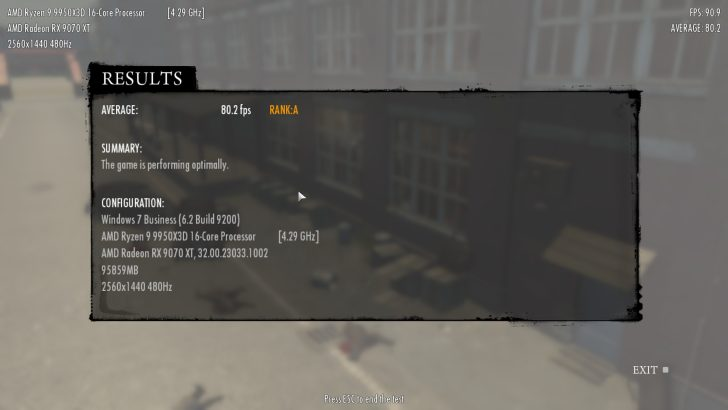
The release of ZLUDA 6 introduces pivotal updates that push compatibility to a new frontier. A standout achievement is the initial support for the PhysX engine. While currently in an early alpha stage and limited to 32-bit builds, this opens the door for legacy titles with hard-coded dependencies on Nvidia physics. The real-world impact is striking: in titles such as Mafia II, ZLUDA has been shown to boost frame rates from a stuttering 26 FPS to a fluid 80 FPS, effectively transforming an unplayable experience into a seamless one.
Beyond physics, version six significantly enhances texture handling, resulting in a more stable and comprehensive experience within Blender. Simultaneously, comprehensive optimizations for Windows have been implemented, streamlining deployment for a broader user base.
Perhaps most critical is the project's strategic focus on artificial intelligence. ZLUDA 6 expands support for frameworks used in Large Language Models (LLMs), including PyTorch. This allows developers to leverage specific CUDA optimizations—originally engineered for Nvidia silicon—on AMD hardware. Amidst the global generative AI boom, this capability is a strategic imperative, granting researchers and developers the flexibility to choose their hardware without the need to rewrite code for every specific architecture.
Looking ahead, ZLUDA aims to expand beyond the AMD ecosystem by adapting its mechanisms for Intel GPUs. This evolution would transform the tool into a universal abstraction layer, finally stripping proprietary APIs of their status as the exclusive gateway to the world of high-performance computing.
 The Speed Limits of Modern Gaming Displays