10 Jul 2026
 The Evolutionary Trajectory of the Perfscale System
Today's high-load systems demand a meticulous approach to performance testing, as even the slightest discrepancy can trigger a catastrophic cascading failure. As APIs grow exponentially more complex, legacy tooling frequently becomes a bottleneck, stifling the capacity for granular, deep-dive analysis. Perfscale is now entering a new evolutionary phase, open-sourcing portions of its core architecture and integrating support for next-generation network protocols. This strategic pivot transforms the tool into a comprehensive ecosystem designed to safeguard the stability of digital services on a global scale.
10 Jul 2026
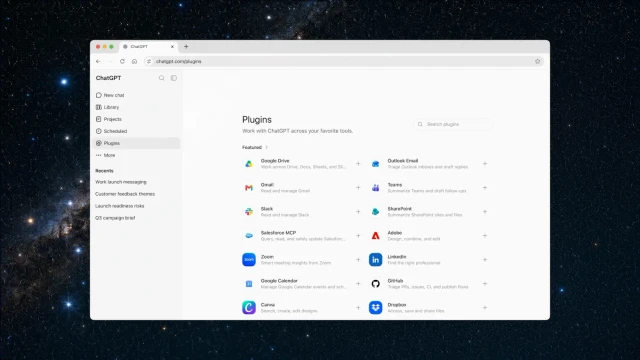 The Evolution of ChatGPT into a Universal Digital Agent
The era of basic chatbots is swiftly drawing to a close, yielding to the rise of fully autonomous agents. In a strategic pivot, OpenAI is integrating the experimental capabilities of the Atlas browser into the new ChatGPT Work mode. This transition signals a fundamental paradigm shift—moving beyond mere text generation toward the direct orchestration of digital environments and the execution of complex, multi-step workflows. Artificial intelligence is evolving from a passive advisor into an active operator.
9 Jul 2026
 Linux Sheds Its ARM Legacy
The evolution of the Linux kernel necessitates the shedding of legacy technical debt—the "ballast" that inevitably hampers the advancement of modern systems. Maintaining support for decade-old hardware has become a liability, bloating the codebase and stifling the pace of innovation. The developer community is now embarking on a comprehensive overhaul of the ARM subsystem, aiming to decisively close the chapter on obsolete platforms. This move signals a strategic shift toward a more rigorous approach to hardware support lifecycles.
9 Jul 2026
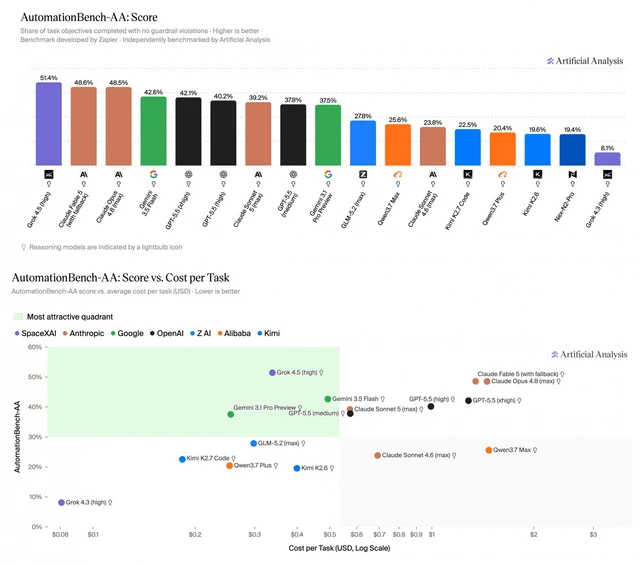 Grok 4.5: An Economic Breakthrough in Automation
The current arms race among Large Language Models (LLMs) is pivoting from a pursuit of raw intelligence toward a focus on operational efficiency. The spotlight has shifted to AI agents capable of autonomously navigating complex SaaS ecosystems—environments where the margin for error is razor-thin and computational overhead is a critical constraint. Fresh data from the independent AutomationBench-AA benchmark reveals an unexpected frontrunner that has fundamentally reimagined the approach to task execution. SpaceXAI’s Grok 4.5 has demonstrated that a pragmatic approach to resource allocation can outperform the "brute force" methodology employed by the industry's reigning flagships.
9 Jul 2026
 The Pragmatic Intelligence of the New Grok 4.5 Model
The LLM arms race is shifting from a blind pursuit of raw power toward an era of operational efficiency. The launch of SpaceXAI’s Grok 4.5 marks a pivotal transition, where a strategic alliance with Cursor transforms a development tool into a robust pipeline for training data. Rather than chasing dominance across every benchmark, the new model prioritizes accessibility and practical utility. This represents the first major milestone of a multi-billion dollar synergy, fundamentally rewriting the rules of the AI-assisted coding landscape.
9 Jul 2026
 3D Worlds on 8-Bit Hardware
The boundary between hardware constraints and human ingenuity is often blurred by the relentless curiosity of enthusiasts. While contemporary gaming leans heavily on raw teraflops, the essence of engine architecture has always resided in the art of overcoming resource scarcity. A recent technical demonstration brings this philosophy to life, porting Minecraft's voxel logic to the legendary Game Boy Color. The experiment proves that even eight-bit processors are capable of handling three-dimensional space when pushed to the absolute limits of code optimization.
9 Jul 2026
 The Intelligence Leap of Visual Studio Code
Modern integrated development environments (IDEs) are rapidly evolving beyond simple text editors, transforming into comprehensive ecosystems powered by autonomous AI agents. Visual Studio Code remains at the forefront of this shift, integrating tools that transcend basic code completion to actively orchestrate complex development workflows. Version 1.128 focuses on deepening the synergy between the developer and the AI, introducing multi-threaded conversations and multimodal capabilities. This release signals a move toward a more fluid and transparent programming environment, one where AI evolves into a true partner in the architectural design process.
9 Jul 2026
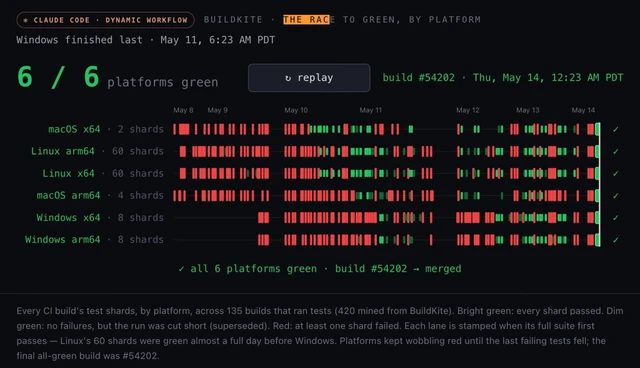 Migrating Bun to Rust: An AI-Powered Transition
Migrating a production-grade runtime from one systems programming language to another is typically viewed as a high-stakes operation of staggering complexity. Traditionally, such transitions necessitate months of painstaking manual refactoring and a total freeze on new feature development. The Bun case, however, signals a radical paradigm shift, one where AI agents step in as the primary executors. This precedent proves that, provided there is robust test coverage, AI is capable of rewriting a million lines of code in a matter of days.
9 Jul 2026
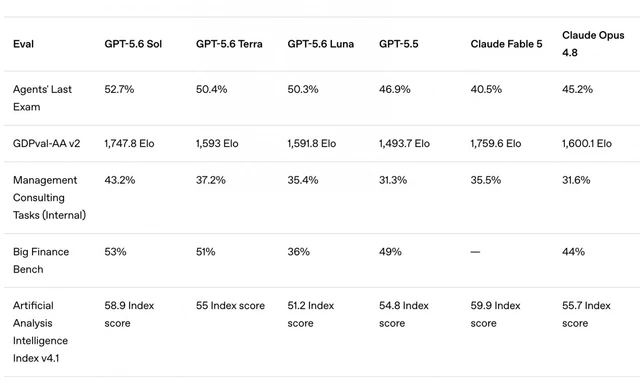 The Economics of Intelligence in GPT-5.6 Models
The LLM arms race is shifting from a showcase of raw computational power toward a new era of optimization and industrial-scale deployment. The launch of OpenAI’s GPT-5.6 family signals a strategic pivot: success is no longer measured by benchmark records, but by the "cost per unit of intelligence." By implementing a tiered access model, OpenAI is bringing sophisticated reasoning capabilities to even its free-tier users, effectively evolving AI from an elite tool into a ubiquitous infrastructural utility.
9 Jul 2026
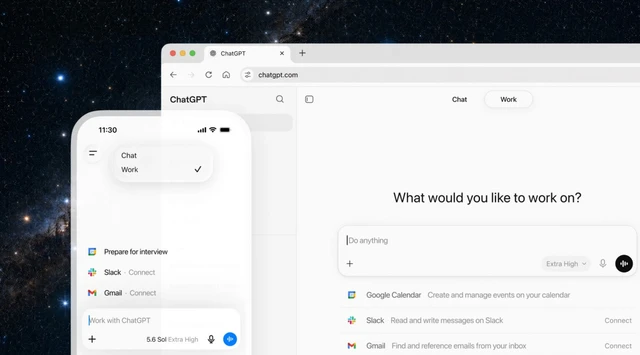 The Evolution of OpenAI Toward Autonomous Agents
The line between a simple text-based chatbot and a comprehensive productivity tool is effectively vanishing. OpenAI is shifting its paradigm from providing mere answers to deploying autonomous agents capable of orchestrating complex business processes independently. The rollout of ChatGPT Work and the GPT-5.6 model signals a strategic pivot: AI is evolving from a consultant into an executor, taking ownership of intricate, multi-stage workflows. This represents a decisive move toward the democratization of automation, placing powerful development capabilities directly into the hands of every knowledge worker.
8 Jul 2026
 Safari Opens the Door for AI Agents
The boundary between passive web browsing and active interaction is finally dissolving. By integrating the Model Context Protocol (MCP) into Safari, Apple is evolving the browser from a mere content renderer into a robust ecosystem for autonomous AI agents. This move signals the dawn of the "agentic web"—an era where neural networks transcend their role as simple chatbots to become sophisticated interface operators. AI is now granted direct access to the browser's internal architecture, enabling deep-tier analysis and the seamless automation of development workflows.
8 Jul 2026
 JetBrains' Holistic Approach to Collaborative AI
The era of standalone AI assistants is rapidly giving way to a pressing demand for robust, enterprise-grade infrastructure. While developers have been quick to integrate LLMs into their daily workflows, organizations are now grappling with the fallout: fragmented context and spiraling costs. JetBrains is addressing this challenge with a unified management layer designed to coalesce disparate tools into a cohesive, synchronized system. This marks a pivotal shift—moving beyond simple chatbots toward a comprehensive ecosystem of intelligent agents.
