In the realm of server infrastructure and professional workstations, Debian has long established itself as the "universal operating system"—a platform where stability is treated as an absolute. The release of version 13.6 marks another pivotal milestone in the lifecycle of the "Trixie" branch, reaffirming the project's steadfast commitment to security and predictability. In an era of rapidly evolving cyber threats, such targeted updates provide the essential foundation for mission-critical infrastructure. This release focuses primarily on rigorous code refinement and the systematic elimination of system vulnerabilities.
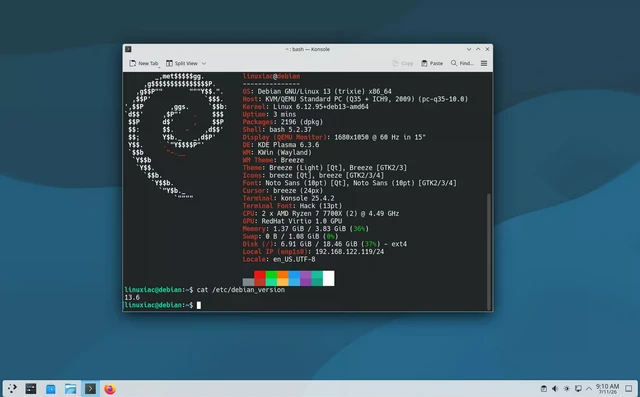
The architectural bedrock of Debian 13.6 is built upon the Linux 6.12 LTS kernel, ensuring long-term stability and optimized performance for contemporary hardware. Parallel to the system kernel, the user layer has seen a comprehensive refresh; the distribution ships with the latest iterations of major desktop environments, including GNOME 48, KDE Plasma 6.3.6, Xfce 4.20, Cinnamon 6.4.10, LXQt 2.1, MATE 1.26.1, and LXDE 13. This strategic approach allows Debian to maintain its signature server-side conservatism while meeting the sophisticated interface demands of modern workstations.
Debian's steadfast commitment to versatility is evident in its expansive hardware compatibility. The system operates seamlessly on traditional AMD64/x86-64 platforms, encompasses various ARM iterations (EABI, ARM64, ARMv7), and supports specialized architectures such as mipsel, mips64el, RISC-V, PowerPC 64 (ppc64el), and even IBM System z (s390x). This breadth of support renders the distribution viable for everything from compact single-board computers and IoT devices to massive enterprise mainframes.
The current development cycle traces its origins back to August 2025 with the unveiling of Debian 13, codenamed "Trixie." Since then, the project has undergone a series of rigorous iterations, each designed to further refine system stability. Sequential releases, spanning from 13.1 in September 2025 to 13.5 in May 2026, paved the way for the current update, transforming "Trixie" into a mature, battle-tested tool.
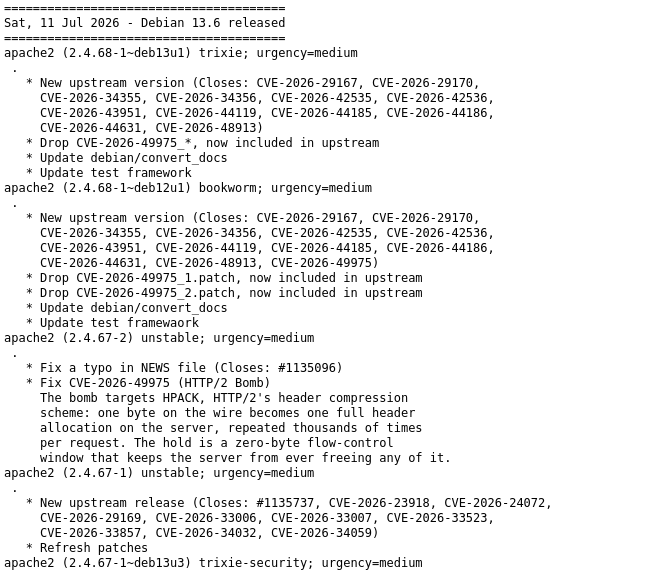
Version 13.6 represents a comprehensive effort in code refinement, resolving 124 bugs across various packages and implementing 120 security patches. Particular emphasis was placed on mission-critical components. For instance, the Apache update mitigates a complex array of serious threats, including Denial-of-Service (DoS) vulnerabilities, buffer overflows, cross-site scripting (XSS) errors, and use-after-free memory issues that could have potentially led to unauthorized file access.
A similar level of rigor was applied to Curl—a fundamental tool upon which millions of network requests depend. The new version eliminates bearer token and credential leaks, fixes proxy server authentication errors, and resolves connection reuse issues within the SMB protocol.
Application-layer security also saw significant hardening. In the Dolphin file manager (KDE), a critical vulnerability that allowed for sandbox escapes was closed. The GIMP image editor received fixes for integer overflow vulnerabilities, while the Mesa library addressed memory allocation errors within the WebGPU/SPIR-V stack. Furthermore, Python 3.13 and QEMU packages received a series of patches to close potential attack vectors.
The cornerstone of the ecosystem's security remains the security.debian.org service, which delivers real-time fixes to users. The development team remains focused on neutralizing the most hazardous classes of errors: heap overflows, memory corruption, parsing failures, and bounds-check failures.
For existing "Trixie" users, the transition to version 13.6 is seamless and can be executed via the terminal using the standard commands: sudo apt update && sudo apt full-upgrade. For new adopters, clean installation images are available, allowing for a deployment that is fully patched from the first boot.
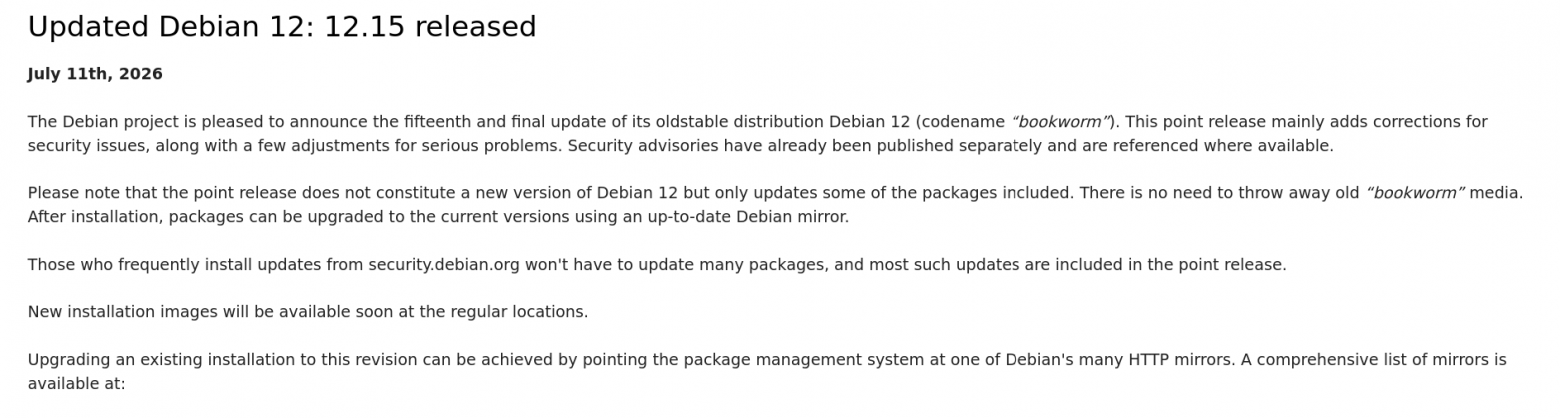
Catering to those who prioritize a more conservative stability profile, the project team has also released an update for the previous stable branch—Debian 12.15. This release includes 88 stability fixes and 97 security patches, extending the secure operational lifespan of legacy systems until their eventual migration to the latest version.
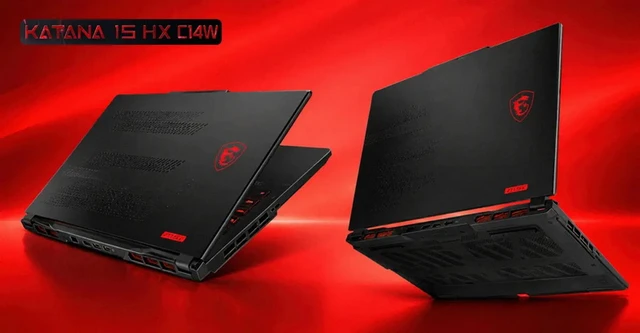 MSI Katana 15 HX and the Memory Paradox