Today's high-load systems demand a meticulous approach to performance testing, as even the slightest discrepancy can trigger a catastrophic cascading failure. As APIs grow exponentially more complex, legacy tooling frequently becomes a bottleneck, stifling the capacity for granular, deep-dive analysis. Perfscale is now entering a new evolutionary phase, open-sourcing portions of its core architecture and integrating support for next-generation network protocols. This strategic pivot transforms the tool into a comprehensive ecosystem designed to safeguard the stability of digital services on a global scale.
Perfscale's development strategy has entered a new phase of transparency, with a significant portion of its engine transitioning to an Open Source model. The establishment of a dedicated GitHub organization allows the community to integrate more deeply into the product, while the application of modern AI tools during code migration has substantially accelerated the publication process.
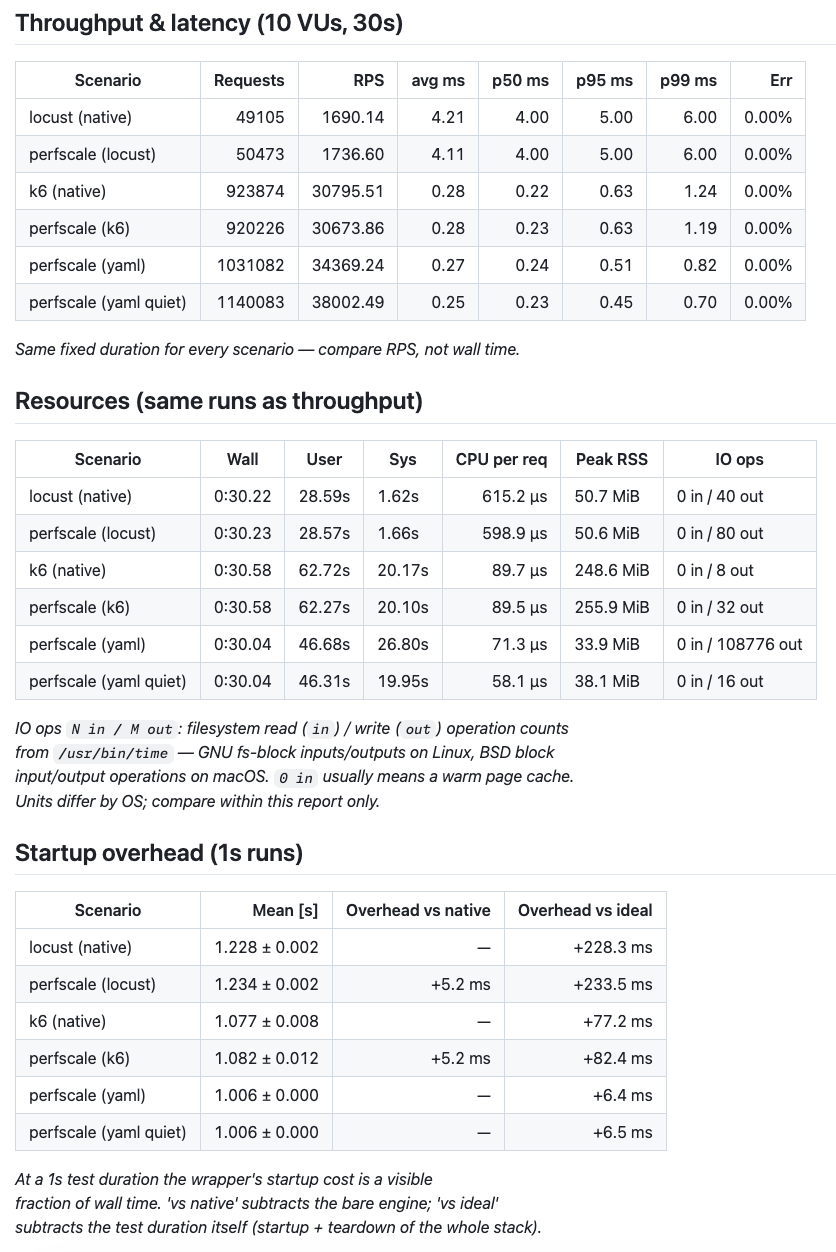
As part of this transition, a comprehensive benchmarking system has been implemented. Leveraging its ability to orchestrate tools such as Locust and k6, Perfscale now features an infrastructure dedicated to comparative performance analysis. This system does more than just capture current metrics; it enables the correlation of data with previous runs, which is critical for tracking regressions and monitoring optimization progress.
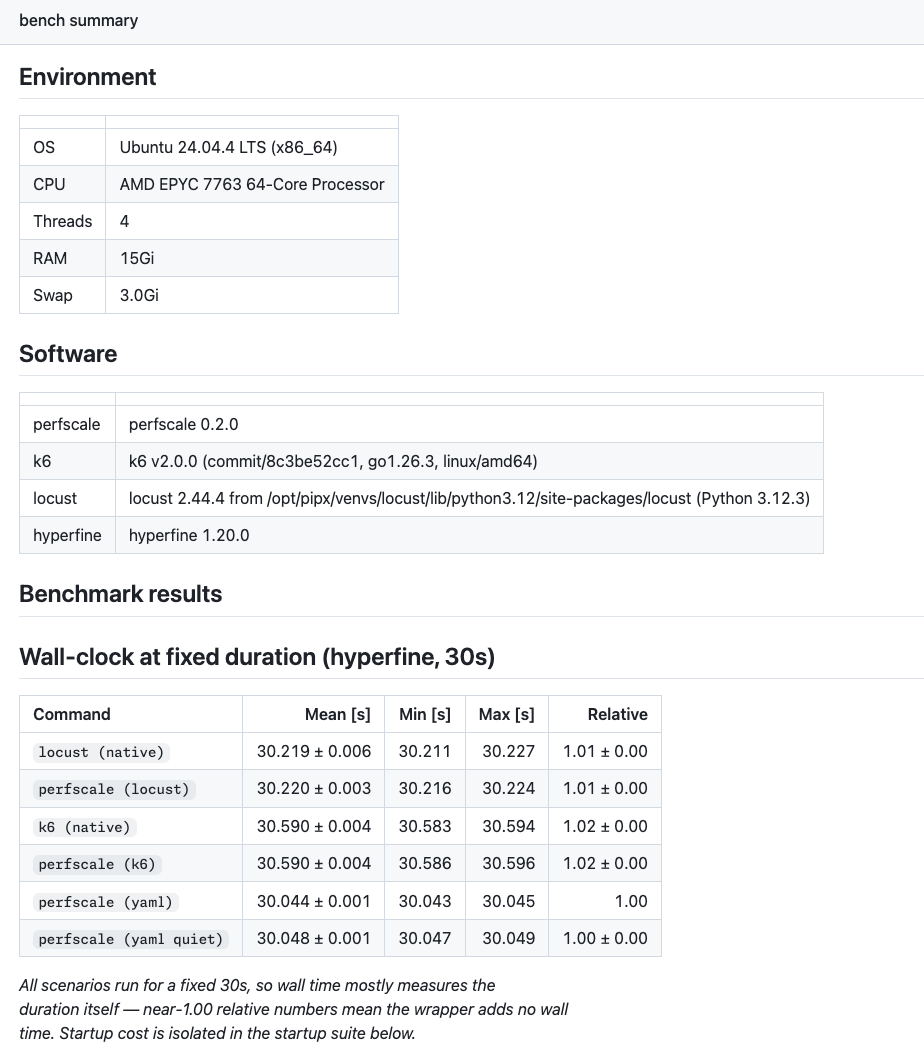
Initial testing is centered on baseline resource analysis and quantifying overhead relative to other industry-standard frameworks.
Particular emphasis is placed on micro-benchmarks, which enable the identification of bottlenecks at the lowest levels of execution.
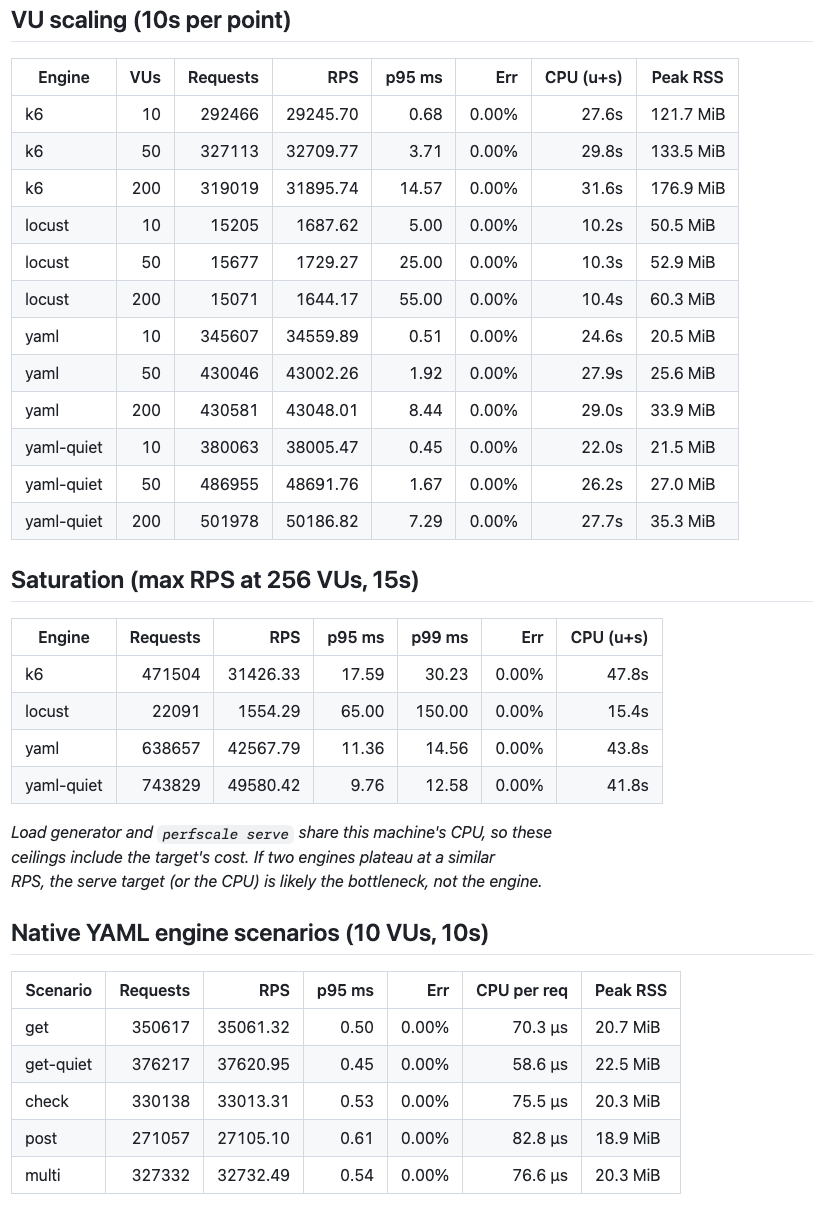
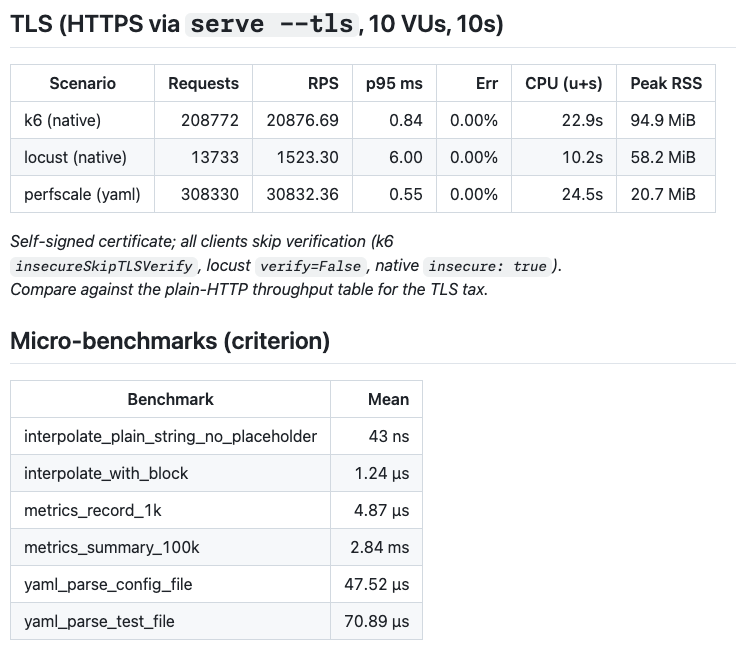
Analysis reveals that the YAML engine is the most efficient and performant. This is attributed to the absence of overhead required for executing third-party code, positioning YAML syntax as the primary vector for the platform's future evolution. Looking ahead, the roadmap includes expanding functionality, specifically the integration of WebSocket support, which will significantly broaden the system's application scope.
Parallel to core development, support for the HTTP QUERY method, compliant with the RFC 10008 standard, has been integrated. This method is designed for idempotent data operations, where identical input parameters consistently yield the same result. The implementation of QUERY addresses the fundamental limitation of query string lengths in GET requests and mitigates security risks associated with transmitting data via URLs.
Within the Perfscale ecosystem, implementing this method via YAML configuration is remarkably streamlined: the user simply defines the QUERY method, specifies the URL, and provides the request body containing the search parameters. Currently, very few backends on the market offer native support for this method, positioning Perfscale as one of the first tools to provide this capability "out of the box."

The project's scaling ambitions extend beyond technical milestones. An application to the Western venture fund LvlUp has already yielded tangible results, sparking interest from SHOPLINE (NASDAQ: JOYY). This strategic move is driven by the specific nature of the high-load systems market, where gaining access to major corporate clients often requires an established network of professional contacts at the executive level.
The venture capital route is viewed as a strategic bridge to the Enterprise segment. Simultaneously, the platform continues to refine a service-based model for businesses that find it cost-prohibitive to maintain a full-time, in-house load-testing specialist. This external expert support model allows companies to leverage Perfscale's capabilities at a cost significantly lower than hiring and maintaining a full-time SDET engineer, while still ensuring high-quality performance verification for their applications.

 The Evolution of Network Speeds in the ROG Rapture GT-BN98