14 Jul 2026
 Security Vulnerability in the DPCalendar Component
Data security within modern content management systems remains one of the most pressing challenges in contemporary web development. Even battle-tested extensions can harbor latent vulnerabilities that leave sensitive information exposed. The recent discovery of a critical flaw in the DPCalendar component underscores the inherent fragility of access control mechanisms. Ultimately, rigorous and timely software updates represent the only reliable safeguard against unauthorized database exfiltration.
14 Jul 2026
 Intelligent Navigation for YouTube Video Content
The era of simplistic keyword matching in search queries is rapidly fading, giving way to a nuanced, semantic understanding of user intent. Today’s users expect more than just a curated list of links; they demand definitive answers to complex questions. In this landscape, the launch of "Ask YouTube" represents a critical milestone in the platform's evolution from a video hosting giant into a comprehensive knowledge ecosystem. The integration of generative AI is fundamentally shifting the paradigm of content interaction, evolving search from a mechanical process into an intelligent, meaningful dialogue.
14 Jul 2026
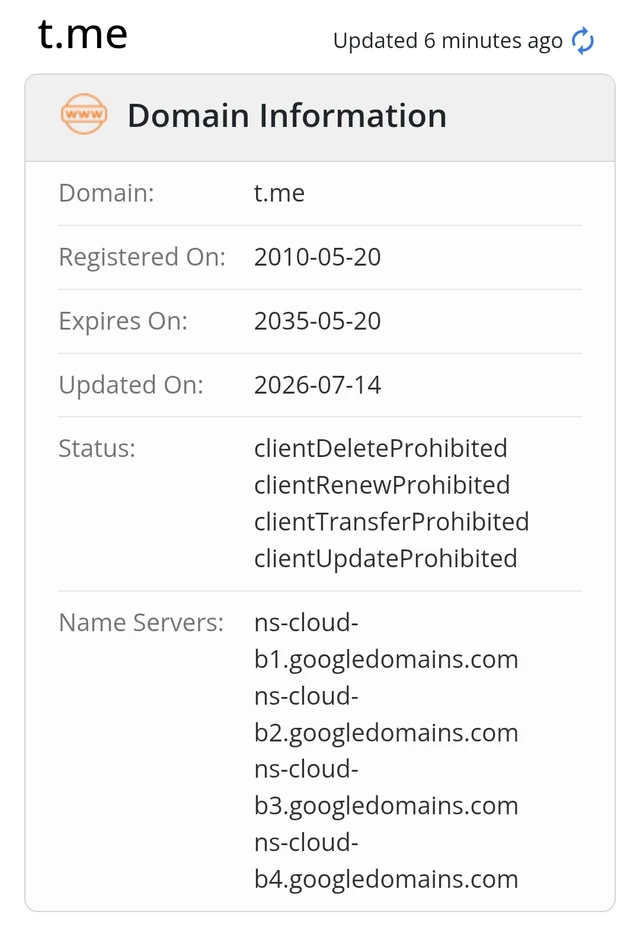 The Return of Telegram’s Short Link Functionality
The stability of global network infrastructure frequently hinges on the seamless operation of critical bottlenecks within naming systems. A sudden failure in one of the most recognizable short domains can trigger a systemic disruption, severing the connection between millions of users and their content. The recent incident involving the t.me domain serves as a stark reminder that even the most dominant services remain vulnerable to the administrative levers of domain registries. As access is restored, the familiar dynamics of interaction within the messenger's ecosystem are returning to normal.
14 Jul 2026
 Managing Information Flow in Discord
Modern communication platforms are evolving beyond rudimentary chat interfaces into sophisticated content management ecosystems. For years, the pervasive "spoiler culture" within gaming and cinema communities has forced users to rely on makeshift workarounds to safeguard sensitive plot details. Discord is addressing this friction by implementing a native mechanism for isolating sensitive content—a move that signals a shift toward more granular user agency over the consumption of narrative data.
14 Jul 2026
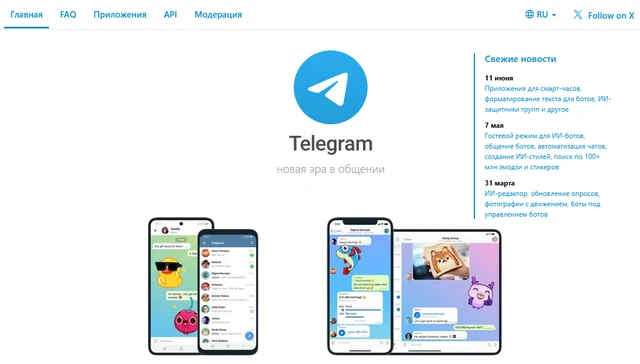 Restoring Access to the t.me Domain
The infrastructure of modern messaging platforms relies on the mission-critical stability of traffic redirection systems, where even a momentary disruption can paralyze content distribution. A recent incident involving the availability of Telegram's short links underscored the precariousness of relying on external domain registrars. The restoration of the primary URL shortener reinstates the seamless interconnectivity of the service's digital ecosystem, ensuring that the user journey from an external link to a specific message is once again frictionless.
14 Jul 2026
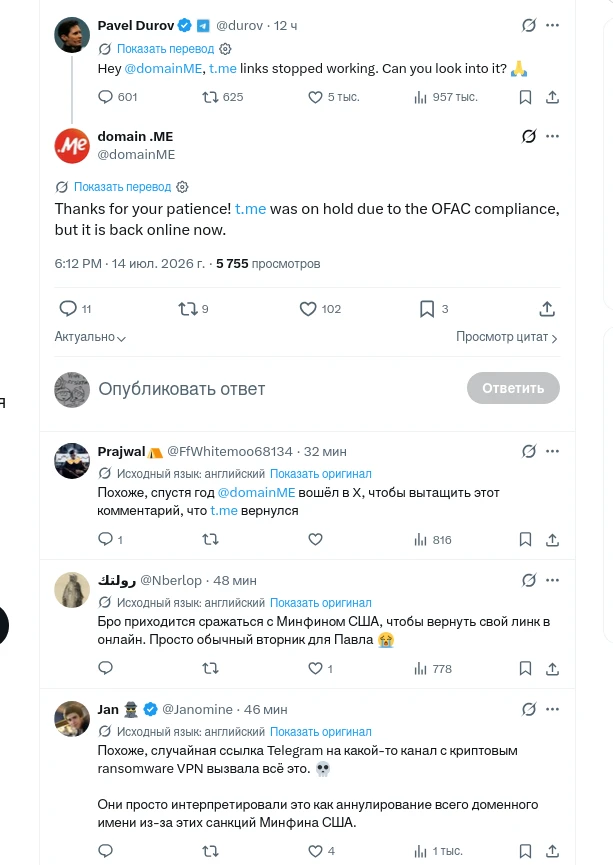 Regulatory Oversight and the Temporary Paralysis of t.me
Global internet infrastructure frequently falls victim to political maneuvering and administrative lapses. When US financial regulators levy sanctions, the technical execution of these mandates can trigger unforeseen, wide-scale disruptions. The incident involving the t.me domain serves as a stark reminder of the fragility inherent in the governance of national TLDs. A simple misinterpretation of requirements resulted in a brief but significant paralysis of one of the world's most ubiquitous URL shortening systems.
14 Jul 2026
 Transforming Google Images into a Gallery of Ideas
Visual search is experiencing a paradigm shift, evolving from a mechanism of mere data retrieval into a process of active discovery. For a quarter-century, Google Images served primarily as a utility for locating specific files; today, it is transforming into a comprehensive engine for inspiration. The convergence of personalized curation and generative AI is fundamentally altering the dynamics of how users interact with visual content. This evolution underscores a strategic pivot toward an ecosystem where content proactively discovers the user.
13 Jul 2026
 The Blocking of the t.me Domain
Modern digital infrastructure rests upon invisible yet indispensable name delegation mechanisms. A sudden failure in one of the world's most ubiquitous link shorteners can trigger a catastrophic chain reaction, disrupting communications for millions of users. The situation involving the t.me domain exposes a fundamental vulnerability: even the most dominant platforms remain susceptible to the administrative mandates of domain registries. Central to this crisis is the "serverHold" status—a designation that effectively excised the service from the global address space.
11 Jul 2026
 A Hundredfold Leap in Starlink’s Network Capacity
The global race for satellite communication dominance is entering a fundamentally new phase of scaling. SpaceX is not merely aiming to expand its coverage; it seeks to radically redefine the very nature of space-based data transmission, narrowing the performance gap between orbital networks and terrestrial fiber optics. An ambitious roadmap to deploy hundreds of thousands of new satellites is transforming Starlink from a niche service for remote regions into a critical backbone for global AI infrastructure. However, such aggressive expansion raises urgent concerns regarding ecological security and the preservation of the night sky.
11 Jul 2026
 The Proliferation of Neural Networks in Digital Communication
Today's information landscape is undergoing a subtle yet radical transformation, one where the boundary between human cognition and algorithmic generation is blurring into near invisibility. Social media feeds are increasingly saturated with what has been termed "AI slop"—homogenized, sterile content produced entirely without human intervention. A new study by the Pangram platform exposes the true magnitude of this shift, crystallizing intuitive user suspicions into cold, hard data. The question of online authenticity is no longer a mere philosophical exercise; it has become a struggle for the survival of human meaning within a vast ocean of synthetic noise.
10 Jul 2026
 Data Integrity in the Era of Ultra-High-Capacity HDDs
For decades, the cloud storage industry has walked a fine line, balancing the relentless pursuit of higher recording density against the physical durability of the storage media. The arrival of drives exceeding 20TB naturally sparked a critical question: would such extreme capacities inevitably result in increased fragility? New data from Backblaze, drawn from the real-world operation of hundreds of thousands of devices, allows us to examine this issue through the lens of empirical statistics. As it turns out, modern engineering breakthroughs have rendered these ultra-high-capacity drives some of the most reliable in the history of the medium.
10 Jul 2026
 Intelligent Contextual Control in the New Outlook
Modern enterprise communication is increasingly devolving into a relentless stream of fragmented messages, where mission-critical information often vanishes within the depths of sprawling email threads. This information overload triggers cognitive lapses; when users rely on obsolete data, they inadvertently introduce friction and confusion into the active workflow. Microsoft is addressing this challenge by integrating proactive context-management mechanisms directly into Outlook. These new tools are engineered to align user attention with the real-time state of a conversation, thereby mitigating the risk of communication breakdowns.
