In an age of pervasive digitalization, the boundary between virtual and physical security has become increasingly porous. A casual snapshot shared on social media can be weaponized into a sophisticated tool for gaining unauthorized entry into a private residence. The convergence of advanced image analysis and the democratization of additive manufacturing transforms a candid photo into a critical security vulnerability. This phenomenon compels us to fundamentally rethink our conventional approach to data privacy within the public sphere.
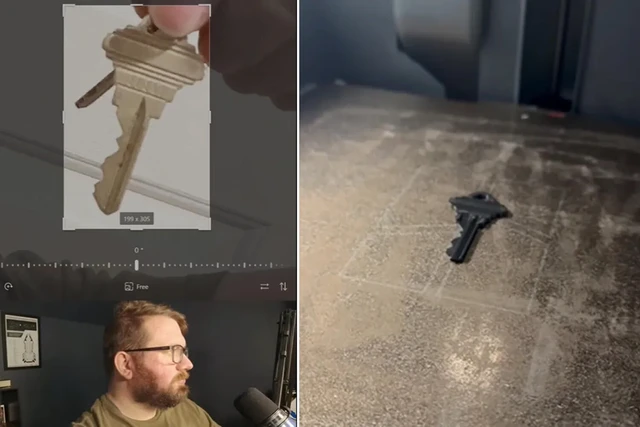
The contemporary landscape of Open Source Intelligence (OSINT) has evolved far beyond the simple harvesting of email addresses or leaked passwords. Today, the scope of analysis has expanded to include tangible artifacts—most notably, physical door keys. Empirical tests confirm that a single high-resolution photograph is sufficient to create a fully functional duplicate, even if the key is merely an incidental detail within the overall composition of the shot.
The technical workflow for reconstructing a key follows a standard data pipeline: converting a two-dimensional image into a three-dimensional object. The process begins in a graphic editor (such as GIMP) to process the image and normalize its scale. From there, specialized templates and modeling software are employed to precisely determine the key's profile and bitting specifications.
The final stage is the physical fabrication of the model. While 3D printing is the most obvious tool, the barrier to entry is significantly lower. With an accurate digital blueprint in hand, a copy can be crafted manually or produced via commercial metal-cutting services. For a specialist equipped with these tools, the entire cycle—from analyzing a photograph to holding the physical object—takes a mere 10 to 15 minutes.
The primary threat posed by this method is its invisibility. Unlike conventional lock-picking or brute-force entry, the use of an identical duplicate leaves no forensic trace. The lock operates seamlessly, rendering the intrusion virtually undetectable during an initial inspection and avoiding any suspicion at the moment of entry.
This shift effectively moves the security of physical keys into the realm of digital hygiene. Posting a photograph of a key in a public forum is functionally equivalent to publishing administrative credentials for a secure account. The only effective countermeasure is a defense-in-depth strategy. A simple mechanical lock is no longer a sufficient deterrent; residential security must now rely on a multi-layered system, incorporating video surveillance and active alarm systems capable of detecting an intrusion even when a legitimate key is used.
 The Pinnacle of Clarity: AOC's New 5K Monitor