31 Jul 2026
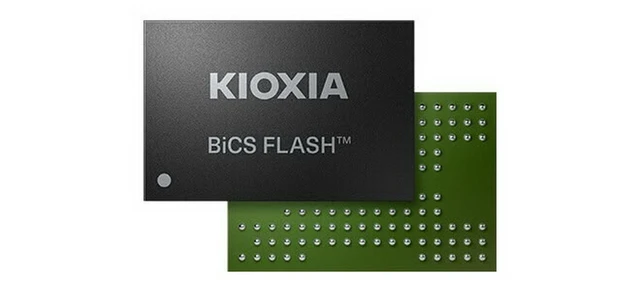 Kioxia’s Next-Generation Flash Memory: A Quantum Leap in Speed
The semiconductor industry is currently undergoing a period of profound transformation, catalyzed by the meteoric rise of generative AI. As the demand for ultra-fast data access becomes a critical driver for the evolution of mobile devices and personal computers, Kioxia has unveiled its latest innovation: the ninth generation of BiCS FLASH memory. The company's technological stack is engineered to strike an optimal balance between storage density and interface throughput.
31 Jul 2026
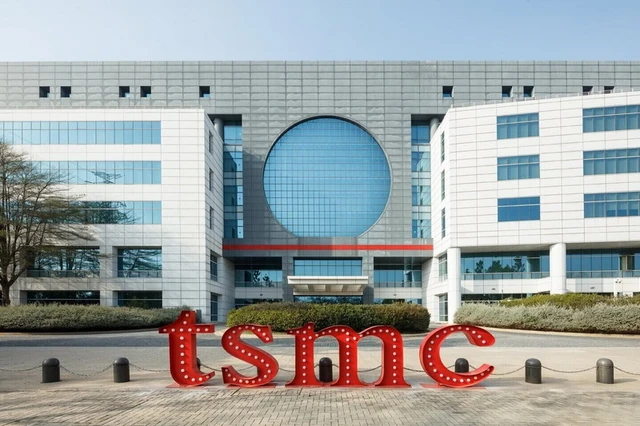 TSMC’s Technological Leap to 1.4 Nanometers
The modern semiconductor industry has evolved into a global race for nanometers, where every incremental gain defines the architecture of future computing systems. In this high-stakes competition, Taiwan's TSMC is seeking to cement its dominance by pivoting toward the A14 process node. This shift represents more than just the physical shrinking of transistors; it signals a radical transformation in industrial construction itself. The integration of artificial intelligence and virtual reality into fab deployment is becoming the new benchmark for efficiency, enabling the industry to bypass traditional temporal constraints.
31 Jul 2026
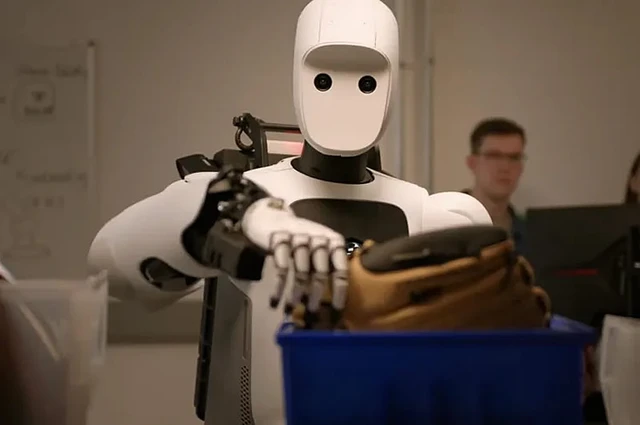 Motion Synchronization in Gemini Robotics 2
For years, the quest to build a truly versatile robotic assistant has been hindered by a persistent disconnect: the chasm between an AI's cognitive prowess and the physical dexterity of its mechanical hardware. While contemporary systems often exhibit a sophisticated grasp of high-level instructions, they frequently falter when tasked with executing the intricate spatial coordination required for real-world movement. A recent breakthrough from Google DeepMind aims to bridge this gap by shifting the paradigm of control—moving away from the management of isolated manipulators toward a model of integrated, holistic body orchestration. The objective is the achievement of true proprioception, allowing artificial intelligence to emulate the fluid and intuitive motor skills inherent to human movement.
31 Jul 2026
 The Quantum Standard for Data Integrity
Ever since the first high-profile claims of quantum supremacy, the industry has been grappling with a fundamental epistemological paradox: if a classical computer lacks the capacity to simulate a computation, how can we verify the accuracy of the output? This ambiguity has rendered milestones in quantum computing a sort of "Schrödinger’s cat"—success exists and does not exist simultaneously, suspended until the moment of verification. The focus is now shifting from the mere feasibility of these computations toward the mechanisms of establishing trust in their results. Emerging research proposes a systematic framework for validating data integrity at a point where classical verification methods have reached their absolute limit.
31 Jul 2026
 The European Union’s Strategy for Computational Sovereignty
The global AI arms race has coalesced into a stark duopoly between the United States and China. Wary of being relegated to a mere consumer of foreign algorithms and cloud ecosystems, Europe is now striving to reclaim its technological agency. This ambition is manifesting in a sweeping initiative to establish a network of specialized computing centers—a strategic foundation for digital sovereignty built upon the deployment of high-performance data processing infrastructure.
31 Jul 2026
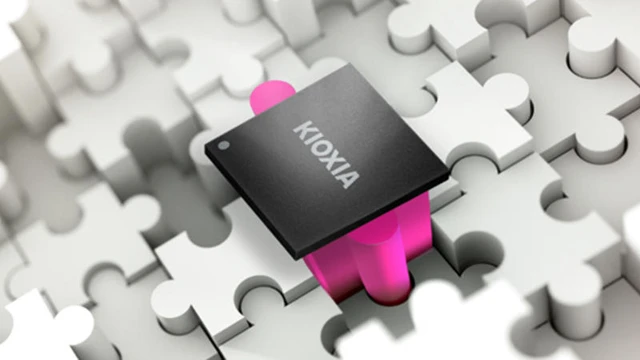 The Expectation Crisis in the NAND Memory Market
The global arms race in artificial intelligence has triggered an unprecedented surge in demand for high-performance storage systems. For some time, flash memory manufacturers have been riding a wave of "gold rush" euphoria; however, the first fissures in this optimistic narrative are now becoming apparent. Recent financial reports from Kioxia signal a potential market cooling and a pivot in sentiment among major investors. This shift exposes the underlying fragility of the AI boom when pitted against real-world economic pressures and intensifying competition.
31 Jul 2026
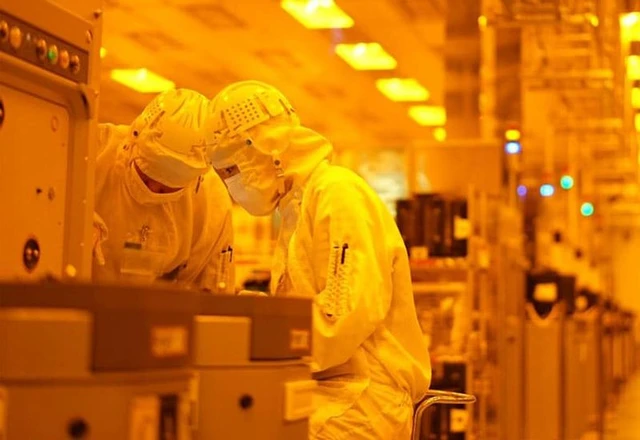 Sony Restores Sensor Production in Kyushu
High-precision semiconductor manufacturing stands as one of the most precarious ecosystems in modern industry. A powerful earthquake on Kyushu Island has once again laid bare the critical vulnerability of tech giants when faced with natural disasters. All eyes are now on Sony’s manufacturing facility in Kumamoto, where even a temporary shutdown could trigger a ripple effect across global supply chains. The company's ability to swiftly resume operations will serve as a vital litmus test for the resilience of Japan's entire technology sector.
31 Jul 2026
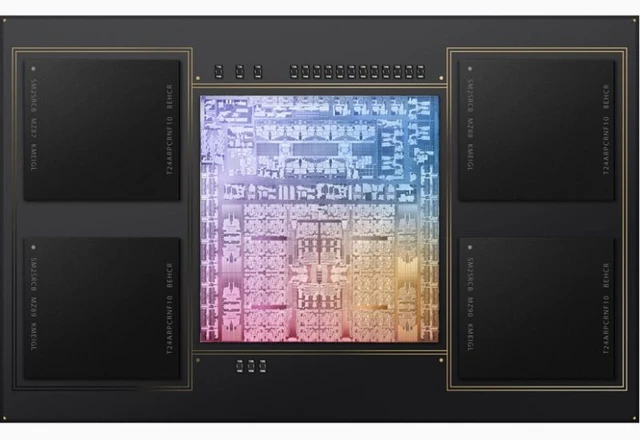 Diversifying Memory Sourcing Within the Apple Ecosystem
The global semiconductor market remains characterized by high volatility, where over-reliance on a handful of industry titans has evolved into a systemic risk. For Apple, whose production cycles encompass millions of devices, any disruption in memory procurement represents more than just a logistical hurdle—it translates into direct financial losses. Tim Cook has candidly acknowledged the necessity of diversifying its partner ecosystem to mitigate the pressures of scarcity and pricing leverage. This strategic pivot may lead to closer alignment with Chinese players as the company navigates an increasingly cutthroat competitive landscape.
31 Jul 2026
 A Compact Trackball for the Professional Workspace
The modern workstation often becomes a friction point where typing speed clashes with navigational efficiency. The constant oscillation of the wrist between keyboard and mouse introduces unnecessary ergonomic tension and fragments the cognitive flow essential for deep work in coding or writing. Keychron proposes a radical departure from this paradigm, reimagining the fundamental concept of the input device. Their latest offering, the Nape Pro, seeks to dissolve the boundary between character input and cursor manipulation.
31 Jul 2026
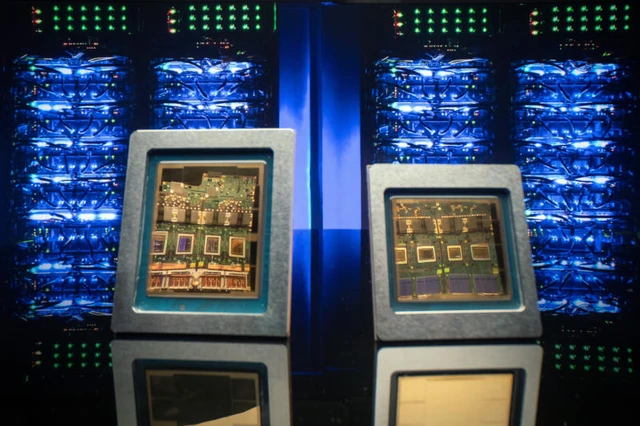 Google’s Silicon Offensive: Challenging Nvidia's Dominance
The global AI arms race is shifting its center of gravity from algorithmic optimization to the tangible reality of semiconductor manufacturing. Google, which has long cultivated its proprietary Tensor Processing Units (TPUs), is now gearing up for an unprecedented scale-up of its production capabilities. The company's roadmap for the coming years envisions scaling output to levels that rival those of the current market hegemon, Nvidia. This strategic pivot is designed to secure technological sovereignty and guarantee total independence for the tech giant's cloud infrastructure.
31 Jul 2026
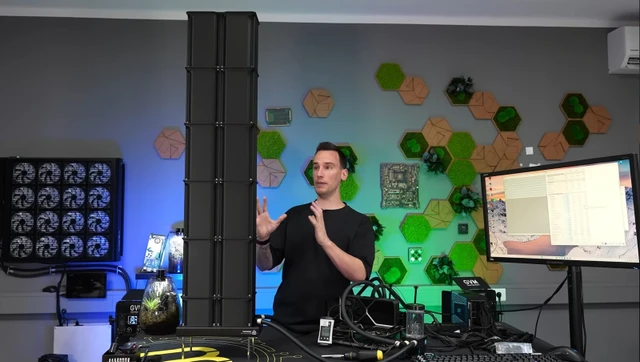 The Physics of Convection: Combatting Thermal Overheating
Managing thermal loads in high-performance systems has traditionally been a battle of attrition, fought by increasing fan speeds and expanding heatsink surface areas. However, the fundamental laws of thermodynamics offer a more sophisticated alternative rooted in the natural movement of air masses. The "stack effect" enables heat dissipation without any electrical overhead, relying solely on the differential in air density. A practical experiment leveraging 3D printing demonstrates that with the right structural scale, passive design can serve as a viable replacement for active cooling.
31 Jul 2026
 MediaTek’s Strategic Push into the Server Processor Market
The global AI boom is fundamentally restructuring the semiconductor landscape, pivoting away from consumer-grade hardware toward server-side infrastructure. As demand for specialized compute scales exponentially, legacy leaders in the mobile sector are being compelled to identify new growth vectors. Taiwan-based MediaTek is making a decisive strategic pivot, shifting its investment priorities toward cloud solutions and custom silicon. This trajectory is not merely an ambition; it is a critical imperative driven by the sweeping transformation of global computing capacity.
