Ever since the first high-profile claims of quantum supremacy, the industry has been grappling with a fundamental epistemological paradox: if a classical computer lacks the capacity to simulate a computation, how can we verify the accuracy of the output? This ambiguity has rendered milestones in quantum computing a sort of "Schrödinger’s cat"—success exists and does not exist simultaneously, suspended until the moment of verification. The focus is now shifting from the mere feasibility of these computations toward the mechanisms of establishing trust in their results. Emerging research proposes a systematic framework for validating data integrity at a point where classical verification methods have reached their absolute limit.
For years, the quest for quantum supremacy remained largely a matter of faith. When an algorithm's complexity transcends the capabilities of any existing supercomputing system, internal data consistency becomes the sole criterion for truth. However, in the realm of quantum mechanics—where noise and decoherence are constant companions—simply arriving at an answer is insufficient; one must provide empirical proof that the result is not merely a stochastic set of parameters.
To address this challenge, a comprehensive approach was proposed, focusing on the analysis of the computational process itself rather than solely on the final output. A pivotal experiment demonstrated the efficacy of circuits utilizing 70 logical qubits and 468 T-gates. It is these T-gates that pose the greatest hurdle for classical simulation, as their emulation demands exponential resources. In this specific implementation, 97 physical qubits were deployed, and the system was configured to automatically detect and mitigate error loops. This filtering method reduced the effective error rate nearly tenfold, with reliability ever-verified by control measurements integrated directly into the quantum circuit's architecture.
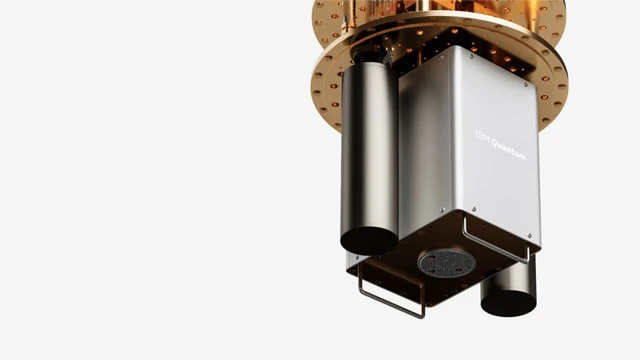
Another critical milestone involved modeling a two-dimensional system of interacting particles—the Ising model—on the Heron processor. This research explored stable magnetization oscillations under periodic external influence using up to 74 qubits. Here, a stark divergence in methodology emerged: while some quantum algorithms suffered from crude errors and others relied on excessive simplifications, the Heron processor delivered a stable result that classical simulation methods could no longer reproduce with requisite precision.
To eliminate the possibility of device-specific systematic error, a strategy of cross-platform verification was employed. The results were partially replicated using Quantinuum’s ion-trap quantum computers. The fact that two fundamentally different architectures—IBM’s superconducting qubits and Quantinuum’s ion traps—converged on the same answer served as a powerful testament to the validity of the computations.
Simultaneously, researchers investigated the propagation of quantum information in systems scaling up to 56 qubits. In this scenario, classical algorithms yielded contradictory predictions, further confirming their inadequacy as a benchmark. The solution lay in replicating the calculations across multiple quantum processors with varying noise profiles. Despite the differing nature of interference in each setup, the corrected results aligned, suggesting that an objective truth can indeed be distilled from noisy data.
This transition toward "quantum confirmation" represents a paradigm shift. It is becoming evident that attempting to use classical systems to verify high-performance quantum calculations is a futile endeavor. The future of verification lies in internal error control and the mutual validation of results across diverse quantum platforms. While there remains a theoretical possibility that a new, hyper-efficient classical algorithm could emerge to reclaim the lead, the current trajectory points toward the creation of an autonomous ecosystem of trusted quantum computing.
 Scaling Next-Generation Chip Production