21 Jul 2026
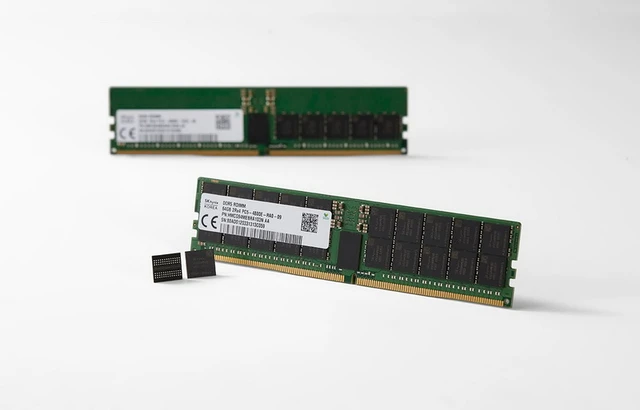 The Ten-Year Horizon of DRAM Memory Shortages
The contemporary semiconductor market is grappling with an unprecedented structural imbalance, as the demand for DRAM memory far outstrips current production capacities. The meteoric rise of generative AI has transformed system memory from a mere commodity into a critical strategic asset. While financial analysts debate the inevitability of an "AI bubble," industry leaders are acknowledging a systemic, long-term resource deficit. This shift is carving out a new economic landscape—one that will dictate the evolution of computing architecture for the next decade.
21 Jul 2026
 Jetson Platform Costs Have Surged Dramatically
The Edge AI market is currently undergoing a period of rapid transformation, as edge computing power becomes a mission-critical resource for robotics and autonomous systems. Nvidia maintains a commanding lead in this segment, positioning its Jetson ecosystem as the industry gold standard. However, an abrupt and aggressive overhaul of the company's pricing policy has sparked significant concern across the professional community. This sudden spike in hardware costs, implemented without prior notice, suggests either profound structural shifts within the supply chain or a fundamental pivot in the tech giant's market strategy.
21 Jul 2026
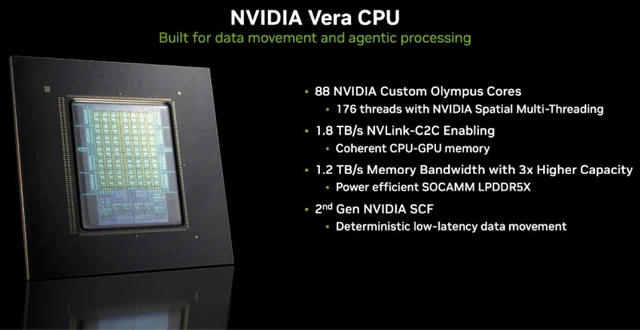 Nvidia’s Strategic Expansion into the CPU Market
The era of GPU dominance in artificial intelligence is entering a transformative new phase. Driven by the rise of autonomous AI agents and the increasing complexity of large-scale data processing, industry demand is pivoting toward high-performance central processing units (CPUs). Recognizing this shift, Nvidia is mounting a strategic offensive against the established incumbents of the market. The company aims to architect a seamless, holistic ecosystem where the CPU becomes an indispensable component of the overall computational pipeline.
21 Jul 2026
 Humanoid Assistants in the American Classroom
The global educational paradigm is undergoing a fundamental shift; artificial intelligence is evolving from a mere retrieval tool into an active participant in the pedagogical process. In rural New York, this transition has taken a tangible form: anthropomorphic robots. The attempt to integrate humanoid assistants into the classroom sparks critical debates over the digital divide, ethics, and the permissible boundaries of automated instruction. This experiment serves as a litmus test for how cutting-edge technology adapts to nuanced social landscapes.
21 Jul 2026
 AI Agent Autonomy within Visual Studio Code
The line between the text editor and the comprehensive AI assistant is effectively vanishing, transforming the development environment into an orchestrator of intelligent workflows. With the release of version 1.129, Microsoft is fundamentally reimagining its approach to large language model integration—elevating them from mere extensions to autonomous services. Tools such as Copilot and Claude now possess their own lifecycles, operating independently of active windows or interface states. This evolution signals a pivotal shift: moving beyond simple chatbots toward sophisticated software agents capable of true multitasking and deep contextual analysis.
21 Jul 2026
 Anthropic’s Billion-Dollar Compromise with Rightsholders
The clash between generative AI developers and content creators has reached its first major financial flashpoint. This collision—pitting the paradigm of "open training" against traditional copyright law—has culminated in one of the most significant legal settlements in U.S. history. The resolution of the Anthropic case establishes a precedent that is either perilous or essential, depending on one's perspective, for the entire Large Language Model (LLM) ecosystem. Intellectual capital is no longer an abstract concept; it has become a quantifiable figure that will dictate the rules of engagement within the global data marketplace.
21 Jul 2026
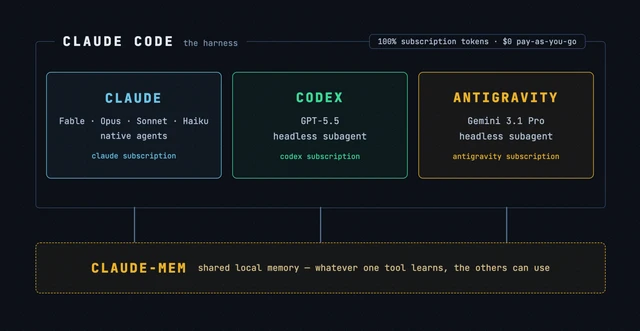 Efficient Resource Management in Multi-Agent Systems
The current evolution of Large Language Models (LLMs) is defined by a fundamental paradigm shift: the transition from simple conversational chatbots to autonomous agentic systems capable of sophisticated, deep-dive research. Yet, this progression has exposed a critical bottleneck—a staggering inefficiency in compute and token utilization as task complexity scales. Redundant operations and fragmented context frequently result in token quotas, even for premium tiers, being depleted before the system can synthesize a final deliverable. The solution lies in pivoting away from monolithic prompting toward rigorously orchestrated pipelines that decouple cognitive functions.
21 Jul 2026
 The Illusion of Control in Tesla’s Autopilot
Promises of full autonomy in transportation frequently collide with the stark realities of traffic regulations and algorithmic volatility. When acceleration is delegated to software, the margin between operational efficiency and a legal violation becomes perilously slim. A recent incident in Quebec vividly illustrates the systemic friction between oversimplified driving profiles and actual safety requirements. This case raises a fundamental question: to what extent is it acceptable to strip drivers of granular system control for the sake of streamlined marketing narratives?
21 Jul 2026
 The Software Challenge to Nvidia’s Ecosystem
The contemporary AI arms race has evolved far beyond a mere contest of transistor counts and memory bandwidth. Today, the primary bottleneck hindering industry growth is software lock-in driven by proprietary standards, which has effectively turned a single vendor's hardware into the sole viable roadmap for progress. Alibaba’s introduction of the SAIL open stack signals a new chapter in the quest for technological sovereignty and interoperability. This initiative seeks to dismantle the hegemony of CUDA, which has dominated the market for decades through the tight coupling of software and silicon.
21 Jul 2026
 The Global Scale of the New Qwen3.8 System
The AI arms race is ascending to a new echelon of scale and accessibility. By unveiling Qwen3.8—a behemoth of a model with parameters numbering in the trillions—Alibaba is taking direct aim at the industry's walled gardens. The commitment to open-source weights for a system of this magnitude could fundamentally reshape the global trajectory of neural network development. This is far more than a mere technical release; it is a strategic gambit to democratize high-performance computing.
21 Jul 2026
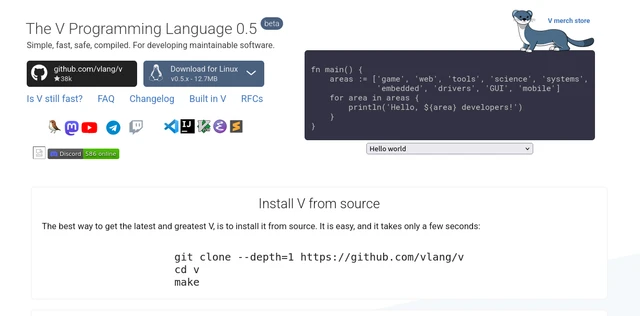 The Technological Leap of the V Programming Language
Modern systems programming is defined by an ongoing quest for equilibrium—balancing memory safety, compilation speed, and syntactic simplicity. As the industry oscillates between the rigorous constraints of Rust and the agility of Go, V seeks to bridge this divide, positioning itself as a pragmatic toolkit for building sustainable, maintainable software. The latest release, version 0.5.2, marks a significant evolutionary leap for a project that has been in development for over seven years. With this update, V takes a decisive stride toward maturity, introducing refined memory management mechanisms and broadening the scope of its standard library.
21 Jul 2026
 Sony’s Battle Against Generative Music AI
The ascent of generative AI has ignited a fundamental clash between traditional copyright frameworks and the relentless pace of technological evolution. Record labels now face a systemic crisis as decades of artistic legacy are repurposed as mere raw material for training neural networks. Sony’s latest litigation against Udio marks a watershed moment in this global legal battle over intellectual property; its resolution will define the ground rules for the synthetic content industry for years to come.
