The global hardware market is undergoing a fundamental paradigm shift, where artificial intelligence has evolved from a value-add feature into the primary catalyst for demand. Lenovo has positioned itself at the epicenter of this transformation, delivering financial results that transcend conventional growth metrics. Record-breaking revenue and profit margins signal a successful pivot from legacy electronics manufacturing toward the orchestration of integrated AI ecosystems. This strategic leap is redefining the competitive hierarchy across both personal computing and server infrastructure.
Lenovo’s financial performance for the first quarter of fiscal year 2027 marks a definitive triumph. Total revenue surged by 43%, hitting a historic peak of $26.9 billion. Even more striking is the growth in net profit, which climbed 176% year-over-year, crossing the psychological threshold of one billion US dollars for the first time. This success is driven by an aggressive expansion into the artificial intelligence segment, which now accounts for 35% of the group's total revenue, contributing $9.3 billion. To sustain this momentum, the company has increased its R&D investment by 30%, allocating $682 million to research and development.
The Intelligent Devices Group (IDG), encompassing PCs, tablets, and smartphones, warrants particular attention. Revenue in this segment grew by 27% to $17.1 billion, with sales of personal computers and peripherals increasing by 30%. Despite volatility in component pricing, Lenovo managed not only to maintain an operating margin of 7.1% but to grow it to $1.2 billion. The company's market capture strategy is yielding tangible results: for ten consecutive quarters, the manufacturer has widened the gap with its nearest competitor, currently commanding a 24.2% share of the global PC market.
This transformation has also permeated the mobile segment. Smartphone revenue grew by 13%, fueled primarily by the success of premium lines such as Moto Razr, Signature, and Edge, which now constitute 37% of the division's income. Between 2023 and 2025, the adoption rate of AI PCs within Lenovo's portfolio significantly outpaced industry benchmarks. A similar trend is evident with Motorola: sales of premium models grew by an average of 23% annually, vastly exceeding the overall market growth of 7%. Simultaneously, the tablet segment saw a phenomenal revenue spike of 83%, setting a new record for the season.
The infrastructure block, responsible for server solutions, has emerged as the primary engine of growth. Revenue here nearly doubled, reaching $8.5 billion with an operating profit of $777 million. In international markets, demand for AI servers is exhibiting triple-digit percentage growth, reflecting a global trend toward the deployment of local language models and compute clusters. The scale of this demand is underscored by a massive order backlog for AI servers, which has surged 157% to reach $54 billion.
Parallel to its hardware evolution, the company is scaling its high-margin solutions and services sector, where revenue rose 28% to $2.9 billion with a record operating margin of 24.2%. This represents a strategically critical pivot: forecasts suggest the AI services market could expand to $850 billion by the end of the decade. Lenovo anticipates that by that time, intelligent services will account for up to half of the corporation's total revenue.
The market responded to these metrics with overwhelming positivity; company shares climbed 17% following the report, bringing year-to-date growth to an impressive 225%. Even a technical net loss of $609 million, triggered by the revaluation of 2025 warrants, failed to deter investors. For the professional community, it has become clear that Lenovo's operational efficiency and strategic vision have evolved the company from a mere hardware assembler into a pivotal player in AI infrastructure.

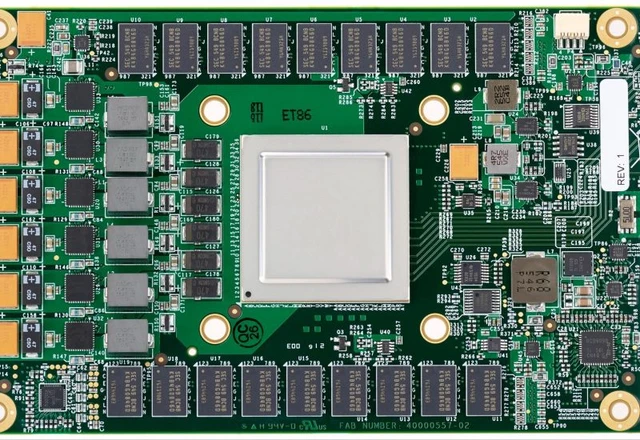 Anthropic’s Strategic Push for Hardware Independence