The contemporary smartphone landscape has evolved into a relentless pursuit of energy efficiency, where every additional hour of screen-on time serves as a critical competitive edge. Amidst this competition, Samsung is recalibrating the equilibrium for its "accessible" FE flagship series, striving to harmonize raw performance with sustained endurance. Recent filings from European regulatory bodies suggest a significant leap in battery life for the forthcoming Galaxy S26 FE. Yet, this progress has come at a cost, forcing the manufacturer to make strategic compromises regarding the long-term durability of its components.
Early insights into the upcoming Samsung Galaxy S26 FE have begun to surface via European regulatory filings. Data from the European Product Registry for Energy Labelling (EPREL) reveals an intriguing trajectory for the lineup: the device, listed under model index SM-S741B, demonstrates battery endurance that significantly outperforms its predecessor.
While last year's Galaxy S25 FE provided roughly 42.5 hours of operation—earning it a "B" rating—the new model climbs a rung higher, securing an "A" rating with an estimated runtime of 50 hours. Such a leap suggests substantial hardware revisions or a major breakthrough in power optimization.
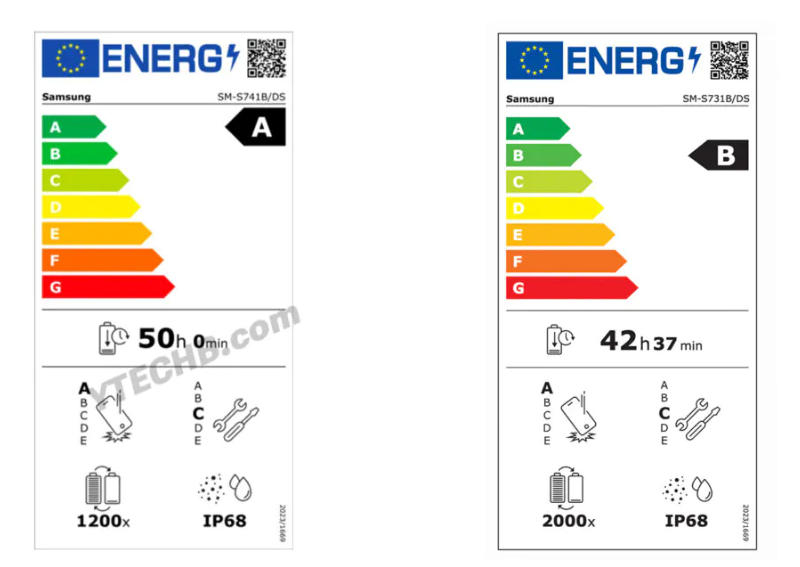
This technological surge likely stems from two key factors. First is the implementation of silicon-carbon batteries. This technology allows for a significant increase in energy density without expanding the battery's physical footprint, a move already seen in the Galaxy Z Fold8 series. The second factor is the transition to a new fabrication process: the Galaxy S26 FE is expected to feature the Exynos 2500 processor, built on a 3nm process. Moving from 4nm (as seen in the Exynos 2400) to 3nm typically results in reduced leakage current and enhanced overall chip efficiency, translating directly into additional hours of uptime.
However, this gain in single-charge endurance comes at the cost of overall battery longevity. An analysis of the data reveals a concerning trend: the number of full charge cycles before capacity degrades to 80% has dropped from 2,000 in the previous model to 1,200 for the Galaxy S26 FE.
From a technical standpoint, this appears to be a calculated trade-off. Increasing energy density often accelerates the chemical degradation of the electrolyte or electrodes. Nevertheless, for the average user, 1,200 cycles remains quite acceptable. With daily charging, this lifespan covers approximately three and a half years of active use before a noticeable decline in autonomy occurs. Consequently, Samsung is prioritizing immediate user experience and impressive benchmark figures, betting that most owners will upgrade their devices long before the battery begins to lose its efficacy.
 The Evolution of Apple's Augmented Reality Ecosystem