The global semiconductor landscape is undergoing a fundamental transformation, catalyzed by the meteoric rise of generative AI. At the epicenter of this shift is Samsung Electronics, whose financial trajectory is now inextricably linked to its ability to navigate the friction between the world's dominant geopolitical blocs. Recent corporate filings reveal a surprising pivot: the Chinese market has overtaken the U.S. as the primary driver of profitability. This trend underscores the profound interdependence of tech titans and the intricate complexities of the modern global division of labor.
The modern microelectronics industry is currently navigating a period of significant turbulence, where the insatiable demand for AI computing power is rewriting the rules of engagement. Samsung Electronics, maintaining its status as the world's largest memory chip manufacturer, has demonstrated an impressive ability to scale its revenue; however, this growth is distributed across geographic regions with striking unevenness. An analysis of interim financial results for the first half of the year reveals a paradoxical trend: despite mounting technological pressures, China has emerged as a more profitable frontier for the company than the U.S. market.
The trajectory of expansion in the PRC appears particularly aggressive, with revenue growth in the region surging by 208%. In absolute terms, export earnings from China reached $62.8 billion. By comparison, the North American market generated approximately $50 billion. While the U.S. figure also shows rapid acceleration—more than doubling compared to the previous year—it still trails the Chinese vector in absolute value.
To understand the nature of this growth, one must examine Samsung's internal organizational structure. The company's financial flows are consolidated across two fundamentally different divisions: DX (Device Experience), which handles consumer electronics, and DS (Device Solutions), which specializes in semiconductors. The DS division has become the primary engine of profitability. In the first half of the year, it accounted for 68.5% of the corporation's total revenue, while its share of operating profit reached a staggering 97.4%.
Revenue growth in the U.S. is likely driven by demand from tech giants building massive infrastructure for training neural networks. This is where a "pricing lever" effect comes into play: the cost of specialized memory components is rising faster than the physical volume of shipments, significantly boosting total revenue in dollar terms.
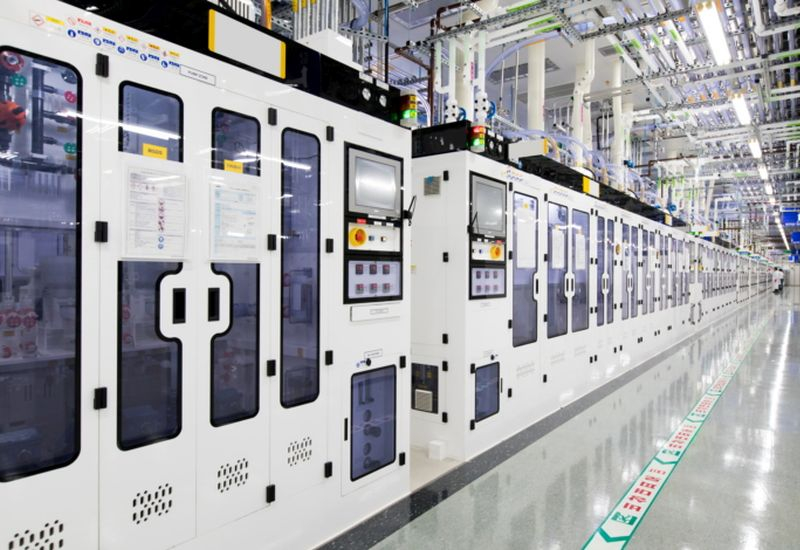
The situation in China follows a different logic. Here, Samsung faces stringent regulatory constraints; the supply of the most advanced memory chips to the PRC is effectively prohibited due to export controls. Nevertheless, the company continues to dominate the commodity memory segment, a significant portion of which is produced directly within Chinese territory. Consequently, financial success in this region is driven not by high-tech innovation, but by massive volumes of standardized products and deep integration of production capacities.
This diversification highlights Samsung's strategic dilemma: the company is forced to balance high-margin but politically sensitive shipments to the U.S. against the massive, traditional market of China, which remains the primary source of cash flow despite its increasing technological isolation.

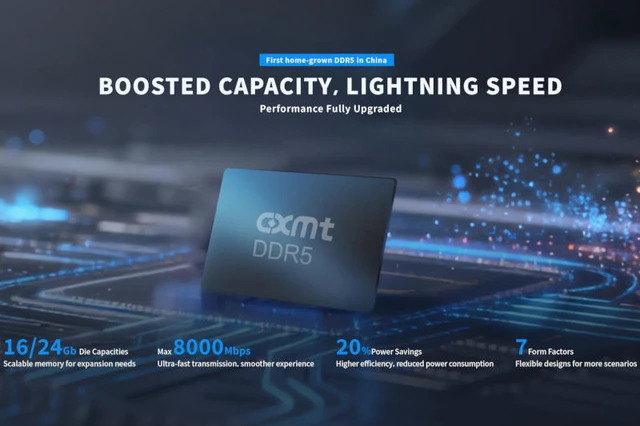 The Price of Acceleration: CXMT’s Rapid Push into Memory