The divide between legacy code and modern platforms is rapidly dissolving, driven by the evolution of Large Language Models. A recent experiment—porting an iconic early-2000s strategy title to iOS—highlights AI's transition from a mere assistant to a fully autonomous engineering agent. At the center of this breakthrough was Claude Fable 5, which successfully navigated technical hurdles that had stymied previous iterations of neural networks. This case marks the beginning of a new chapter in digital preservation and the automation of sophisticated systems programming.
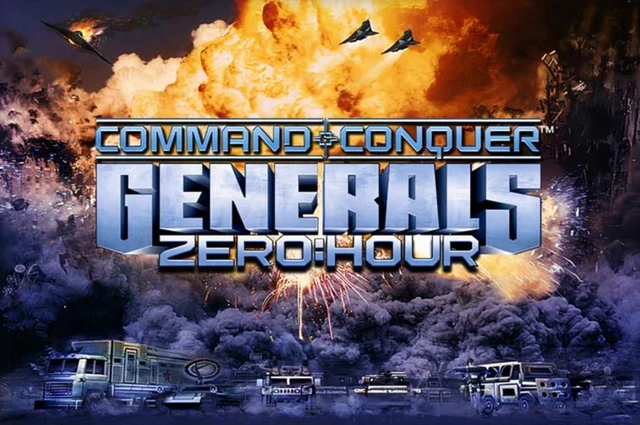
The resurrection of Command & Conquer: Generals — Zero Hour (2003) on modern Apple hardware is less a product of traditional development and more a testament to the synergy between human orchestration and advanced AI. This project is a full-fledged native ARM64 port for iPhone and iPad, fundamentally distinguishing it from typical emulators or cloud-streaming solutions. It represents a sophisticated adaptation of a twenty-year-old engine, successfully refactored to meet contemporary execution standards.
The technical implementation of the graphics pipeline warrants a deep dive. To enable legacy code to interface with modern Apple silicon, a multi-layered rendering translation chain was engineered: DirectX 8 is converted via DXVK into Vulkan, which then passes through MoltenVK before finally reaching Metal—Apple's proprietary graphics API. This cascade preserves the game's visual identity while ensuring high performance on mobile chips. Consequently, users have full access to the original campaigns, skirmishes, and the Generals Challenge mode.
One of the primary hurdles was the user interface. Real-time strategy (RTS) games were historically designed for the precision of a mouse, making them virtually unplayable on touchscreens without a comprehensive overhaul. To solve this, a custom control scheme was developed: unit selection is handled via taps, group selection through marquee dragging, and action cancellation via long-press. Map navigation is implemented through two-finger scrolling and intuitive pinch-to-zoom gestures.
The development process vividly illustrated the capabilities gap between different generations of neural networks. While the Opus 4.8 model failed to tackle the task even at maximum settings, Claude Fable 5 served as the project's primary architect. The first working build was achieved in just 40 minutes, although subsequent debugging required several hours of intensive iteration. Notably, this progress came at a high cost in terms of computational resources: the Claude Max subscription limit was completely exhausted within two days of development.
It is critical to recognize that this success rests upon a community foundation. The port is based on the GeneralsX project, which previously migrated the game engine to macOS and Linux using EA source code released under the GPL v3 license. The current fork extends these capabilities by adding iOS/iPadOS support, a touch interface, and several critical engine fixes. Although the volume of new commits is small compared to the base codebase, these specific modifications are what transformed a desktop application into a mobile product.
The ethical context is equally intriguing: the developer, an employee of Google AI Studio, consciously opted for a competitor's tool from Anthropic. This approach underscores a pragmatic view of the AI industry, where the efficiency of solving a specific problem takes precedence over corporate allegiance.
Currently, the project remains available to enthusiasts via GitHub and is not intended for mass distribution on the App Store. Deployment requires an Xcode environment and the original game assets sourced from Steam. The only significant technical constraint remains memory management: during extended sessions, iOS may force-close the application if RAM consumption exceeds a 3 GB threshold.
 Anthropic’s Strategic Push for Hardware Independence