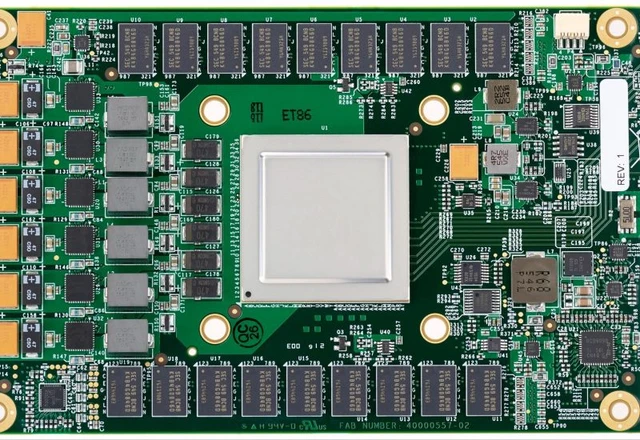
The global AI arms race has traditionally centered on the raw computational power of GPUs, yet the true scale of this expansion lies hidden within the supporting infrastructure. While market discourse remains fixated on flagship chips, fundamental demand is pivoting toward the ancillary components that sustain their operation. The trajectory of SMIC illustrates how the second-order effects of the AI boom are evolving into primary drivers of financial growth—underscoring a profound restructuring of supply chains and an aggressive pursuit of technological sovereignty across the world's largest electronics markets.
The modern semiconductor market is navigating a curious paradox: while public attention remains fixated on the "brains" of AI, actual order volumes are shifting toward auxiliary systems. SMIC, one of the world's largest foundries, has reported an impressive 40% revenue surge in peripheral chips for AI infrastructure. This phenomenon can be viewed as a "side effect" of the current technological leap: a single high-performance server equipped with 72 GPUs requires a massive array of supporting components—thousands of specialized chips managing power delivery and distribution without which high-performance computing (HPC) would be physically impossible.
Parallel to this technological demand is a pronounced trend toward regionalization and import substitution. SMIC’s revenue structure vividly illustrates this shift: the share of domestic customers has climbed from 84.1% to 90.2%, while its footprint in the US market has contracted nearly 1.5 times, dropping from 12.9% to 8.2%. This trajectory signals the emergence of a closed technological loop, where internal demand serves as the primary guarantor of production stability.
Amidst current market conditions, the company is maintaining a firm stance on pricing, resisting any downward pressure on service costs. Despite stagnating demand in traditional sectors such as consumer smartphones and industrial automation, SMIC has avoided price dumping. Interestingly, the consumer electronics segment is exhibiting atypical behavior: many firms have begun stockpiling chips. This strategic hoarding, driven by fears of supply chain disruptions or further cost escalations, is creating artificial demand support even as the broader market cools.
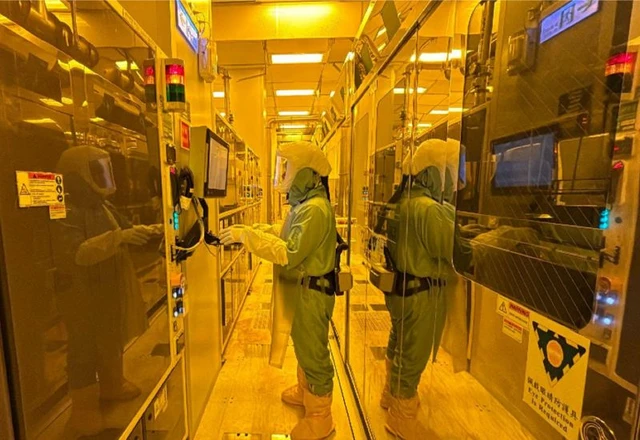
The scale of this expansion is reflected in the operational metrics. In the second quarter, wafer starts (in 200mm equivalents) grew by 20% year-over-year, reaching 2.87 million units. The capacity utilization rate has neared its ceiling, climbing to 93.7%. This indicates that the company's facilities are operating at near-peak capacity, despite structural shifts in its order portfolio.
Simultaneously, a notable diversification of the product mix is underway. While client-side devices previously dominated—their share dipping from 46.2% to 44.2%—the automotive electronics and industrial automation sectors are growing rapidly, increasing their overall contribution from 10.6% to 16.5%. To sustain this momentum, SMIC is investing heavily in its infrastructure; capital expenditures for capacity expansion totaled $3.4 billion in the first half of the year alone. Such a strategy underscores the company's long-term commitment to strengthening its position as a cornerstone of the digital economy's infrastructure.
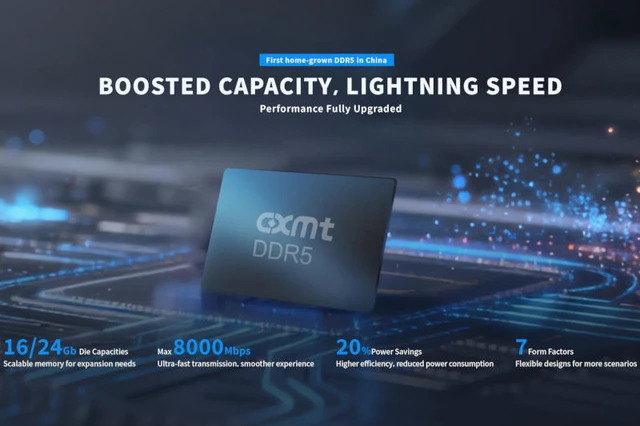 The Price of Acceleration: CXMT’s Rapid Push into Memory