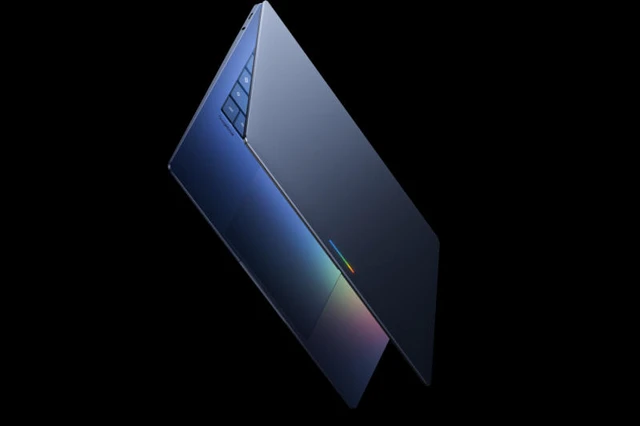
For years, ChromeOS was pigeonholed as a basic utility for classrooms and entry-level tasks, hampered by budget plastic chassis and lackluster performance. Now, Google is radically shifting its trajectory, pivoting from a "bottom-up" strategy toward an expansion driven by flagship hardware. The objective of this strategic pivot is to shed its image as a budget-tier offering and establish itself as a legitimate alternative to the MacBook and Copilot+ PCs. Central to this new vision is a rigorous approach to hardware segmentation and a decisive bet on high-performance silicon.
The trajectory of the early Chromebook era was fundamentally shaped by its market positioning: these devices were conceived as entry-level, ultra-affordable machines. However, this emphasis on low cost became a reputational trap. Underpowered hardware paired with budget chassis materials cemented the image of the "student machine"—a perception that persisted even after the launch of the Chromebook Plus line. To break this cycle, Google has initiated the "Googlebook" program, pivoting toward a diametrically opposite strategy for market penetration.
The new strategy focuses on capturing the apex of the pyramid. Early leaks confirm that the company is betting on uncompromising hardware. Specifically, we are seeing models like the Asus CX9406, weighing less than one kilogram and boasting an impressive 64GB of RAM, alongside the Dell XPS 13 powered by the Snapdragon X Elite chip. These devices are designed to serve as a "showcase" for the platform's capabilities, demonstrating that Googlebook can compete with the top-tier solutions currently on the market.
However, these flagships are merely tools for shifting perception. For the platform to truly survive and scale, Google is constructing a multi-tiered device hierarchy designed to cover every consumer and corporate need. The internal portfolio is divided into three distinct segments.
The first is AL Premium. This is the top tier, where devices featuring OLED panels and cutting-edge processors—such as the Intel Panther Lake Core Ultra 7, Qualcomm Snapdragon X Elite/X2, or MediaTek Dimensity CX—make their debut. Here, hardware requirements are stringent, and chassis materials must reflect a premium status.
The second level, AL Mass Premium, targets the general user and the business segment. The goal here is a precise balance between cost and efficiency. The computational core consists of 8-core processors (such as the Snapdragon X Plus or Intel Core Ultra 5), augmented by powerful NPUs delivering 45 TOPS, ensuring extended battery life and high-speed AI performance.
Rounding out the lineup is the AL Entry segment. This is the direct successor to the classic budget Chromebook, intended for education and basic user scenarios. Despite the cost optimization, these machines will feature native Android desktop applications and core Gemini functionality, making them fully integrated members of the ecosystem.
This top-down rollout—from premium to entry-level—is a calculated strategic move. To incentivize professional software developers, such as those at Adobe Premiere Pro or Canva, to create optimized interfaces for keyboard and mouse input, Google first had to prove that its devices are legitimate workstations. By creating a product comparable in power to M-series MacBooks or Copilot+ PCs, the company is setting a high performance benchmark that will eventually trickle down to more affordable models.
In the long term, the bulk of sales volume will be concentrated in the AL Mass Premium segment. Data from the Chromium Gerrit environment indicates active development of platforms based on the Snapdragon X Plus (codenamed Annite and Pic). Despite their 8-core architecture, these solutions are nearly identical to the flagship 12-core chips in terms of AI accelerator performance. In doing so, Google is shaping a future where the new Aluminium OS permeates every price point, transforming the laptop from a simple terminal into a powerful, intelligent tool.
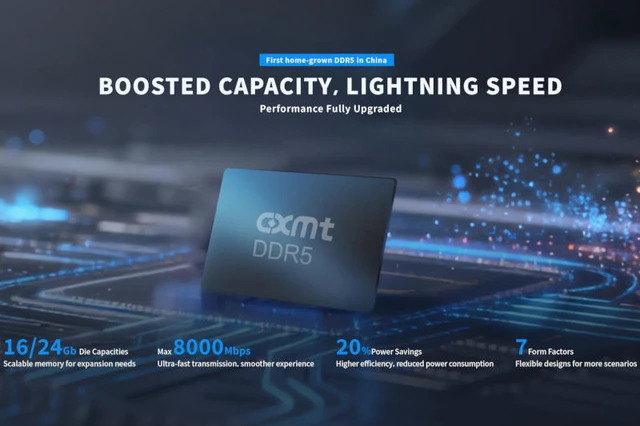 The Price of Acceleration: CXMT’s Rapid Push into Memory