The global technology market is undergoing a phase of unprecedented growth, propelled by the rapid expansion of artificial intelligence and cloud computing. Yet, beneath the veneer of record-breaking financial performance lies a precarious mechanism of cross-capitalization, effectively transforming the industry into a closed-loop ecosystem. The world's leading tech giants are increasingly reporting profits derived not from product sales, but from the appreciating value of their mutual equity stakes. This financial interdependence fosters an illusion of stability—one that could trigger a systemic crisis the moment market optimism begins to cool.
The current Big Tech landscape reveals a paradoxical shift: giants like Alphabet and Amazon, who dominated search and retail for decades, are evolving into something akin to investment funds. A significant portion of their quarterly earnings is no longer driven by core operations, but by the revaluation of assets within the AI sector. In Alphabet's case, over 70% of net income is derived from investments, including its stake in SpaceX; for Amazon, this figure reaches 65%, with Anthropic serving as the primary catalyst.
At the heart of this system lies the mechanism of "paper profits." Under current accounting standards, unrealized gains in asset value at the end of a quarter are added to the company's total profit. Consequently, if the perceived value of SpaceX or Anthropic rises in the eyes of analysts, Alphabet and Amazon record a profit without having sold a single share. This mechanism is a double-edged sword: any dip in a startup's market valuation immediately erodes the corporation's reported earnings, creating a state of extreme volatility.
Of particular concern is the emergence of circular financing loops. Tech leaders, chipmakers, and AI labs are increasingly investing in one another or extending mutual loans. These funds often flow back to the original partners as payments for cloud computing capacity or specialized hardware. While OpenAI’s Sam Altman describes such schemes as a "creative way" to unlock capital and accelerate innovation, from a financial analysis perspective, it looks like the inflation of an artificial bubble, where asset values are pumped up through internal transactions.
The scale of this phenomenon becomes evident when analyzing the "Magnificent Seven" (Alphabet, Amazon, Microsoft, Meta, Apple, Tesla, and Nvidia). In a recent quarter, their combined net profit totaled $315.6 billion, yet nearly 42% of that—$134.6 billion—was attributed to investment income. Without this factor, the group's profit growth would have been effectively flat. Notably, just one quarter prior, investment gains accounted for only 5%, signaling a rapid industry pivot toward a model of mutual financial interdependence.
Nvidia, the primary beneficiary of the hardware boom, is deeply integrated into this web. The company invests not only in OpenAI and Anthropic but also in infrastructure providers like CoreWeave and Applied Digital, which lease out GPU-powered data centers. In effect, Nvidia is financing its own customers, who then spend those funds purchasing Nvidia chips.
The risks inherent in this architecture become apparent at the first sign of a market correction. For instance, following SpaceX's public trajectory, its valuation—despite an initial surge—dipped 17% from its peak, directly impacting Alphabet's financial statements. Should skepticism regarding the actual utility of AI begin to outweigh the hype, a domino effect will ensue: a decline in a startup's valuation will trigger a drop in the investor corporation's profits, dragging down its stock price and, ultimately, the entire sector's market capitalization.

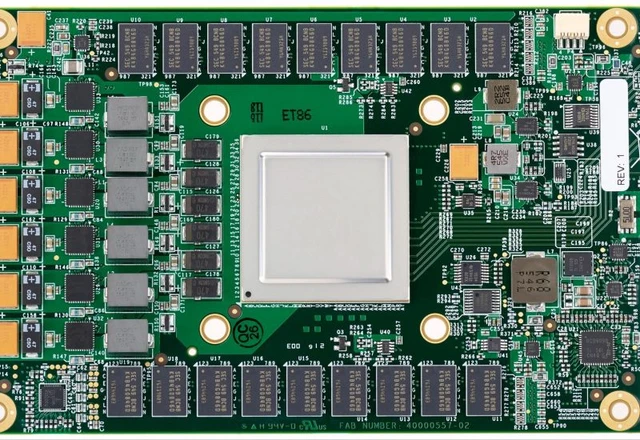 Anthropic’s Strategic Push for Hardware Independence