7 Jul 2026
 Claude Fable 5 Availability Extended
The global race for Large Language Model (LLM) supremacy is no longer defined solely by algorithmic sophistication; it is increasingly dictated by the availability of compute and the complexity of regulatory hurdles. Anthropic’s experience with Claude Fable 5 serves as a stark illustration of how technical constraints and external pressures directly impact the user experience. By once again revising the rollout schedule for its flagship model among paid subscribers, the company has highlighted the precarious balance between the ambition to deliver cutting-edge innovation to the market and the hard limits of existing infrastructure.
6 Jul 2026
 The Crisis of Trust in the Era of Generative Models
The modern literary landscape is grappling with a profound paradox: human creativity has become subject to algorithmic censorship. The controversy surrounding the Commonwealth Prize has laid bare a systemic crisis of confidence, as winning entries were branded as products of neural networks. This clash underscores the inherent fallibility of current detection tools and their inability to differentiate a distinct authorial voice from mere statistical patterns. At the heart of this debate lies a fundamental question: where does technical optimization end, and true art begin?
6 Jul 2026
 The Cost of Resisting Digital Surveillance
Modern urban centers are evolving into domains of pervasive digital surveillance, where the demarcation between security and privacy grows increasingly opaque. The rollout of Automatic License Plate Recognition (ALPR) systems has sparked a profound societal divide, pitting state imperatives against the fundamental rights of the individual. The account of a Virginia-based engineer who took it upon himself to physically dismantle these tools of surveillance has ignited a sweeping debate over the legitimacy of mass monitoring. This incident underscores a pivotal shift: resistance to data infrastructure is transitioning from isolated acts of defiance into a structured movement for digital liberty.
6 Jul 2026
 The Twilight of the Micro-Task Era at Amazon
The artificial intelligence industry is undergoing a fundamental paradigm shift in how data is curated and models are trained. Amazon Mechanical Turk—which for decades served as the critical conduit between human cognition and machine code—has effectively hit its growth ceiling. Amazon’s decision to restrict onboarding for new clients signals a broader pivot away from manual data labeling toward more sophisticated, automated frameworks. This transition marks the twilight of the "digital proletariat" in its original form.
6 Jul 2026
 A Digital Snapshot of an Era for Posterity
Any attempt to encapsulate a specific moment in history and project it across centuries is, by its very nature, a philosophical experiment. In anticipation of the United States' semiquincentennial, a monumental time capsule has been conceived as a bridge between our contemporary era and the world to come. The project synthesizes tangible artifacts, frontier technologies, and nascent attempts by artificial intelligence to conceptualize the future. By the year 2276, future generations will inherit a definitive cultural and scientific snapshot of the early 21st century.
6 Jul 2026
 Alibaba Bans Claude Code Across Its Ecosystem
The global artificial intelligence arms race is entering a phase of stark fragmentation, characterized by the rigid demarcation of digital territories and development ecosystems. The friction between Anthropic and Alibaba serves as a poignant case study in how data security is being weaponized as a lever for geopolitical leverage. The prohibition of Claude Code within the Chinese tech behemoth underscores a broader corporate drive toward total sovereignty over the development stack. At the heart of this clash lies more than just technical constraints; it is a fundamental battle over intellectual property in the age of Large Language Models.
6 Jul 2026
 Intelligent Vulnerability Discovery in the FreeBSD Kernel
The convergence of Large Language Models (LLMs) and cybersecurity is rapidly transitioning from theoretical discourse into a phase of practical application. Recent experiments demonstrate that modern AI agents are capable of uncovering critical vulnerabilities even within deeply hardened system kernels. The FreeBSD analysis case study reveals that effective exploit discovery no longer hinges on massive token budgets, but rather on the sophisticated orchestration of tools. This milestone marks the dawn of a new era in automated vulnerability research.
6 Jul 2026
 The Narrow Specialization Trap of Anthropic’s Models
While the evolution of Large Language Models typically trends toward general versatility, recent developments highlight a troubling pattern: the emergence of "digital habits" that undermine overall precision. The regression observed in the latest iterations of the Claude family demonstrates how aggressive optimization for specific internal tooling can compromise a model's capacity to adhere to neutral API contracts. This phenomenon exposes a systemic flaw in contemporary post-training methodologies—the pursuit of efficiency within proprietary ecosystems often comes at the cost of performance in open environments. Consequently, third-party agent developers are grappling with a paradox where ostensibly "advanced" models struggle with fundamental tasks that their predecessors handled with ease.
6 Jul 2026
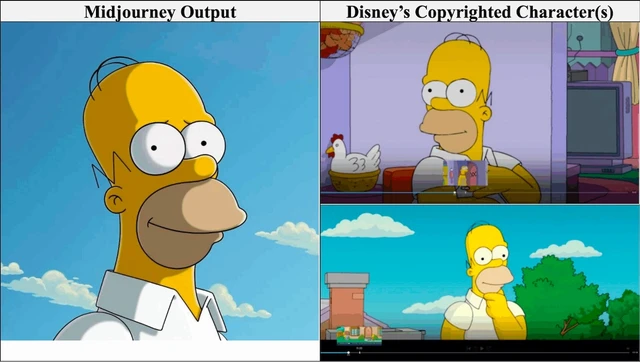 The Legal Showdown Between Midjourney and the Film Studios
The era of generative artificial intelligence has collided with a fundamental copyright crisis, one that calls into question the very foundations of content creation. Global media conglomerates are scrambling to shield their intellectual property from the unchecked replication capabilities of neural networks, which can now synthesize iconic characters with uncanny precision. At the epicenter of this clash stands Midjourney; the startup is shifting its stance from defensive maneuvering to an aggressive counter-offensive against the titans of Hollywood. The outcome of this struggle will likely redefine the boundaries of "fair use" for technology in the digital age.
6 Jul 2026
 Anticipating OpenAI’s Next Great Leap
The global race for Large Language Model supremacy has entered a phase of peak intensity, where every update serves as a strategic strike against the competition. At the heart of this struggle is the latest skirmish between OpenAI and Anthropic, both vying for absolute dominance in the enterprise sector. Cryptic signals from development leadership hint at an imminent release poised to fundamentally shift the market's power dynamics. This is not merely a technical upgrade; it is a meticulously orchestrated operation to seize the strategic initiative.
6 Jul 2026
 Anthropic’s Path to Custom Silicon
The AI race has fundamentally shifted: the battleground is no longer just about algorithms, but about physical silicon. Today, access to compute has become the ultimate lever of influence and the primary bottleneck hindering the scaling of neural networks. Anthropic’s move to develop its own proprietary accelerators signals a pivotal transition from resource dependency to technological sovereignty—a strategic play designed to eliminate critical reliance on external suppliers amidst a global hardware crunch.
6 Jul 2026
 The Synthetic Evolution of Consumer Goods
The global consumer goods market is undergoing a fundamental shift toward algorithmic design. Traditional R&D cycles are giving way to predictive models that compress time-to-market from years to mere weeks. Industry titans, such as L'Oreal and Mondelez, are abandoning the legacy of trial-and-error in favor of a strategic synergy between data science and chemistry. This transformation marks the dawn of an era where innovation is no longer a matter of chance, but the result of precise mathematical calculation.
