The artificial intelligence industry is undergoing a fundamental paradigm shift in how data is curated and models are trained. Amazon Mechanical Turk—which for decades served as the critical conduit between human cognition and machine code—has effectively hit its growth ceiling. Amazon’s decision to restrict onboarding for new clients signals a broader pivot away from manual data labeling toward more sophisticated, automated frameworks. This transition marks the twilight of the "digital proletariat" in its original form.
Effective July 30, 2026, Amazon will cease onboarding new users to its Mechanical Turk platform. While the service will remain operational for existing accounts, it is transitioning into a maintenance phase: AWS has committed to ensuring system security and availability, but all functional updates and the introduction of new features will cease. This move appears to be more than a mere technical optimization; it is an admission that the "human-in-the-loop" paradigm, in its classical execution, has reached its logical conclusion.
Launched in 2005, Mechanical Turk became the quintessential embodiment of crowdsourcing for tasks that were, at the time, insurmountable for algorithms. The platform operated on the concept of HITs (Human Intelligence Tasks)—micro-assignments requiring human cognitive abilities, ranging from deciphering distorted CAPTCHA characters to analyzing sentiment or identifying the core premise of a sentence. In essence, millions of people worldwide became the invisible architects of modern neural networks, labeling the datasets upon which the first generations of computer vision and natural language processing were trained.
However, beneath the veneer of technological progress lay a profound ethical and operational paradox. For years, Mechanical Turk was suspected of serving as the "hidden engine" for AI developers. Many products marketed as fully autonomous automation systems actually relied on the labor of thousands of low-paid workers correcting algorithmic errors in real time. This phenomenon, recognized in academic circles as "ghost work," created an illusion of technological perfection by masking a colossal volume of manual effort.
Amazon's current decision is a logical extension of the global shift toward automated data labeling and the adoption of synthetic datasets. Rather than relying on thousands of humans, the industry is pivoting toward self-supervised learning models and leveraging more powerful LLMs for data verification.
This transition is further underscored by Amazon's own strategic trajectory. Its deep partnership with Anthropic—including investments of up to $25 billion—demonstrates a clear bet on a high-performance compute stack: specialized Trainium chips and massive computational power. Anthropic's commitment to spend over $100 billion on AWS services over the next decade confirms that the center of gravity has shifted from human resource management to infrastructure management and model efficiency. Mechanical Turk, once the cradle of modern AI, is now yielding to the era of pure computing power.

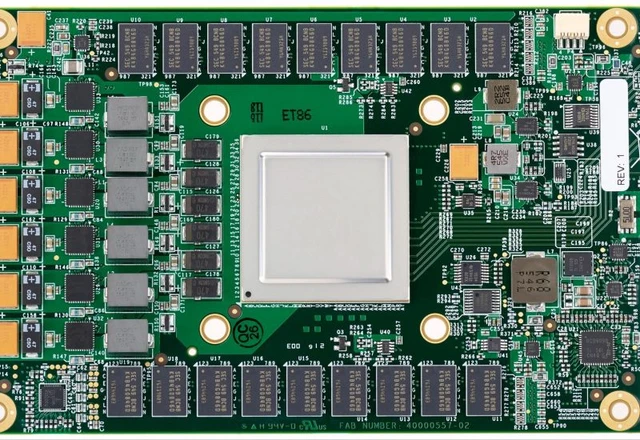 Anthropic’s Strategic Push for Hardware Independence