The global consumer goods market is undergoing a fundamental shift toward algorithmic design. Traditional R&D cycles are giving way to predictive models that compress time-to-market from years to mere weeks. Industry titans, such as L'Oreal and Mondelez, are abandoning the legacy of trial-and-error in favor of a strategic synergy between data science and chemistry. This transformation marks the dawn of an era where innovation is no longer a matter of chance, but the result of precise mathematical calculation.
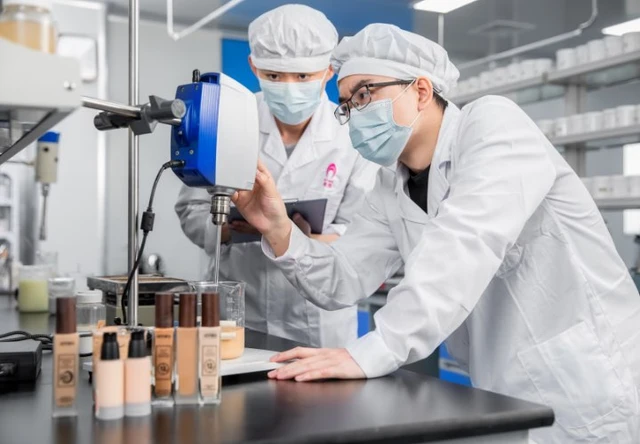
Contemporary R&D in the FMCG sector is evolving beyond the realm of intuitive trial-and-error and protracted laboratory testing. Today, the "digital twin" concept has taken center stage, with artificial intelligence assuming the role of chief architect for product formulations. The French cosmetics giant L'Oréal has spent the last four years integrating neural networks into its laboratories, transforming the development of skincare and haircare products into a high-precision computational challenge.
A pivotal achievement for the company has been the implementation of models capable of predicting how specific molecules interact with biological structures. This has enabled a strategy of cross-domain ingredient application: molecules previously reserved exclusively for dermocosmetics are now being successfully transitioned into haircare lines. A prime example is the launch of a collagen-infused volumizing shampoo, developed four times faster than via traditional methods, thanks to AI's ability to identify non-obvious correlations between chemical compounds and their beneficial properties.
This innovation "arms race" is driven not merely by technological curiosity, but by intense market pressure. In an environment of rapidly shifting consumer preferences and stagnating sales, legacy development methods have become too slow and cost-prohibitive. The strategic "beauty stimulation plan" initiated by L'Oréal’s leadership is essentially a response to the urgent need to radically accelerate the innovation cycle to maintain a competitive edge.
Similar shifts are occurring within the food industry. Mondelez, the powerhouse behind brands like Oreo and Toblerone, is leveraging generative AI for recipe creation. Here, algorithms operate on the principle of expanding the solution space: the neural network proposes "unconventional" ingredient combinations, which are then validated by human food technologists. This symbiosis of man and machine has already resulted in the creation of Golden Oreo gluten-free cookies and a reformulated Chips Ahoy.
The statistics regarding AI adoption in the food sector are striking: approximately 60% of algorithmically generated recipes outperform human-led developments across three critical KPIs—nutritional value, formula stability, and production cost. This demonstrates that machine learning is uniquely capable of optimizing multi-dimensional problems where health requirements, taste profiles, and economic viability must be balanced simultaneously.
The scaling of this approach is impacting the entire consumer market, from Sensodyne (Haleon) toothpastes to Nestlé products. For these corporations, such a transformation represents more than just operational speed; it provides strategic agility. The use of AI significantly reduces the need for physical prototypes, decreases reliance on a narrow circle of raw material suppliers, and allows formulas to be instantly adapted to local consumer demands. Ultimately, development timelines that were once measured in years are shrinking to months, and months to weeks, turning product development into a dynamic, high-tech process.
 Anthropic’s Strategic Push for Hardware Independence