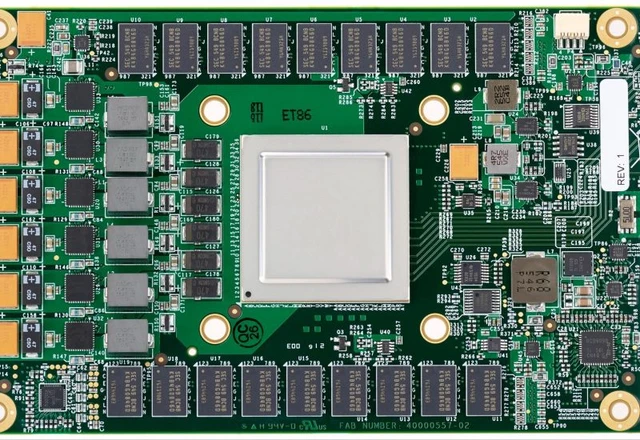
The AI race has fundamentally shifted: the battleground is no longer just about algorithms, but about physical silicon. Today, access to compute has become the ultimate lever of influence and the primary bottleneck hindering the scaling of neural networks. Anthropic’s move to develop its own proprietary accelerators signals a pivotal transition from resource dependency to technological sovereignty—a strategic play designed to eliminate critical reliance on external suppliers amidst a global hardware crunch.
Anthropic’s ambition to develop its own AI accelerator has evolved from theoretical discourse into concrete negotiations with Samsung Electronics. In an industry where access to NVIDIA chips has become the equivalent of political leverage, designing custom hardware is the only way to escape the waiting room and begin dictating the terms of one's own evolution. Reports suggest that the parties are discussing the use of Samsung Foundry’s cutting-edge 2-nanometer process, which could position the future chip as one of the most technologically advanced devices in its class.
The shift to such a precise process is not merely a pursuit of benchmarks. In the context of Large Language Models (LLMs), this translates to a radical increase in transistor density and a reduction in power consumption—factors that are critical for data centers, where electricity costs have become the primary operational burden. While the final design remains shrouded in secrecy, the focus has shifted toward analyzing specific performance metrics and methods for integrating the chip into existing server infrastructure.
Currently, Anthropic exists in a state of forced diversification, simultaneously utilizing Amazon Trainium, Google TPUs, and NVIDIA GPUs. On the surface, such diversification seems prudent; in practice, however, it creates colossal complexities. Each of these stacks requires independent optimization, turning the development process into a perpetual struggle against incompatibility and divergent hardware behavior. A proprietary ASIC (Application-Specific Integrated Circuit) would allow the company to achieve total synchronization between the software layer and the underlying hardware.
This is particularly vital for the evolution of Claude. The model's expanding context window demands specialized approaches to memory management and data transfer—areas where general-purpose GPUs are suboptimal. By designing a chip tailored to its own needs, Anthropic can implement architectural solutions that accelerate the processing of massive datasets, bypassing the bottlenecks inherent in off-the-shelf hardware.
For Samsung, this deal carries equal strategic weight. The South Korean giant is engaged in a protracted battle with TSMC for dominance in the contract manufacturing segment. By partnering with one of the AI market's frontrunners, Samsung strengthens its position in an era of explosive demand for custom solutions. According to TrendForce projections, the market for specialized ASICs for cloud providers will grow by nearly 45% by 2026; adding Anthropic to its client portfolio would send a potent signal to the broader market. The financial foundation for this partnership has already been laid: Samsung previously participated in funding rounds for the company alongside other memory titans such as SK Hynix and Micron.
This trend toward vertical integration has become a common thread among all key industry players. OpenAI, Google, Amazon, and Microsoft have long recognized a fundamental truth: control over hardware equals control over cost and the pace of innovation. When you define the specifications of the silicon yourself, you cease to be dependent on third-party vendor roadmaps and can deploy new model features instantaneously rather than waiting for the next generation of GPUs.
The primary question remains one of scale. Developing a proprietary chip is an undertaking with an exceptionally high barrier to entry and immense financial risk. However, given Anthropic's current market valuation—approaching nearly a trillion dollars—the financial resources for such a leap are available. The industry now awaits the transition from negotiations to the first engineering samples, which will determine whether the company can successfully translate its ambitions into functioning silicon.

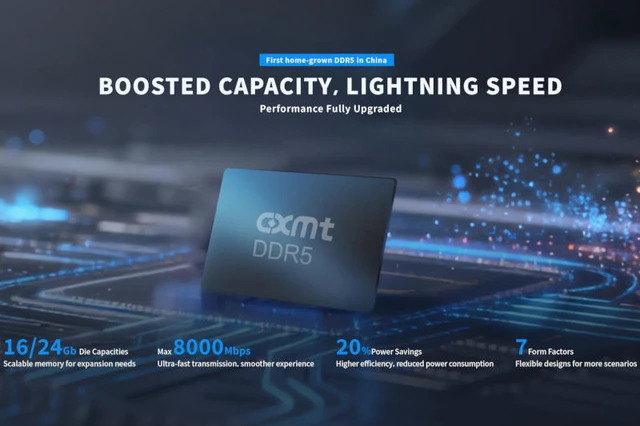 The Price of Acceleration: CXMT’s Rapid Push into Memory