The era of generative artificial intelligence has collided with a fundamental copyright crisis, one that calls into question the very foundations of content creation. Global media conglomerates are scrambling to shield their intellectual property from the unchecked replication capabilities of neural networks, which can now synthesize iconic characters with uncanny precision. At the epicenter of this clash stands Midjourney; the startup is shifting its stance from defensive maneuvering to an aggressive counter-offensive against the titans of Hollywood. The outcome of this struggle will likely redefine the boundaries of "fair use" for technology in the digital age.
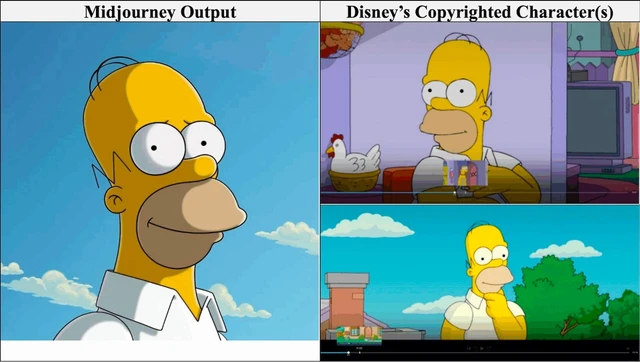
The legal battle between Midjourney and the titans of the entertainment industry—Disney, Universal, and Warner Bros.—has escalated into a high-stakes procedural confrontation. At the heart of the dispute lies a conflict quintessential to the AI era: the allegation that neural networks were trained on copyrighted characters, enabling them to generate content virtually indistinguishable from the original works. Throughout 2025, the studios have initiated lawsuits aimed at halting what they characterize as the illicit copying and distribution of their intellectual property.
Midjourney’s defense rests on the doctrine of "fair use." Their argument posits that training a model on existing data is not an act of theft, but rather a process of pattern analysis designed to synthesize something fundamentally new. However, the focus of the dispute has now shifted from theoretical copyright debates to the granular level of documentation and the internal workflows of the film studios themselves.
The primary point of contention has become the discovery phase. The court previously limited the scope of data the studios are required to disclose, restricting it only to instances where generative AI resulted in a final consumer-facing product. Midjourney vehemently opposes this limitation, arguing that such a narrow scope allows the plaintiffs to cherry-pick documents, presenting the court only with evidence that underscores their alleged damages.
The startup's defensive strategy is centered on proving that the use of AI with unlicensed content has become an industry standard. If it emerges that Disney or Warner Bros. utilize similar tools internally—for instance, in creating storyboards, concept art, or pre-production materials for films and series—it would provide a powerful lever for Midjourney. Essentially, the defendant seeks to demonstrate that the industry giants are employing the very same methods of "learning" and generation for which they are attempting to penalize the startup.
Furthermore, Midjourney is demanding full disclosure of all prompts and their corresponding outputs used by studio employees. This would provide a comprehensive view of how industry professionals interact with neural networks, rather than offering only those fragments that led to overt copyright infringements.
The prosecution, represented by attorney David Singer, has characterized these demands as a "fishing expedition" for compromising material. The studios' position remains steadfast: they are not seeking to dismantle the technology or bankrupt Midjourney, but rather to establish rigid boundaries. Their goal is to end the creation of derivative works without explicit authorization from the rights holders.
This litigation transcends a private dispute between two parties. It touches upon the most sensitive nerve of the modern tech industry: where does inspiration and data analysis end, and direct infringement begin? The outcome of this case could set a landmark precedent—either legitimizing the mass training of models on closed datasets or forcing AI developers to fundamentally overhaul their entire approach to data acquisition.
 The Price of Acceleration: CXMT’s Rapid Push into Memory