30 Jul 2026
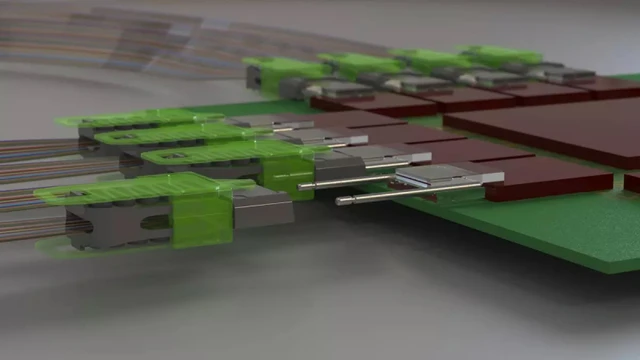 Silicon Photonics: The Bedrock of AI Infrastructure
The current race for AI supremacy has shifted its focus: the battleground is no longer defined by transistor density, but by the efficiency of data movement. Conventional copper interconnects have become a critical bottleneck, throttling both the throughput and power efficiency of next-generation supercomputing architectures. In this climate, government investment in silicon photonics has evolved beyond mere technological advancement—it is now a matter of national security. The strategic partnership between the U.S. government and GlobalFoundries is designed to forge a new data transmission infrastructure powered by light.
30 Jul 2026
 The Triumph of Cloud Computing Over Gaming
The modern tech landscape is undergoing a fundamental transformation, as traditional consumer products increasingly give way to infrastructure-centric solutions. Microsoft stands at the epicenter of this pivot, illustrating a stark dichotomy between the stagnation of its gaming sector and the explosive ascent of intelligent services. While the Xbox division struggles for viability amidst shifting demand, cloud technologies have emerged as the new bedrock of corporate capital. This dynamic is defining the strategic trajectory for the entire industry in the years to come.
30 Jul 2026
 Intelligent Climate Control: The E-Wind Series
Air conditioning has transcended its role as a simple refuge from the summer heat, evolving into a sophisticated system for comprehensive microclimate management. The modern user no longer settles for mere cooling; they demand draft-free airflow, deep air purification, and seamless integration within a smart home ecosystem. The Dreame E-Wind series of inverter split systems meets these exacting standards, offering a fresh perspective on domestic comfort. At the heart of its design philosophy lies a commitment to physiological well-being and technological autonomy.
30 Jul 2026
 The Paradox of Starship’s Successful Splashdown
Deep space exploration demands absolute rigor in energy and mass management, where the slightest miscalculation can lead to catastrophe. Yet, modern astronautics is facing a new breed of challenge: one where technical triumph devolves into a logistical nightmare. The latest Starship flight demonstrated an unprecedented level of precision during descent, but it was this very efficiency that birthed an unforeseen complication. Now, the massive steel behemoth has become an unguided derelict, drifting aimlessly through the waters of the Indian Ocean.
30 Jul 2026
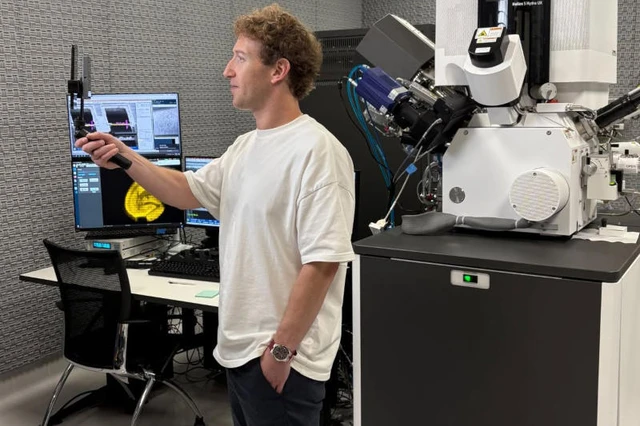 The Cost of Transitioning to an Agentic Economy
The contemporary tech landscape has entered a period of acute friction, where long-term visionary roadmaps are colliding head-on with the immediate demands of capital markets. Meta serves as a textbook example of this tension: even staggering revenue figures cannot shield a company from a market correction when growth projections fall marginally short of analyst expectations. As the industry pivots from rudimentary chatbots toward autonomous AI agents, the financial toll of this transition is becoming increasingly palpable—and painful. Shareholders are now demanding tangible returns on the multi-billion dollar capital expenditures poured into infrastructure.
30 Jul 2026
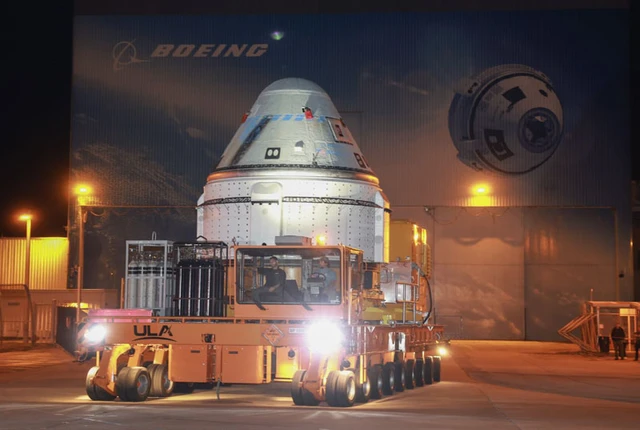 Starliner’s Path to Redemption and the Strategic Stakes for NASA
The race for Low Earth Orbit has evolved beyond a mere technological contest; it is now a matter of existential viability and operational reliability. Plagued by critical setbacks, the Boeing Starliner program is approaching a pivotal moment of reckoning. As engineers scramble to rectify systemic technical flaws, the project finds itself caught in a vice between mounting financial hemorrhaging and a rapidly closing window of opportunity. The outcome of the upcoming missions will dictate whether Boeing retains its status as a cornerstone of orbital logistics or serves as a costly cautionary tale of overextended aerospace ambition.
30 Jul 2026
 The Memory Crunch in the Age of Neural Networks
The global technology market is grappling with a stark paradox: the meteoric ascent of generative AI is outstripping the physical capacity of hardware manufacturing. A critical shortage of high-performance memory has emerged as the primary systemic bottleneck hindering the evolution of cloud computing and advanced neural networks. Recent financial disclosures from Samsung confirm that these pressures are not fleeting but will persist for years to come. The industry is now entering a period of long-term structural deficit—one that is fundamentally reshaping the economics of the semiconductor landscape.
30 Jul 2026
 Radical Access to Intel Atom Technologies
The semiconductor industry is undergoing a fundamental pivot toward energy efficiency and edge computing. For decades, Intel has guarded its x86 intellectual property with near-religious fervor, transforming it into an impenetrable corporate bastion. Yet, an unexpected alliance with the startup RosaicLabs suggests that cracks are finally appearing in these walls. It appears that strategic imperatives and personal networks are beginning to outweigh the tech giant’s long-standing tradition of isolationism.
30 Jul 2026
 Qualcomm’s Strategic Pricing Gambit in the Chip Market
The global semiconductor market is facing unprecedented pressure, driven by surging raw material costs and systemic supply chain disruptions. In this volatile climate, industry titan Qualcomm has been forced to recalibrate its pricing strategy—a move that will inevitably trickle down to the retail price of consumer devices worldwide. This shift is part of a broader strategic pivot as the company seeks to diversify its revenue streams and reduce its heavy reliance on the smartphone market.
30 Jul 2026
 Sony’s Strategic Bid to Consolidate the Optics Market
The contemporary digital imaging market is undergoing a profound transformation, where control over optical components has emerged as a pivotal driver of competitiveness. Sony Group’s pursuit of Tamron is far more than a mere financial transaction; it is a calculated strategic move toward deeper vertical integration. In the high-stakes race for dominance within the mirrorless ecosystem, ownership of premium optics provides the leverage necessary to dictate industry standards. This initiative could fundamentally reshape the dynamics between camera manufacturers and third-party lens providers.
30 Jul 2026
 The Economics of the Semiconductor Shortage: The Samsung Perspective
The global electronics market is grappling with a systemic crisis in which sales leadership no longer serves as a guarantee of financial stability. What began as a transient disruption in memory component supply has evolved into a structural risk for hardware manufacturers. Samsung’s current trajectory illustrates a perilous paradox: revenue growth can coexist with operational losses when the cost of raw materials outpaces retail pricing. This shift heralds a new epoch, one defined by the acute vulnerability of tech giants to the inherent volatility of the semiconductor market.
30 Jul 2026
 The Threehalves Hybrid Platform: Engineered for Extreme Environments
Striking the perfect balance between stability and functionality remains one of the most persistent challenges in modern robotics. While traditional humanoids often falter when faced with rugged terrain, quadrupedal systems lack the dexterity required to interact effectively with tools. The "robocentaur" concept emerges as a solution to this dichotomy, merging animal-like agility with human-centric manipulative capabilities. The Threehalves project, developed by California-based startup Satyress, positions itself as a versatile tool engineered specifically for operation in high-risk environments.
