Striking the perfect balance between stability and functionality remains one of the most persistent challenges in modern robotics. While traditional humanoids often falter when faced with rugged terrain, quadrupedal systems lack the dexterity required to interact effectively with tools. The "robocentaur" concept emerges as a solution to this dichotomy, merging animal-like agility with human-centric manipulative capabilities. The Threehalves project, developed by California-based startup Satyress, positions itself as a versatile tool engineered specifically for operation in high-risk environments.
In the contemporary search-and-rescue sector, a critical divide exists between the capabilities of wheeled platforms and anthropomorphic robots. The former are tethered to flat surfaces; the latter struggle with stability amidst rubble and rugged terrain. Bridging this gap has resulted in Threehalves—a two-meter machine whose morphology draws inspiration from mythical creatures. By fusing four support limbs with a fully humanoid torso, the robot can navigate chaotic landscapes with confidence while retaining the capacity for complex manipulation.
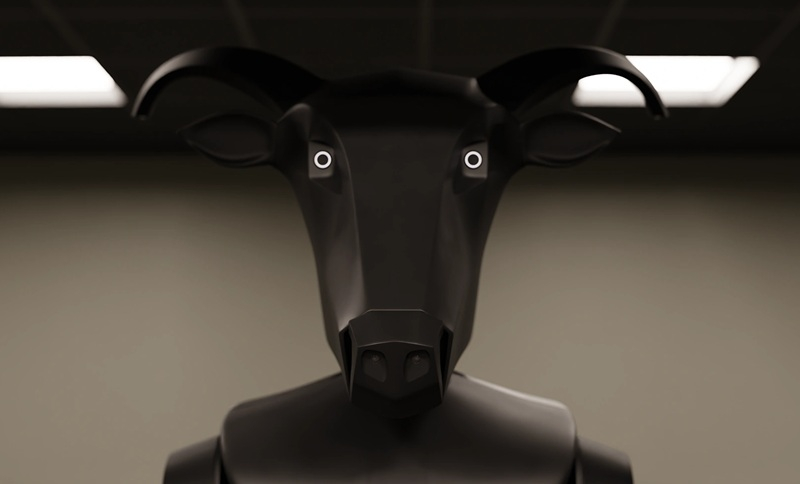
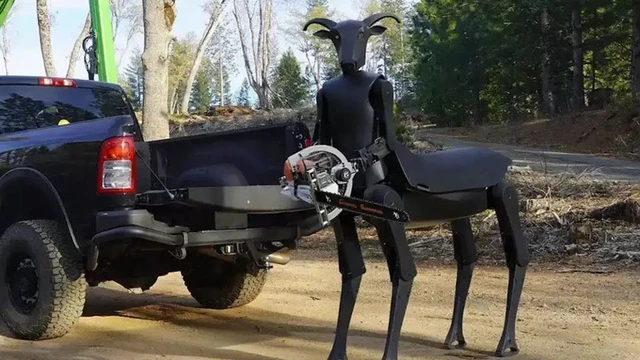
The defining characteristic of Threehalves is its pivot from rigid, fixed functionality toward a modular architecture. Rather than relying on static manipulators, the system employs interchangeable limbs that can be reconfigured in minutes. This transforms the robot into a universal tool carrier; depending on the mission, an operator can equip it with a chainsaw, a drill, or a screwdriver. Such standardization not only broadens the machine's operational scope but also significantly streamlines field maintenance and repair.
At its current stage of development, Threehalves operates as a remotely piloted system. From a secure perimeter, an operator coordinates the robot's movements via joystick, eliminating human risk in hazardous environments. However, the machine's substantial power and scale necessitated the implementation of a multi-tiered safety framework.
The first line of defense relies on visual recognition: the robot can trigger an immediate halt upon identifying a raised palm gesture. For critical failures, a more radical mechanical lockout method is employed. High-pressure cylinders are integrated into the chassis; physical damage to these—such as a puncture—triggers an instantaneous pneumatic pressure drop, completely immobilizing the mechanisms. Complementing this are fail-safe brakes that automatically lock the system upon loss of power.
From a logistical standpoint, the developers have integrated a compact folding mechanism, allowing two such units to fit within a standard pickup bed approximately 1.7 meters in length. Despite the impressive concept, the project remains a promising prototype. The current lack of data regarding payload capacity, energy efficiency, and environmental ingress protection (against dust, smoke, and extreme temperatures) suggests that the system still faces a rigorous path toward certification and real-world field trials.
The emergence of Threehalves aligns with a global trend returning to biomorphic design. While some engineers refine the concept of "robodogs," others are experimenting with hybrid vehicles that merge human and machine into a single organism. Insights from Japanese and Chinese developers confirm a fundamental truth: nature has engineered far more efficient off-road locomotion than the wheel. Modern engineering is simply borrowing these patterns to restore human agency in environments where technology was previously powerless.
 The Environmental Toll of U.S. Technological Leadership