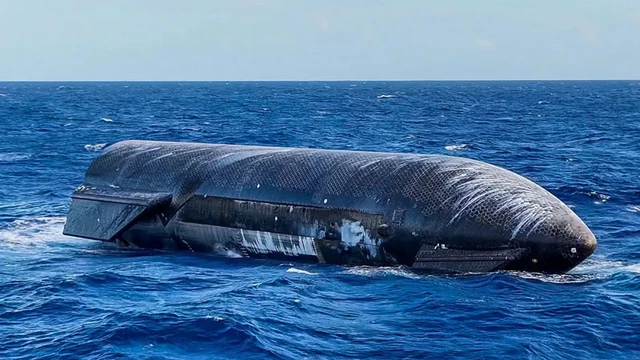
Deep space exploration demands absolute rigor in energy and mass management, where the slightest miscalculation can lead to catastrophe. Yet, modern astronautics is facing a new breed of challenge: one where technical triumph devolves into a logistical nightmare. The latest Starship flight demonstrated an unprecedented level of precision during descent, but it was this very efficiency that birthed an unforeseen complication. Now, the massive steel behemoth has become an unguided derelict, drifting aimlessly through the waters of the Indian Ocean.
The thirteenth test flight of Starship launched from Starbase, Texas, marking another pivotal milestone in SpaceX's pursuit of full reusability. Executed on a suborbital trajectory, the mission allowed for the real-world validation of critical system components. During the flight, twenty experimental Starlink V3 satellites were deployed; while they were not intended for stable orbit and subsequently incinerated upon atmospheric reentry, their release confirmed the operational viability of the separation mechanisms.
Engineering focus centered heavily on the performance of the Raptor engines. A successful vacuum restart of one of the six engines was achieved—a capability fundamental to future interplanetary transit and critical deorbit maneuvers. Without this functionality, the spacecraft would remain a captive of its own trajectory, devoid of the ability to adjust course or return to Earth.
The reentry phase served as a rigorous trial for the heat shield, which bore the brunt of high-temperature plasma during atmospheric entry. The descent dynamics were flawless: the ship transitioned from a horizontal to a vertical orientation, sequentially firing its Raptor engines—first three, then two, and finally one. This resulted in the softest splashdown in the program's history. In stark contrast, the Super Heavy booster met a more violent end; due to an incorrect engine ignition sequence, it struck the surface of the Gulf of Mexico at high velocity.
Yet, this very precision created a paradoxical dilemma. Due to maintained hull integrity and residual fuel in the tanks, the 52-meter vessel did not sink, but remained buoyant. While viewed as a triumph within the context of the space program, from a maritime safety perspective, it became a significant liability.
The sheer mass of the steel hull, combined with chemically active propellants, transformed Starship into a hazardous obstacle for shipping lanes. A vessel akin in scale to a flying skyscraper, it was left at the mercy of oceanic currents. Nearby support ships proved powerless; they lacked the specialized equipment required to lift or tow an object of such immense volume and weight.
The situation necessitated direct intervention from SpaceX leadership. To mitigate the consequences of this "overly successful" landing, a specialized recovery vessel was dispatched to the coast of Western Australia to retrieve the craft. Thus, the mission's technical victory evolved into an unexpected sequel, transitioning from an astronomical event into a complex open-ocean salvage operation.
 Tesla Roadster: A New Wave of Ambition