The race for Low Earth Orbit has evolved beyond a mere technological contest; it is now a matter of existential viability and operational reliability. Plagued by critical setbacks, the Boeing Starliner program is approaching a pivotal moment of reckoning. As engineers scramble to rectify systemic technical flaws, the project finds itself caught in a vice between mounting financial hemorrhaging and a rapidly closing window of opportunity. The outcome of the upcoming missions will dictate whether Boeing retains its status as a cornerstone of orbital logistics or serves as a costly cautionary tale of overextended aerospace ambition.
The roadmap for the CST-100 Starliner’s return to orbit is beginning to crystallize, with a potential launch window slated for late 2026. Boeing CEO Kelly Ortberg has confirmed that the overhaul of problematic systems is progressing well and that the company is satisfied with current benchmarks. At this stage, the primary challenge is synchronizing schedules with NASA—a process that has become more bureaucratic than technical.
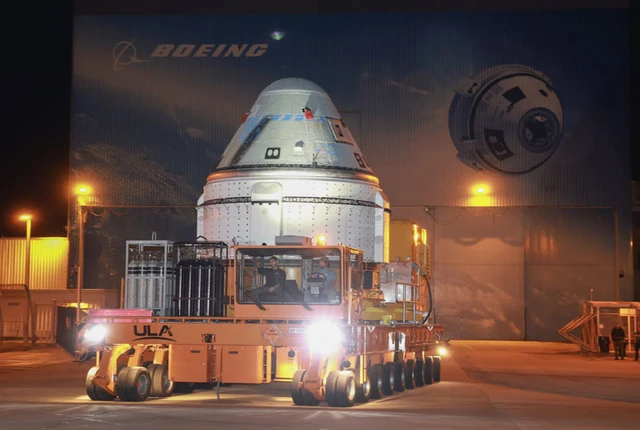
The upcoming mission will be uncrewed, tasked with delivering cargo to the International Space Station (ISS). This flight will serve as a critical validation of the modifications implemented following the disastrous crewed trial of 2024. NASA classified that incident as a "Type A" event—the highest category of danger—where propulsion system failures jeopardized the lives of astronauts Butch Wilmore and Sunita Williams. Ultimately, their evacuation required the intervention of a competitor: SpaceX’s Crew Dragon.
Technical post-mortems revealed that the root of the failure lay within the propulsion system. While most corrections have already been integrated, the primary obstacle to setting a firm launch date is now the ISS operational calendar. A successful docking requires not only an available port but also sufficient crew bandwidth on the station to handle equipment offloading.
Should the uncrewed flight validate the reliability of the updated systems, Boeing could resume crewed missions by the end of 2027. For the corporation, this success is as much about financial survival as it is about reputation. Losses on the Starliner program have already reached a staggering $2 billion; any further delays will only widen the financial hemorrhage within its NASA contract.
However, the situation is complicated by the broader context of orbital logistics. SpaceX plans to retire the Crew Dragon and Falcon 9 by 2030, or perhaps even sooner. Meanwhile, NASA intends to operate the ISS well into the next decade, while private firms are aggressively designing commercial replacement stations. The eventual exit of the "Dragons" creates a precarious vacuum in transport accessibility, rendering Starliner a strategic imperative despite its troubled history.
Launch infrastructure remains a critical bottleneck. United Launch Alliance (ULA) has only six rockets remaining for Starliner launches. While the Vulcan rocket presents an alternative, certifying it for crewed missions would entail colossal additional expenditures.
Ultimately, the industry is facing a bitter irony: operating the Starliner is significantly more expensive than utilizing SpaceX’s reusable systems. Because Boeing's service module incinerates upon reentry, every mission remains a costly, single-use operation. Consequently, even after full certification, transporting crews via Starliner will remain financially burdensome—a direct contradiction to the program's original mandate of reducing the cost of access to space.
 Tesla Roadster: A New Wave of Ambition