11 Aug 2026
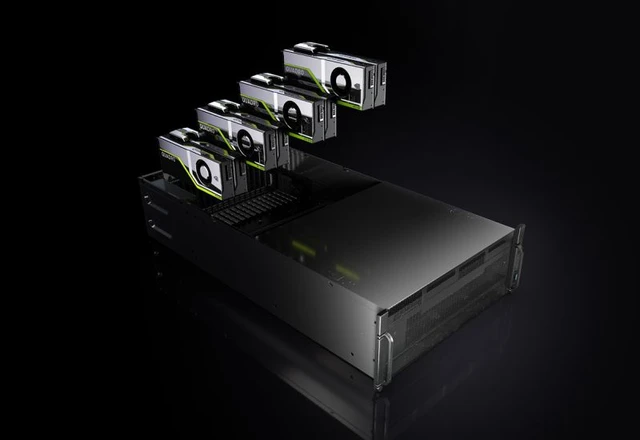 The Financial Leverage Driving Nvidia’s Expansion
The current AI boom has evolved beyond a mere competition of algorithms; it has transformed into a high-stakes struggle for physical infrastructure. The staggering demand for compute has erected a financial barrier that threatens to throttle the pace of global AI adoption. Recognizing this bottleneck, Nvidia is pivoting—evolving from a hardware vendor into the industry's primary financial orchestrator. By assembling a massive investment syndicate, the company aims to bridge the capital gap and secure an uninterrupted pipeline of demand for its own products.
11 Aug 2026
 Unitree’s Phenomenal Market Debut
The humanoid robotics market is rapidly evolving from a sci-fi curiosity into one of the most lucrative asset classes of the modern era. China’s near-total hegemony in the sector has ignited an investment frenzy surrounding the industry's primary contenders, and Unitree’s impending IPO on the Shanghai Stock Exchange is set to serve as a critical bellwether for the broader field of embodied AI. The unprecedented appetite for the company’s shares underscores the immense expectations global capital holds for the imminent robotics revolution.
11 Aug 2026
 The Energy Appetite of Modern Neural Networks
The meteoric rise of generative AI has shifted the primary technological bottleneck from algorithmic constraints to the realities of physical infrastructure. Today, computational capacity is inextricably linked to the stability and scale of available power, elevating energy into a critical strategic asset. OpenAI’s decision to recruit its own energy trading experts signals the dawn of a new era—one where tech giants are evolving into active participants in the energy markets. This transformation underscores a broader, global scramble for resources as the industry races toward the realization of Artificial General Intelligence (AGI).
11 Aug 2026
 OpenAI’s Capital Management: Financial Mechanisms and Strategic Architecture
In today's AI landscape, the widening chasm between explosive private-market growth and the eventual transition to a public offering has become a pivotal challenge for talent management. As the anticipated IPO remains deferred, companies are compelled to engineer alternative liquidity events for their early stakeholders. OpenAI has opted for secondary share sales—a strategic maneuver that enables shareholders to realize gains without disrupting the overarching equity structure. This approach underscores management's resolve to maintain tight strategic control over the company's trajectory while simultaneously satiating the financial expectations of both institutional investors and key personnel.
11 Aug 2026
 The Pricing Paradox of the GeForce RTX 50 Series
The contemporary high-end GPU market has evolved into a battlefield where corporate rhetoric clashes with the brutal realities of supply and demand. Once the disparity between the suggested retail price and the actual street price hits a breaking point, the very notion of MSRP becomes an exercise in futility. The rollout of the GeForce RTX 50 series underscores a systemic crisis in the accessibility of flagship hardware on a global scale; at this juncture, Nvidia's official pricing serves less as a reliable benchmark for consumers and more as a carefully curated marketing facade.
10 Aug 2026
 The Regulatory Transformation of Moonshot AI
The global AI race is entering a phase of institutional entrenchment, where technological supremacy has become synonymous with national sovereignty. Against this backdrop, Moonshot AI—the Chinese startup behind the Kimi K3 model—is navigating a radical structural overhaul ahead of its anticipated IPO. This transition has evolved into a precarious balancing act, weighing the demands of foreign investors against the stringent mandates of domestic regulators. At the heart of the struggle is a fundamental tension: how to attract and retain global capital while maintaining absolute fidelity to the PRC’s internal directives.
10 Aug 2026
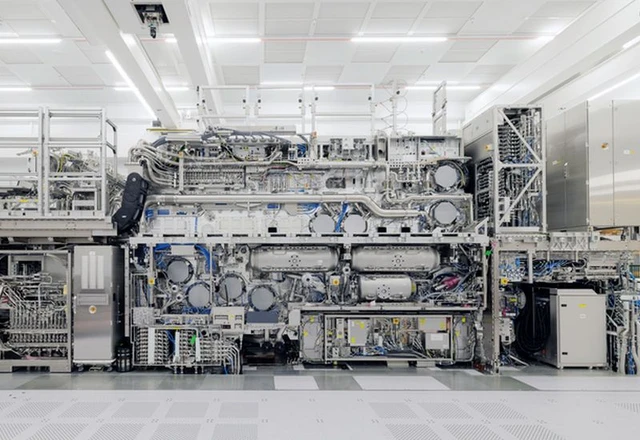 TSMC’s Dominance in the Era of Neural Networks
The modern technological arms race has shifted from the realm of software to the physical architecture of computation. At the center of this pivot stands TSMC, which has effectively become the sole guarantor for the ambitions of the world's largest tech corporations. The company's latest financial performance confirms that demand for cutting-edge semiconductors is not merely growing—it is scaling exponentially. This transformation positions chip fabrication as the primary lever of global economic influence.
10 Aug 2026
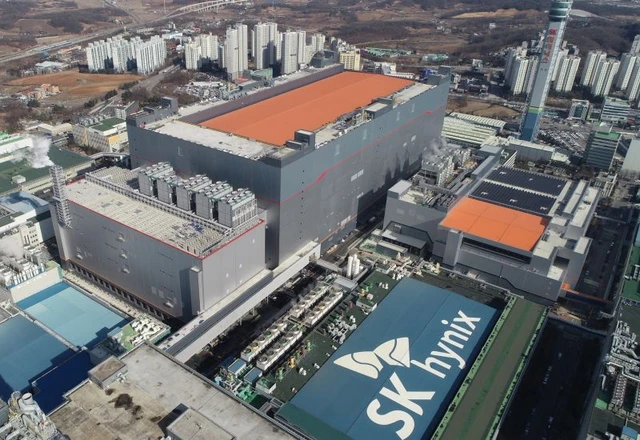 Workforce Consolidation at SK hynix
Today's global semiconductor landscape is shaped not merely by technical prowess, but by the structural resilience of the corporations themselves. In South Korea—the epicenter of memory chip fabrication—a systemic friction is mounting: a clash between management’s drive for cost optimization and the workforce's demand for greater transparency in compensation. The situation at SK hynix exemplifies a pivotal shift, as fragmented labor grievances coalesce into a singular, monolithic bloc of influence. This trajectory underscores a profound crisis of confidence between high-tier technical talent and corporate leadership.
9 Aug 2026
 A Shift in Global Research Leadership
The global race for technological supremacy has moved beyond theoretical debate, evolving into a contest of massive financial mobilization. For decades, the United States held an unchallenged lead as the world's primary benefactor of scientific advancement; however, current metrics signal a fundamental shift in the balance of power. Through an aggressive growth strategy, China has surged ahead, overtaking its Western rival in total R&D expenditure. This pivot heralds a new era—one where economic capital serves as the primary lever steering the trajectory of human civilization.
9 Aug 2026
 The Steep Cost of Subaru’s Shift Toward Electrification
The global automotive industry's pivot toward electrification has evolved into a grueling ordeal for legacy manufacturers. Even tech titans like Xiaomi are grappling with extended periods of unprofitability upon entering the fray—a trend that has become systemic across the sector. For Japan's Subaru, the situation has reached a critical juncture where the cost of acquiring a single EV customer is placing an unsustainable strain on its budget. This dynamic exposes a profound disconnect between strategic technological partnerships and actual market viability.
7 Aug 2026
 The Evolution of Embodied Intelligence in China
The global race to develop fully realized humanoid robots is evolving, shifting from a phase of technical demonstrations toward the deep integration of cognitive systems. The primary bottleneck remains the persistent gap between mechanical dexterity and a machine's capacity for sentient interaction with the physical world. China is addressing this challenge by forging strategic alliances between hardware titans and neural network architects. Unitree’s trajectory toward a public offering, coupled with its synergy with DeepSeek, signals the dawn of a new epoch: the era of Embodied AI.
7 Aug 2026
 The Precarious Foundation of Microsoft’s Artificial Intelligence
The AI arms race has evolved from a mere technological competition into a high-stakes financial gamble, characterized by unprecedented infrastructural expenditure. While Microsoft reports record-breaking growth and a soaring stock price, the underlying architecture of this success reveals a precarious asymmetry. A substantial portion of its AI-driven revenue is not the result of organic market demand, but rather a cyclical flow of capital tethered to a single partner. This creates a systemic vulnerability where the trajectory of a global tech titan becomes inextricably linked to the viability of a single startup.
