The global race for technological supremacy has moved beyond theoretical debate, evolving into a contest of massive financial mobilization. For decades, the United States held an unchallenged lead as the world's primary benefactor of scientific advancement; however, current metrics signal a fundamental shift in the balance of power. Through an aggressive growth strategy, China has surged ahead, overtaking its Western rival in total R&D expenditure. This pivot heralds a new era—one where economic capital serves as the primary lever steering the trajectory of human civilization.
Technological advancement is rarely serendipitous; it has always been built upon a formidable financial foundation. Today, that foundation is more robust in China than anywhere else in the world. According to analytical data from Nikkei Asian Review, based on the monitoring of hundreds of indicators since 2024, the PRC has officially claimed the top spot in total research and development (R&D) expenditure.
In 2024, investments from Chinese universities and corporations reached a staggering $615 billion, representing a growth rate of 13.1%. By comparison, the United States—long considered the gold standard for innovation funding—spent $604 billion, with a growth rate of just 6.7%. The rest of the world trails significantly: Japan rounds out the top three at $140 billion, followed by Germany ($116 billion), South Korea ($97 billion), the UK ($68 billion), and France ($56 billion).
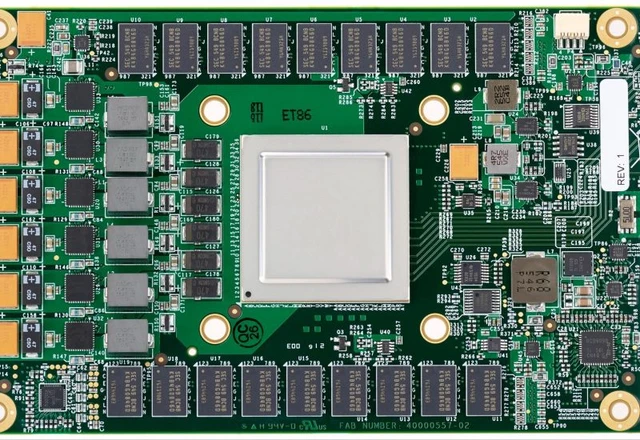
However, raw budgetary data does not reveal the full depth of the shift. What matters more is the strategic allocation of these funds. The Chinese model is driven by a utilitarian approach: the lion's share of funding—approximately $478 billion—is concentrated within the corporate sector. This capital has been aggressively deployed toward strategic verticals: computing, electronics, and optics.
This hyper-concentration of resources was a direct response to external pressures. The sanctions imposed by the U.S. in 2022 effectively acted as a catalyst for China, forcing an acceleration of import substitution programs. What was originally intended to restrict access to technology has instead become a powerful incentive for the creation of a sovereign, independent ecosystem of development and manufacturing.
Meanwhile, the American strategy reflects a different trajectory. In the U.S., a significant portion of funding has shifted toward non-manufacturing sectors. Nearly half of all R&D expenditures were absorbed by the development of artificial intelligence systems and software solutions. This creates a compelling contrast: while one side is building a foundation of "hardware" and physical substrates, the other is focusing on cognitive overlays and algorithms.
Financial dominance is only one facet of leadership. China's intellectual capital has grown systematically and methodically. As early as 2017, the country surpassed the U.S. in the volume of scientific publications. This was followed by a leap in quality: by 2018, Chinese research became the most cited within the top 10% of the global scientific community, and by 2019, this leadership extended to the most elite segment—the top 1% of high-impact publications.
Consequently, we are witnessing more than just a shift in statistical reports; we are seeing a wholesale transformation of the global knowledge landscape. China has evolved from imitation to the establishment of its own standards, utilizing financial leverage to accelerate this transition. In an era where science has become the primary instrument of geopolitics, such dynamics will inevitably lead to a reconfiguration of the hierarchy of technological influence over the coming decade.

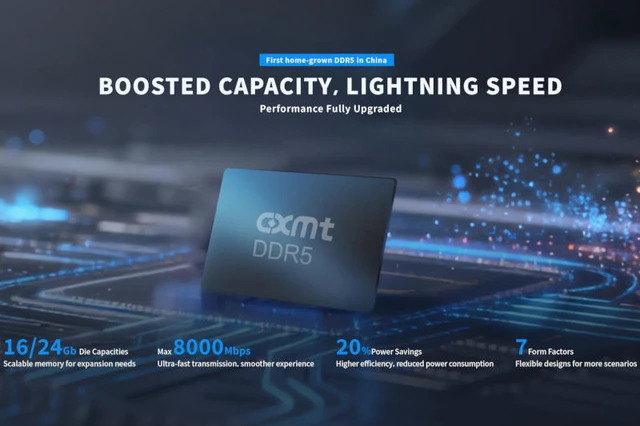 The Price of Acceleration: CXMT’s Rapid Push into Memory