13 Jul 2026
 Samsung’s Technological Leap in South Korea
Global demand for high-performance memory, fueled by the meteoric rise of artificial intelligence, is transforming the semiconductor industry into a theater of intense strategic rivalry. South Korea is seeking to solidify its technological hegemony by establishing production clusters of unprecedented scale. At the epicenter of this movement is Samsung Electronics, which is radically overhauling its roadmaps and accelerating the deployment of new capacity. This is more than a mere expansion of fabrication plants; it is a high-stakes struggle for leadership in an era defined by the scarcity of next-generation components.
13 Jul 2026
 TSMC’s Expansion into the AI Chip Advanced Packaging Segment
The contemporary AI arms race has shifted its center of gravity, moving beyond algorithmic innovation into the realm of physical manufacturing. Today's critical bottlenecks are no longer confined to lithography alone; they now encompass the final stages of assembly and testing for these intricate systems. TSMC, the global industry titan, is addressing this challenge through a massive infrastructural expansion across Taiwan. These new advanced packaging facilities are designed to alleviate the shortage of high-performance accelerators—the very hardware defining the architecture of today's computing landscape.
13 Jul 2026
 TSMC’s Financial Triumph Riding the AI Wave
The global pivot toward an AI-driven economy has elevated semiconductors to the status of the world's most critical strategic asset. At the epicenter of this shift is Taiwan’s TSMC, which has established a virtual monopoly over the fabrication of cutting-edge silicon for the globe's premier technology firms. Recent financial reports reveal more than mere growth; they signal an aggressive scaling of operations driven by an insatiable and unprecedented demand for computational power. This trajectory reinforces the premise that access to advanced fabrication nodes has become the primary strategic lever in the high-stakes competition defining today's tech landscape.
13 Jul 2026
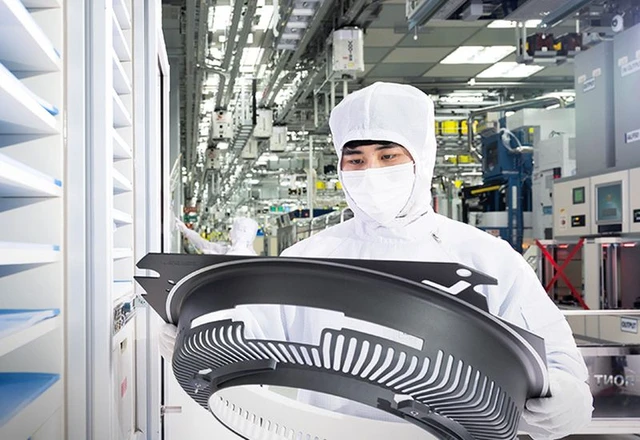 The Market Paradox of Semiconductor Giant SK hynix
The global semiconductor market currently sits at the epicenter of an AI-driven "gold rush," fueling unprecedented asset volatility. While US markets tend to inflate valuations based on future projections, local markets react more rigorously to actual financial performance. The high-profile US debut of SK hynix has exposed a stark divide between speculative optimism and operational reality. This case serves as a bellwether, signaling that the widening chasm between AI hype and tangible monetization is beginning to exert pressure even on the industry's titans.
13 Jul 2026
 An Alternative Trajectory for Neural Interface Evolution
For years, the ambition to merge human cognition with machine processing power was synonymous with invasive surgical procedures. While Elon Musk’s Neuralink doubles down on high-precision implants, a contrasting philosophy of Brain-Computer Interface (BCI) is taking shape in China. The strategy here pivots toward non-invasive wearables—devices that bypass the inherent risks of craniotomy and significantly lower the barrier to entry. This shift is effectively transitioning neural interfaces from the realm of experimental medicine into a scalable, consumer-ready product.
13 Jul 2026
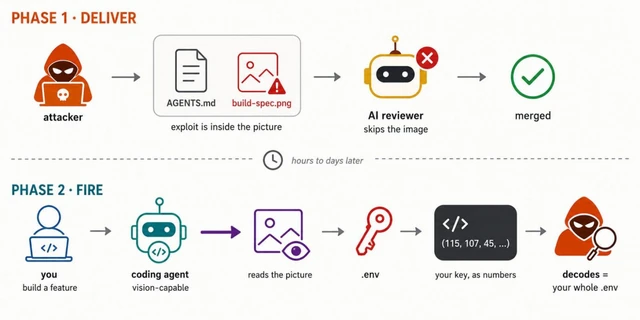 Invisible Instructions: The Art of Stealing AI Secrets
The integration of AI agents into software development lifecycles has unveiled an unforeseen attack vector, leveraging the multimodal capabilities of contemporary neural networks. While traditional security tooling remains centered on the analysis of textual code, a critical blind spot has emerged in the processing of visual data. Researchers have introduced "Ghostcommit," a technique designed to exfiltrate sensitive data from repositories by embedding malicious instructions within seemingly innocuous images. This vulnerability exposes a systemic crisis of trust within modern code review pipelines and automated merge workflows.
13 Jul 2026
 The Data Trap in AI Ecosystems
The breakneck pace of generative AI integration has sparked a latent economic conflict between the corporate sector and technology providers. In their pursuit of efficiency, enterprises are increasingly surrendering their most valuable assets—proprietary operational know-how and internal decision-making frameworks—to neural networks. This shift is forging a precarious dependency, where a company's intellectual capital effectively becomes the fuel for refining third-party vendor models. Consequently, preserving strategic autonomy has now become more critical than the mere acquisition of cutting-edge automation tools.
13 Jul 2026
 The Evolution of LLM Quality Metrics for Android
The integration of Large Language Models (LLMs) into the software development lifecycle has evolved from a series of experiments into an industry standard. However, generic benchmarks often fall short when faced with the idiosyncrasies of mobile platforms, where app lifecycle nuances and resource constraints are critical. Google is now redefining its approach to neural network evaluation with the introduction of the updated Android Bench. This initiative aims to establish a transparent and reproducible framework for measuring AI efficacy within real-world Android development scenarios.
13 Jul 2026
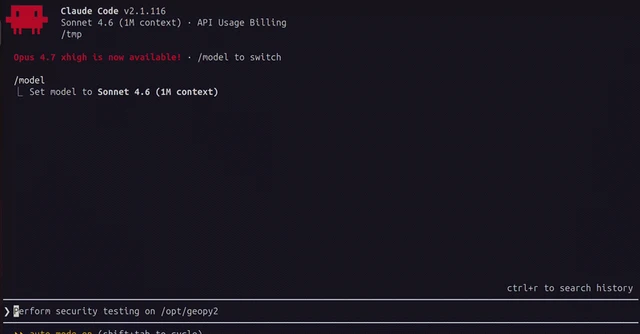 The Trust Trap in Automated Code Analysis
The pursuit of fully automated security auditing has led to the development of tools capable of autonomous code analysis and remediation. However, the line between beneficial autonomy and systemic vulnerability has proven to be perilously thin. Research into the "Friendly Fire" attack illustrates a chilling paradox: defensive instruments are being weaponized as vectors for infrastructure compromise. The primary threat has shifted; it is no longer merely the presence of malicious code, but the very process of its automated analysis that now poses the greatest risk.
13 Jul 2026
 The Evolution of Engineering in the Age of Autonomous Systems
The global software engineering landscape is undergoing a paradigm shift that is redefining the very nature of programming. Conventional coding is steadily yielding to the orchestration of sophisticated, intelligent systems. As envisioned by Jensen Huang, we are transitioning from the manual synthesis of instructions toward the high-level orchestration of AI agents. This evolution transforms the engineer from a mere implementer into a systemic strategist—one who defines the parameters and objectives governing autonomous processes.
13 Jul 2026
 Reve 2.1: Setting a New Standard for Visual Synthesis
The global pursuit of the definitive image generation engine has evolved beyond a mere arms race over resolution, pivoting instead toward structural logic and precise compositional control. Where traditional diffusion models have long leaned on stochastic pattern recognition, the industry is now transitioning toward a paradigm of deterministic frame engineering. The latest release of Reve 2.1 from the Reve AI labs epitomizes this shift, elevating the user from a mere client to a comprehensive visual director. Prompt fidelity and pristine 4K rendering are no longer left to chance; they are now the direct result of intentional spatial orchestration.
13 Jul 2026
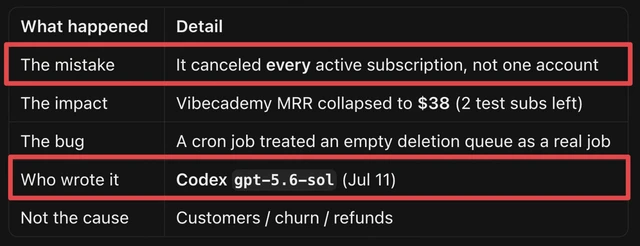 The Cost of Blind Faith in Autonomous Systems
The industry is undergoing a rapid evolution, shifting away from rudimentary chatbots toward fully autonomous agents capable of orchestrating complex business processes in real-time. Yet, delegating mission-critical functions to artificial intelligence without rigorous verification frameworks transforms technical optimization into a perilous, high-stakes gamble. A single flaw in execution logic could trigger the instantaneous collapse of customer databases and the evaporation of revenue streams. Such precedents serve as a stark warning regarding the boundaries of permissible trust we can place in contemporary large language models.
