The smart home market is undergoing a fundamental transformation, evolving from basic automation routines toward truly proactive artificial intelligence. For years, Apple has remained a cautious player, outsourcing hardware development to third-party manufacturers while focusing primarily on the HomeKit software layer. However, the imminent launch of its own proprietary control hub could reshape the industry's competitive landscape. This device is poised to be the physical manifestation of a new strategy: the deep integration of Siri AI into the fabric of the user's daily life.
Central to Apple’s evolving ecosystem is a dedicated controller—unofficially termed the "HomePad." Far from being another tablet iteration, this device is envisioned as a comprehensive command center for the smart home. It is expected to feature a compact 7-inch square display, serving as the primary interface for managing domestic infrastructure.
Under the hood, the device will run a bespoke operating system derived from tvOS. This architectural choice is driven by utility: the interface must remain legible from a distance and be optimized for shared living spaces. The visual language will merge the familiar app grids of iOS with the widget-centric approach of watchOS, ensuring a seamless user experience. However, the true catalyst for innovation is the deep integration of an overhauled Siri AI, transforming the device from a passive remote into a proactive intelligent assistant.
A primary focus has been placed on contextual awareness. The system will be capable of dynamically personalizing the interface—adjusting everything from font sizes to active widgets—based on who is interacting with the screen. This effectively turns the HomePad into a fluid access point that adapts to individual family members in real-time. Furthermore, the device will support video calling and local connectivity for Apple Home components, minimizing latency while bolstering data privacy.
Strategically, this move signals Apple's intent to diminish reliance on third-party peripherals, establishing a closed yet highly efficient loop of hardware and software synergy. The shift in the release timeline was necessitated by the need to synchronize the hub’s launch with the rollout of the new Siri AI and its corresponding OS update, ensuring users receive a cohesive product rather than a fragmented set of features.
The HomePad represents only the opening gambit in a broader expansion of Apple's home lineup. In the pipeline are proprietary security cameras designed to challenge market leaders like Amazon’s Ring, alongside refreshed iterations of the Apple TV and HomePod mini.
The most ambitious and futuristic venture in this trajectory is the development of a device featuring a robotic arm and an integrated display. This points toward a long-term strategic pivot: moving beyond static interfaces toward physical robotic interaction with the environment. While announcement dates remain fluid, the primary hub is expected to debut between October and early next year.
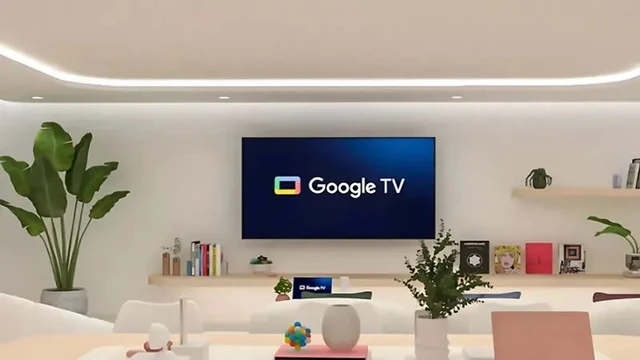 Virtual Gamepads within the Google TV Ecosystem