The global AI boom has elevated semiconductor memory from the status of a commodity component to that of a strategic asset. Today, the industry is grappling with a paradox: while aggregate demand continues to climb, the DRAM and NAND segments are beginning to follow divergent economic trajectories. While one market contends with critical shortages, the other braces for saturation and inevitable price corrections. This divergence is redefining the very architecture of computing systems, shifting the center of gravity away from personal devices toward massive server clusters.
The contemporary semiconductor landscape is being fundamentally reshaped by generative AI, which has effectively rewritten the rules of the game. Current trends indicate that while demand for memory chips will continue to climb, the trajectories for DRAM and NAND will diverge significantly. While the solid-state storage market (NAND) is poised for a gradual improvement in supply and a subsequent decline in costs, the random-access memory segment (DRAM) remains under intense pressure, characterized by persistent shortages and an upward price trend.
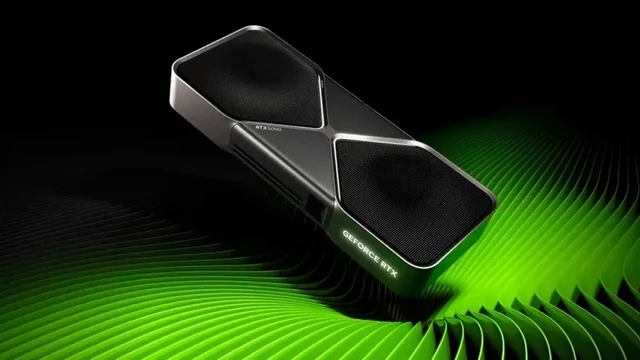
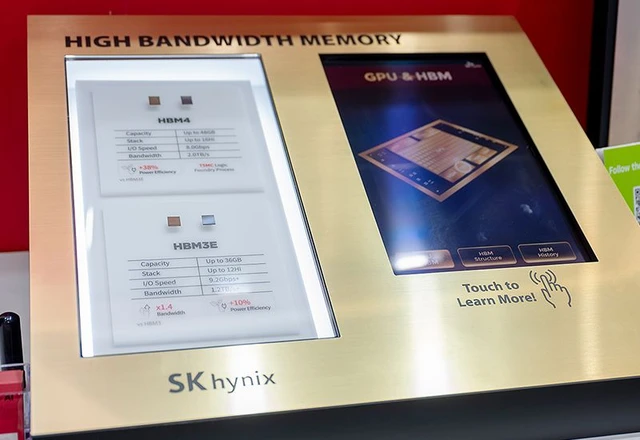
High Bandwidth Memory (HBM)—the high-speed, wide-bus memory critical for modern GPUs—plays a pivotal role in this dynamic. The technical complexity of HBM lies in its production requirements: manufacturing a single chip requires significantly more silicon dies than conventional planar memory. This creates a "capacity absorption" effect; even as wafer throughput increases, the actual volume of finished products grows at a slower pace. Consequently, the DRAM market is resisting saturation, keeping prices elevated.
Efforts by manufacturers to scale output are currently hindered by capital expenditure inertia. While optimizing existing lines and migrating to more advanced process nodes provides some relief, the full-scale commissioning of new fabrication plants will not occur until the second half of next year. The tangible impact of these new capacities on the DRAM market is not expected to be fully realized until 2028.
Parallel to this, a structural pivot in consumption is underway. The server segment has become both the primary beneficiary and the dominant consumer of resources. Server shipments are projected to grow by more than 17%, with the memory density per individual server also increasing. This trend is accelerated by the adoption of new standards, such as SOCAMM, which enable higher memory density. However, this growth comes at the expense of the consumer sector: the high cost of chips is suppressing demand for PCs and smartphones, pushing their sales into a phase of stagnation or decline.
The NAND segment is following a different trajectory. In this space, volume growth has been driven primarily by migration to more sophisticated layer-stacking technologies rather than the physical expansion of plants. However, an uptick in supply is expected in the near future, driven both by increased cell layer counts and the activation of new production capacities.
The primary catalyst here is QLC (Quad-Level Cell) memory, which is ideally suited for server-side data storage. By 2027, QLC will form the backbone of additional market supply. Meanwhile, consumer electronics continue to be sidelined; the industry's focus on high-margin server SSDs maintains a deficit in the budget segment and keeps prices high. The only unpredictable growth factor may be the evolution of AI agents, which will require massive amounts of ultra-high-speed local memory for autonomous operation.
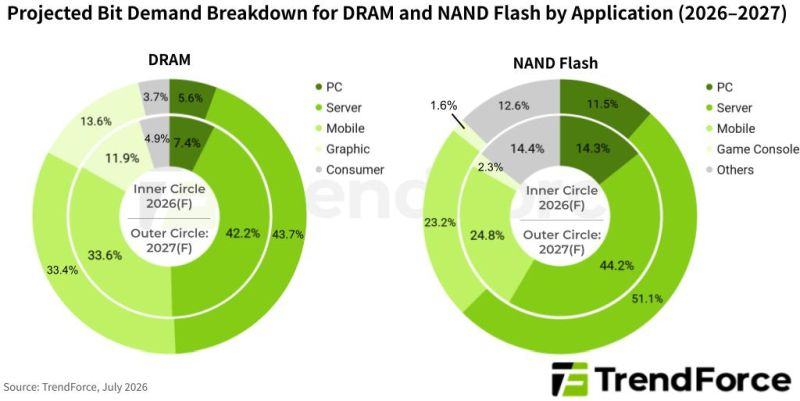
Statistical analysis of resource distribution confirms the overwhelming dominance of the server sector. In terms of DRAM consumption, the server share is expected to rise to 43.7%, while the PC market will shrink to a modest 5.6%. Conversely, graphics solutions will strengthen their position, increasing their share to 13.6%.
This trend is even more pronounced in the NAND segment: servers will absorb more than half of the global flash memory volume (up to 51.1%). The mobile and PC segments will continue to lose ground, and by 2026, gaming consoles will occupy a negligible market share of approximately 1.6%. Consequently, the memory industry is definitively transforming into the infrastructural bedrock for cloud computing, where individual devices become secondary to the computational power of data centers.
 The Environmental Toll of U.S. Technological Leadership